January 2016 in “Belarusian State Pedagogical University repository (Belarusian State Pedagogical University)” This research suggests that geometric classification of hair into fewer groups may be more reliable and useful for studying hair characteristics, rather than racial descriptions, especially in medical and forensic applications.
 August 2026 in “Dermatology and Therapy”
 In this study, researchers identified elongated corkscrew hairs as a new trichoscopic pattern in immunosuppressed adults with chronic endothrix tinea capitis, which may help in earlier diagnosis and targeted mycological investigation.
26 citations
,
January 1993 in “Dermatology” This report describes a new case of isolated trichothiodystrophy with characteristic brittle hair and suggests a simplified classification scheme for understanding sulfur-deficient hair disorders.
 February 2026 in “Zenodo (CERN European Organization for Nuclear Research)”
 This study observed that trichoscopic examination revealed specific signs of secondary post-traumatic cicatricial alopecia in patients with mine-explosive injuries and burns, and reported an 84.1% hair survival rate following transplantation and PRP therapy, with marked improvements in scalp condition after 12 months.
 5 citations
,
June 2019 in “Dermatopathology”
5 citations
,
June 2019 in “Dermatopathology” This study found poor agreement among dermatopathologists in identifying and grading fibrosis in traction alopecia, suggesting the need for better diagnostic methods for early fibrosis detection.
 January 2023 in “Skin appendage disorders”
 This study attempts to define normal post-transplant trichoscopic patterns in patients with androgenetic alopecia, highlighting several findings, but suggests longer follow-up studies are needed to confirm these observations.
 April 2024 in “Diagnostics”
 In this study, researchers found that 68% of orthodontic patients with oligodontia displayed hair disorders, such as hypotrichosis and androgenetic alopecia, highlighting trichoscopy and trichogram as valuable diagnostic tools to distinguish between isolated and syndromic forms of the condition.
4 citations
,
April 2018 in “Journal of vacuum science and technology. B, Nanotechnology & microelectronics” This study demonstrated the potential of a methodology combining ToF-SIMS and AFM to effectively analyze human hair structure and identify cosmetic residues, which can aid the cosmetic industry in product development.
2 citations
,
July 2024 in “Journal of Clinical Medicine” In this study, telemedicine using trichoscopy for alopecia areata patients showed high concordance with outpatient trichoscopy in image quality and similar levels of patient satisfaction, indicating its effectiveness for follow-up and continuity of care.
11 citations
,
April 1993 in “PubMed” In this study, trichocytes were shown to have potential for alternative differentiation, with mesenchymal cell influences playing a critical role in determining this process.
 April 2016 in “Journal of The American Academy of Dermatology”
 This study suggests that low-cost videomicroscopes may inaccurately assess certain features in hair and scalp disorders compared to standard videodermatoscopy, limiting their reliability for trichoscopy.
 25 citations
,
June 2003 in “Journal of Investigative Dermatology Symposium Proceedings”
25 citations
,
June 2003 in “Journal of Investigative Dermatology Symposium Proceedings” This study found that among Japanese women with diffuse hair loss, decreased hair density without changes in vellus hair was the most common and distinct pattern observed, highlighting differences from previous observations in other populations.
2 citations
,
August 2006 in “Journal of Dermatological Science” Automated image analysis helps diagnose and monitor alopecia areata by efficiently measuring hair follicles.
July 2026 in “Dermatology Practical & Conceptual” This review assessed trichoscopic findings in folliculotropic mycosis fungoides of the scalp, reporting features like milky-red globules and distinct vascular patterns, but noted the predominance of small studies and the need for larger research to validate trichoscopy's diagnostic utility for this condition.
 3 citations
,
November 2021 in “Applied Microscopy”
3 citations
,
November 2021 in “Applied Microscopy” This article presents a comprehensive overview of hair microscopy techniques and their diagnostic potential for systemic and cutaneous disorders, emphasizing its usefulness in resource-limited settings and highlighting the underutilization of this non-invasive method due to lack of awareness.
24 citations
,
June 2003 in “Journal of Structural Biology” This study suggests that varying intersheet interactions may explain the differences between the two polymorphic forms of macrofibril assembly in Merino wool and hair.
 46 citations
,
January 2015 in “Journal of The American Academy of Dermatology”
46 citations
,
January 2015 in “Journal of The American Academy of Dermatology” This study suggests that trichoscopic features, such as perifollicular erythema and cicatricial white patches, are independently associated with pruritus and the severity of frontal fibrosing alopecia.
40 citations
,
November 1966 in “Archives of Dermatology” This study found that trichorrhexis nodosa, a cause of unexplained hair loss, is often linked to mechanical trauma rather than a metabolic defect.
19 citations
,
June 2020 in “BMC Cancer” This study reported that genetic changes in trichilemmal carcinoma resemble those in other skin cancers, with TP53 mutations associated with aggressive clinical outcomes.
13 citations
,
July 2012 in “International Journal of Trichology” In this study, the varied phenotype of trichothiodystrophy was highlighted, with findings of distinctive hair shaft abnormalities and a wide range of multisystem issues, including neurologic and urologic disorders.
 1 citations
,
January 2017 in “International Journal of Dermoscopy”
1 citations
,
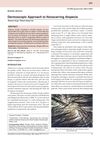
January 2017 in “International Journal of Dermoscopy” This article reviews the use of dermoscopy as a noninvasive tool for diagnosing various types of nonscarring alopecia but presents no new clinical findings.
 April 2018 in “Journal of Investigative Dermatology”
 This paper presents a new methodology combining magnetic tweezers and traction force microscopy to study keratinocyte mechanobiology, but reports no experimental results yet.
March 2003 in “中華皮膚科醫學雜誌” This report describes a patient with trichothiodystrophy exhibiting both specific hair abnormalities and developmental delay, contributing to the understanding of this rare disorder's clinical presentation.
 29 citations
,
January 2019 in “Journal of the European Academy of Dermatology and Venereology”
29 citations
,
January 2019 in “Journal of the European Academy of Dermatology and Venereology” This study found that trichoscopic examination is useful for diagnosing and monitoring systemic lupus erythematosus, with severe diffuse non-scarring alopecia indicating active disease.
July 2025 in “Indian Dermatology Online Journal” This study reports a unique case of trichotillomania incognita in an adult female that mimicked female pattern hair loss, highlighting the importance of trichoscopy and histology for accurate diagnosis.
 April 2025 in “International Journal For Multidisciplinary Research”
 This study explores hypertrichosis, a condition of excessive hair growth, highlighting its classification, diagnostic methods, and potential treatments. The authors emphasize the importance of individualized approaches and further genetic research to enhance treatment options for this primarily cosmetic issue that can signal systemic diseases.
19 citations
,
July 2019 in “Journal of Cosmetic Dermatology” This study found that in patients with patchy alopecia areata, certain trichoscopic features like upright regrowing hairs and pigtail hairs are positive predictive markers for treatment success.
13 citations
,
January 1985 in “International Journal of Dermatology” This study compared trichostasis spinulosa with keratosis pilaris and eruptive vellus hair cysts, finding differences in lesion distribution and microscopic appearance.
32 citations
,
August 2016 in “Journal of the American Academy of Dermatology” This letter discusses congenital triangular alopecia (TTA), a non-scarring hair loss condition often seen in children, without reporting new clinical findings.
 September 2021 in “Mağallaẗ al-Muẖtar li-l-ʿulūm”
 This report describes a case of two sisters with kinky, tangled hair diagnosed using trichoscopic and microscopic methods; they were treated with topical minoxidil.