 1 citations
,
February 2018 in “Australasian journal of dermatology”
1 citations
,
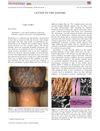
February 2018 in “Australasian journal of dermatology” Advanced imaging techniques are crucial for accurately diagnosing Monilethrix, a rare hair disorder.
 May 2026 in “International Journal of Versatile Research and Analysis”
 This study used air wedge interferometry to measure the thickness of human scalp hair from three individuals, finding average thicknesses of 66.482 µm, 59.355 µm, and 59.927 µm respectively, within the typical range for adults.
 4 citations
,
October 2009 in “Skin research and technology”
4 citations
,
October 2009 in “Skin research and technology” This study found that tristimulus colorimetry is a sensitive and quantitative method for projecting hair growth rates in depilated mice, and it observed that 890 nm LED irradiation promotes hair regrowth.
July 2026 in “Indian Journal of Dermatology Venereology and Leprology” December 2025 in “International Journal of Cosmetic Science” A new tool helps better assess and treat hair loss in Chinese men.
27 citations
,
July 1993 in “The journal of investigative dermatology/Journal of investigative dermatology”  June 2026 in “IP Indian Journal of Clinical and Experimental Dermatology”
 This study found that trichoscopic parameters in male androgenetic alopecia deteriorated progressively with increasing disease severity and were significantly linked to genetic, metabolic, and psychosocial factors.
7 citations
,
January 2009 in “Indian Journal of Dermatology Venereology and Leprology” Hair changes may indicate disease activity in pemphigus patients.
 June 2023 in “Italian journal of dermatology and venereology”
 In this retrospective study, researchers from the University of Bologna observed that trichoscopy can aid in diagnosing allergic scalp contact dermatitis, with key findings including common trichoscopic patterns of erythema, white scales, arborizing vessels, and simple red loops in 12 patients diagnosed with the condition.
January 2026 in “Updates in clinical dermatology”  January 2022 in “Klinicheskaya dermatologiya i venerologiya”
 This study found that anisotrichia, yellow dots, and increased vellus hairs are key trichoscopic markers of early androgenetic alopecia, while late stages are characterized by anisotrichia, yellow dots, and increased single follicular units.
October 2021 in “Indian Journal of Plastic Surgery” This article reviews the use of trichoscopy for differentiating mimickers of patterned hair loss and assessing donor sites in hair transplant patients, without providing new clinical findings.
 January 2015 in “Springer eBooks”
 Understanding hair structure and growth is key for diagnosing hair diseases accurately.
This study reported that Asian patients have few racial differences in trichoscopy compared to Caucasian patients, except for certain features like greater mean hair diameter and masking effects by normal skin color.
 12 citations
,
September 2020 in “Journal of cosmetic dermatology”
12 citations
,
September 2020 in “Journal of cosmetic dermatology” This study found that trichoscopy aided in assessing treatment responses for patchy alopecia areata, with both intralesional corticosteroids and platelet-rich plasma showing effectiveness, but only PRP significantly improved patient symptom impact scores.
 129 citations
,
January 2009 in “International Journal of Trichology”
129 citations
,
January 2009 in “International Journal of Trichology” This study found that trichoscopy criteria can distinguish female androgenic alopecia from chronic telogen effluvium, with specific features achieving 98% diagnostic specificity.
35 citations
,
September 2003 in “Archives of dermatology” This study proposed that the tiger tail phenomenon in trichothiodystrophy hair is caused by regular undulations of hair fibers, altering the optical properties seen under polarized light.
 January 2018 in “Indian Dermatology Online Journal”
 This case report highlights the importance of considering artefacts like artificial hair fibers during trichoscopy, as they can interfere with the accurate diagnosis of hair conditions.
19 citations
,
July 1997 in “British Journal of Dermatology” This study successfully developed and characterized a monospecific monoclonal antibody, LHTric-1, that specifically localizes to the pre-cortical region of the hair follicle and can aid research on hair and nail formation.
 7 citations
,
January 2018 in “Skin appendage disorders”
7 citations
,
January 2018 in “Skin appendage disorders” This article reviews the historical development of trichology and proposes the term "trichiatrist" for physicians specializing in the medical treatment of hair and scalp, noting no new clinical findings.
21 citations
,
September 2022 in “Actas Dermo-Sifiliográficas” This study reviews the use of trichoscopy in diagnosing and monitoring alopecia areata, highlighting that certain trichoscopic findings like yellow and black dots, exclamation mark hairs, and others, provide valuable insights into disease status and treatment response.
March 2026 in “Mendeley Data” This abstract presents supplementary materials illustrating trichoscopy in alopecia areata and scarring alopecia using different dermoscopy techniques but reports no clinical findings.
 March 2021 in “CRC Press eBooks”
 This review discusses the various trichoscopic features of androgenetic alopecia and alopecia areata, noting white dots in advanced cases as indicators of poor prognosis, but reports no new clinical results.
December 2020 in “Journal of Face Aesthetics” This study found that trichoscopy, a non-invasive diagnostic method, may effectively differentiate between types of focal alopecia in the parietal area in adult women, indicating specific trichoscopic features for conditions like alopecia areata, discoid lupus erythematosus, and lichen planopilaris.
1 citations
,
January 2022 in “Anais brasileiros de dermatologia/Anais Brasileiros de Dermatologia” In this study, authors reported that reflectance confocal microscopy may aid in diagnosing trichofolliculoma by identifying specific features correlated with histopathology that can be difficult to discern with other methods.
 1 citations
,
July 2018 in “Elsevier eBooks”
1 citations
,
July 2018 in “Elsevier eBooks” This article reviews the role of trichoscopy in diagnosing hair weathering conditions like trichorrhexis nodosa and trichoptilosis and suggests treatment by avoiding harmful chemical and physical factors, but it provides no new research findings.
January 2026 in “Surgical & Cosmetic Dermatology” 10 citations
,
January 2011 in “Journal of biomedical optics” This study found that optical coherence tomography provides highly reproducible and less variable measurements of hair shaft thickness compared to standard light microscopy, offering a promising noninvasive tool for clinical practice.
May 2022 in “Dermatology practical & conceptual” This study developed new graded visual scales integrating macroscopic and trichoscopic images for assessing the severity of androgenetic alopecia in men and women, potentially aiding in more objective disease evaluation.
 February 2026 in “Dermatology Reports”
 In this case study, trichoscopy was found to be a valuable non-invasive tool for diagnosing dissecting cellulitis of the scalp, enabling early detection and intervention to prevent disease progression and reduce the need for invasive procedures.