 January 2020 in “Clinical dermatology open access journal”
 This study highlights the variation in clinical findings of traction alopecia and emphasizes that changes in hairstyles may prevent progression to scarring alopecia.
15 citations
,
February 2015 in “Anais brasileiros de dermatologia/Anais Brasileiros de Dermatologia” This article reviews the use of dermoscopy in distinguishing temporal triangular alopecia from alopecia areata, emphasizing its role in avoiding invasive diagnostics and ineffective treatments; it reports no new clinical findings.
 4 citations
,
January 2011 in “International Journal of Trichology”
4 citations
,
January 2011 in “International Journal of Trichology” Accidental findings have led to new hair treatment discoveries, like using blood pressure and diabetes medications for hair loss and unwanted hair.
 1 citations
,
March 2014 in “Turkderm”
1 citations
,
March 2014 in “Turkderm” Trichoscopy helps tell different hair loss types apart using specific scalp and hair patterns.
 34 citations
,
January 2014 in “International Journal of Trichology”
34 citations
,
January 2014 in “International Journal of Trichology” This study reported that polarized dermoscopy was better for visualizing vascular patterns, scaling, and reticular pigmentation, while nonpolarized mode better documented features like black dots and tapered hair in various hair and scalp conditions.
 October 2025 in “Revista Científica de Estética e Cosmetologia”
 This study highlights the importance of creating customized, evidence-based hair care solutions by considering scalp types and environmental factors, confirming the effectiveness of multidisciplinary approaches integrating dermatology, cosmetology, and trichology to develop safe and efficient products and treatments.
18 citations
,
March 2003 in “British journal of dermatology/British journal of dermatology, Supplement” This case report details the immunohistochemical study of cytokeratins in a trichofolliculoma, providing insights but no new clinical findings.
2 citations
,
September 2023 in “Journal of the European Academy of Dermatology and Venereology” In this study, the authors compared trichoscopy findings for different forms of diffuse non-cicatricial alopecia in females and suggested that trichoscopy might often replace the need for histopathological confirmation, reserving biopsies for more uncertain cases.
 17 citations
,
January 2015 in “Current problems in dermatology”
17 citations
,
January 2015 in “Current problems in dermatology” This chapter reviews cultural practices and morphological differences in ethnic hair, relating them to specific disorders seen in these populations, without presenting new clinical results.
January 2025 in “International Journal of Trichology” This case report documents a rare instance of body-focused repetitive behavior in a 37-year-old male physician who compulsively pulled hair from his thighs due to exam stress, highlighting the variability in presentation and demographics of such disorders and the potential for psychiatric comorbidity.
 February 2026 in “Zenodo (CERN European Organization for Nuclear Research)”
 This study identified specific trichoscopic signs of secondary post-traumatic cicatricial alopecia in patients with mine-explosive injuries and burns and evaluated the effectiveness of hair transplantation procedures combined with PRP therapy, finding an average hair survival rate of 84.1% one year post-surgery.
January 2011 in “Yearbook of Dermatology and Dermatologic Surgery”  September 2003 in “Current Paediatrics”
 This article outlines how pediatric hair problems present and how they can be assessed, without reporting new research results.
February 2022 in “Actas Dermo-Sifiliográficas” This abstract presents a clinical case of a woman with traction alopecia and discusses trichoscopic findings without reporting any new research results.
 February 2026 in “International Journal of Homoeopathic Sciences”
 This case report from Dr Batra’s Homeopathy Clinic documents a middle-aged man with trichotillomania who showed marked improvement in hair regrowth and reduced hair pulling after receiving a classical homeopathic treatment for seven months.
December 2024 in “Medical alphabet” In this study, 20 patients with telogen alopecia showed reduced hair loss and improved hair quality after 9 weeks of treatment with the topical product "Time to Grow" and the dietary supplement "Thick and Strong Hair.
 September 1998 in “Journal of The European Academy of Dermatology and Venereology”
 Phototrichogram helps assess hair loss severity.
 January 2026 in “Forum Dermatologicum”
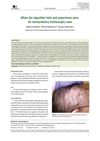
 This case study examined a 72-year-old woman with unique hair shaft constrictions consistent with monilethrix, despite features atypical for this condition, ultimately reaching a diagnosis that led to successful improvement using oral minoxidil and reduced hair trauma.
January 2024 in “Muller Journal of Medical Sciences and Research” This study found that trichoscopy was 73.77% concordant with histopathology in diagnosing patchy alopecia, highlighting its usefulness as a diagnostic tool for conditions like alopecia areata, lichen planus pigmentosus, and discoid lupus erythematosus.
 2 citations
,
July 2005 in “Baylor University Medical Center Proceedings”
2 citations
,
July 2005 in “Baylor University Medical Center Proceedings” This case report diagnosed a 4-year-old girl with trichotillomania after observation of her twirling and pulling her hair at the affected site.
December 2025 in “Al-Azhar International Medical Journal /Al-Azhar International Medical Journal” This study compared the diagnostic effectiveness of Folliscope and Trichoscope in 100 men with androgenetic alopecia, concluding that using both methods enhances diagnostic accuracy by providing complementary insights—Trichoscope highlights patterns while Folliscope offers objective measurements.
 5 citations
,
October 1988 in “Clinics in Dermatology”
5 citations
,
October 1988 in “Clinics in Dermatology” This article reviews various types of alopecia, their diagnostic features, and patterns, but presents no new clinical findings; the authors discuss multiple mechanisms and classification challenges.
December 2021 in “IP Indian journal of clinical and experimental dermatology” In this study, trichoscopy was identified as a useful non-invasive tool to aid in the diagnosis of female pattern hair loss, with peri pilar sign and hair diameter variability being common findings.
 32 citations
,
January 2014 in “Dermatology Research and Practice”
32 citations
,
January 2014 in “Dermatology Research and Practice” This study found that trichoscopy can rapidly and noninvasively diagnose tinea capitis and alopecia areata in pediatric patients by identifying specific hair patterns associated with each condition.
 February 2026 in “Medical Science and Discovery”
 In this case report, an 11-year-old boy with trichotillomania experienced significant reduction in hair-pulling behavior and visible hair regrowth after treatment with medications and psychological interventions, emphasizing the importance of early recognition and comprehensive management of this disorder.
 January 2022 in “Journal of Skin and Stem Cell”
 This review discusses trichodynia, its potential causes, and treatment options, but reports no new clinical findings.
 November 2023 in “International Journal of Trichology”
 In this study, researchers observed that trichoscopy could reliably identify features such as anisotrichosis and signs associated with inflammation and fibrosis in female pattern hair loss, which may aid in assessing disease severity and guiding treatment decisions.
 6 citations
,
October 2020 in “Journal of the European Academy of Dermatology and Venereology”
6 citations
,
October 2020 in “Journal of the European Academy of Dermatology and Venereology” This article introduces teletrichoscopy as a method for diagnosing hair disorders during the COVID-19 pandemic and reports no new clinical results.
June 2026 in “Facial Plastic Surgery Clinics of North America”  August 2021 in “Acta medica Philippina”
 This case study highlights how trichoscopy helped differentiate between diffuse alopecia areata and trichotillomania in an 11-year-old girl, demonstrating its importance in distinguishing hair disorders with similar presentations.