 March 2019 in “Journal der Deutschen Dermatologischen Gesellschaft”
 This clinical letter identifies Rothmund-Thomson syndrome type 2 as a rare cause of chronic wounds, but provides no new experimental findings.
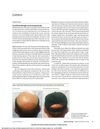 April 2016 in “JAMA Dermatology”
 This commentary highlights the importance of additional sun protection for individuals with alopecia, noting that common headwear like baseball caps may provide insufficient photoprotection for the scalp.
 January 2016 in “Archivio italiano di urologia, andrologia”
 This article reviews treatment-induced sexual dysfunctions related to 5-alpha-reductase inhibitors and reports no new results; it highlights the need to better define and understand this controversial topic.
 July 2013 in “British Journal of Dermatology”
 The document reviews key historical figures and discoveries in dermatology.
 February 2008 in “Vlaams dierengeneeskundig tijdschrift”
 In this case report, a pancreatic adenocarcinoma with liver and omentum metastases was found in a cat, whose clinical signs included anorexia, diarrhea, lethargy, and non-pruritic glistening alopecia.
 July 2004 in “British Journal of Dermatology”
 This paper summarizes the main findings presented in the plenary sessions of the British Journal of Dermatology, July 2004 issue, and provides no new research results.
 June 1998 in “Biomedicine & Pharmacotherapy”
 This document by the AACE and AES provides a 2015 summary of best practices for diagnosing and managing PCOS, emphasizing clinical assessment and treatment options but reports no new clinical results.
 May 1991 in “Current problems in dermatology”
 This article reviews the relationship between the skin and the immune system and discusses how skin manifestations can indicate immunodeficiencies but reports no new research findings.

A bald man grew hair on his head after taking a drug called diazoxide, but lost it again when he stopped the medication.
 March 2026 in “Medeniyet Medical Journal”
 This study found that hypoxia-conditioned mesenchymal stem cell exosomes increased GM-CSF and decreased IL-1 expression in a dose-dependent manner in a murine model, suggesting potential for treating androgenetic alopecia.
 December 2025 in “TURKDERM”
 This article discusses Trikostazis spinuloza (TS), a dermatological condition often misdiagnosed, and reviews its demographic, clinical, and dermoscopic features, but reports no new clinical results.
 December 2025 in “Uludağ Üniversitesi Tıp Fakültesi Dergisi”
 This study found that among medical students and doctors, 93.9% used social media, with 68.5% seeking information on cosmetic procedures, and women were more likely to be influenced by advertisements for non-surgical cosmetic treatments.
In this review, researchers highlighted the use of essential oils, praised for their antimicrobial and anti-inflammatory effects, in treating a variety of conditions, and noted their emerging role in dermocosmetics for issues like hyperpigmentation, acne, and skin aging.
 September 2025 in “Jinekoloji-Obstetrik ve Neonatoloji Tıp Dergisi”
 This review explores how fluctuations in female sex steroid hormone levels affect periodontal health in women, noting that collaboration between dentists and gynecologists may improve diagnosis and treatment of hormone-related periodontal conditions.
 August 2025 in “Fabad Journal of Pharmaceutical Sciences”
 This review highlights that bicalutamide, a non-steroidal antiandrogen used in prostate cancer treatment, is mainly effective through its (R)-enantiomer and emphasizes the need to monitor its adverse effects despite its targeted antiandrogenic action.
In this study, the authors emphasize the importance of accurately diagnosing congenital atrichia with papules—a condition marked by hair loss and papular skin lesions—differentiating it from other similar disorders to prevent unnecessary treatments and inform families about its benign but irreversible nature.
 January 2025 in “Turkiye Klinikleri Journal of Ophthalmology”
 This study of pilomatrixoma cases in children reveals that these benign tumors typically present as painless masses under the eyebrow and can be effectively treated with surgical excision, though rare rapid growth may occur.
 November 2024 in “Image Analysis & Stereology”
 This study introduced a novel, weakly supervised method for segmenting hair in Scanning Electron Microscope images using simple image-level annotations, achieving over 30% improvement in mean Hausdorff Distance compared to Unet and SAM, while enhancing interpretability and refinement.
 October 2024 in “Hippocrates Medical Journal”
 In this review, dermatological symptoms associated with various eating disorders, such as anorexia nervosa, bulimia nervosa, binge eating disorder, and pica, were examined, highlighting the potential role of dermatologists and psychiatrists in early diagnosis and interdisciplinary treatment approaches.
 July 2024 in “Dermatology Practical & Conceptual”
 This study found that patients with SARS-CoV-2 associated telogen effluvium experienced hair loss sooner after infection compared to telogen effluvium from other causes, with distinct dermoscopic findings aiding diagnosis.
 October 2023 in “Dermatologie pro praxi”
 This source outlines the autoimmune condition alopecia areata, discussing its unclear etiology, the significant psychological impact despite not being life-threatening, and the challenging nature of its treatment, which varies greatly among individuals. The article summarizes disease pathogenesis, prevention, and treatment options.
This research highlighted that AI-assisted surgical robots could significantly enhance surgical precision and efficiency by analyzing patient data, making real-time decisions, and automating repetitive tasks, thus potentially improving patient safety and surgical outcomes.

This article reviews various topics including medically important plants in dermatology, supporting medicinal herbs for primary dysmenorrhea, and several drug delivery systems, without providing new clinical findings.
 December 2022 in “Journal of Skin and Stem Cell”
 This article discusses how Indian ergonomics or yoga asanas can help hair transplantation surgeons maintain physical and mental fitness, but it reports no new clinical outcomes.
Vitamin D is crucial for skin health and managing skin diseases.
 December 2021 in “Turkderm”
 This research aims to evaluate the impact of the COVID-19 post-crisis period and normalization process on dermatology practice, suggesting implications for future healthcare challenges; no new results are reported.
 September 2021 in “Selçuk Üniversitesi Tıp Fakültesi dergisi”
 This abstract discusses the dermatological symptoms associated with hepatitis C virus infections but reports no new research findings.

This article reviews alopecia areata as a chronic autoimmune disease affecting hair follicles and discusses its association with other autoimmune conditions, but provides no new clinical findings.
 January 2021 in “Turkiye Klinikleri Journal of Dermatology”
 In this study, the MPV/PC ratio was identified as a potential tool for assessing disease activity in alopecia areata, with higher ratios in active and severe cases compared to inactive and mild/moderate ones.
 December 2020 in “TURKDERM”
 This case report describes a 3-year-old boy diagnosed with temporal triangular alopecia, emphasizing the importance of clinical and dermoscopic examination for correct diagnosis due to the condition's rarity and risk of misdiagnosis.