In this study, introducing the rat OTC gene into spf-ash mice led to increased OTC activity and normalized hair growth and biochemical markers like urinary orotic acid and serum citrulline, partially correcting the symptoms of OTC deficiency.
 60 citations
,
August 2008 in “Human molecular genetics online/Human molecular genetics”
60 citations
,
August 2008 in “Human molecular genetics online/Human molecular genetics” This study suggests that a position effect disrupting TRPS1 expression may be linked to hypertrichosis in both Ambras syndrome in humans and a similar phenotype in Koa mice.
 December 2023 in “American journal of medical genetics. Part A”
 In this study, researchers identified compound heterozygous variants in the MBTPS1 gene associated with ectodermal dysplasia features in a 14-year-old female, broadening the known disorder spectrum linked to these genetic mutations.
 9 citations
,
November 2019 in “Cell calcium”
9 citations
,
November 2019 in “Cell calcium” This study found that a mutation causing Stormorken syndrome in mice led to skeletal abnormalities and unusual hair growth, showcasing the STIM1 R304W protein’s role in bone development and cell fate.
 17 citations
,
June 2017 in “Gene”
17 citations
,
June 2017 in “Gene” This is the first report of the FOXN1 p.R255X mutation from India, demonstrating the global spread of this genetic mutation previously found only in an Italian community.
9 citations
,
June 2017 in “American journal of ophthalmology. Case reports” This case report identifies a novel CDH3 gene mutation associated with hypotrichosis with juvenile macular dystrophy in a 13-year-old Turkish girl, highlighting implications for future genetic analysis and counseling.
9 citations
,
November 2007 in “Blood” This study found that a mutation in the Tmprss6 gene disrupts hepcidin regulation, leading to iron deficiency and alopecia in mice, highlighting TMPRSS6's vital role in iron absorption.
21 citations
,
March 2015 in “Neurological Sciences” This study reports that a novel frameshift mutation in the HTRA1 gene in a CARASIL pedigree led to reduced HTRA1 protein and increased TGF-β1 expression, potentially causing severe CARASIL and peripheral small arterial disease.
15 citations
,
October 1976 in “Biochemical Journal” This study found that Naked trait mice exhibit a decrease in certain low-molecular-weight proteins in their hair, which contain high levels of glycine and tyrosine, compared to normal mice.
September 1997 in “Clinical and Experimental Dermatology” March 2026 in “Journal of Investigative Dermatology” 22 citations
,
December 2015 in “The journal of investigative dermatology/Journal of investigative dermatology” This study found that mice with a mutation in the Zdhhc13 gene exhibited increased susceptibility to skin cancer, highlighting a potential protective role of palmitoyl acyltransferase in skin carcinogenesis.
14 citations
,
February 1991 in “FEBS Letters” This study found that introducing rat ornithine transcarbamylase gene into spf-ash mice improved liver and intestinal enzyme activity and normalized some metabolic indicators.
68 citations
,
August 2009 in “American Journal of Medical Genetics Part A” This study systematically reviewed clinical findings in trichothiodystrophy patients and suggested a new clinico-genetic classification to help better understand the ichthyotic phenotype and its management.
11 citations
,
November 1991 in “Journal of Neuropathology & Experimental Neurology” This study found that brindled mottled mice, a model of Kinky hair syndrome, exhibited abnormal development of catecholamine neurons, with increased TH-immunoreactive neurons and altered neurochemical profiles compared to controls.
 6 citations
,
October 2012 in “Journal of Heredity”
6 citations
,
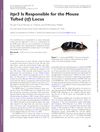
October 2012 in “Journal of Heredity” This study identified the Itpr3 gene as responsible for the tufted hair loss phenotype in the BTBR mouse strain.
36 citations
,
July 1996 in “The journal of investigative dermatology/Journal of investigative dermatology” This research reports a new autosomal recessive mutation in mice, 'lanceolate hair', causing generalized alopecia and hair shaft abnormalities, which may serve as a model for Netherton's syndrome in humans.
4 citations
,
May 1998 in “PubMed” This study found that the Bsk phenotype in mice did not result from a recombination event between specific keratin genes, leaving the gene linked to this mutation unidentified.
1 citations
,
April 2018 in “Journal of Investigative Dermatology” The Trichodysplasia spinulosa virus protein can cause abnormal hair growth in mice.
113 citations
,
June 2010 in “Biological Chemistry” This study found that mice deficient in the enzyme cathepsin L exhibited impaired degradation of autophagolysosomal content, leading to an accumulation of large, abnormal vesicles in various tissues.
12 citations
,
March 2012 in “JEADV. Journal of the European Academy of Dermatology and Venereology/Journal of the European Academy of Dermatology and Venereology” This study observed that some patients with homozygous c.736T>A mutation in LIPH may have mild hypotrichosis with long hairs in adulthood.
5 citations
,
July 1996 in “Journal of Cutaneous Medicine and Surgery” This study explains that while trichothiodystrophy and xeroderma pigmentosum share genetic defects, TTD patients primarily exhibit issues in transcription initiation, not the increased skin cancer risk seen in XP.
3 citations
,
January 2013 in “Dermatology” This study identified novel compound heterozygous mutations in the hairless gene among a non-consanguineous Chinese family with congenital atrichia, illustrating phenotypic variations due to founder or modifier genes.
179 citations
,
June 2000 in “The American journal of pathology” This study reports that the asebia-2J mutation in mice affects sebaceous gland function and leads to hair follicle destruction, offering a model for human scarring alopecias.
37 citations
,
August 1999 in “Journal of Investigative Dermatology” This study identified a nonsense mutation in the zinc-finger domain of the hairless gene associated with congenital atrichia in a Japanese family, indicating a potential genetic cause for this rare form of alopecia.
3 citations
,
January 2021 in “Molecular genetics & genomic medicine” In this study, novel mutations in the BTD gene were identified in a patient with profound biotinidase deficiency, highlighting the importance of biotinidase activity measurement and mutation analysis for early diagnosis.
 301 citations
,
May 1998 in “Genes & Development”
301 citations
,
May 1998 in “Genes & Development” Ets2 gene is crucial for placental development in mice.
54 citations
,
February 2002 in “Carcinogenesis” This study suggests that activation of polyamine catabolism in K6-SSAT transgenic mice may significantly increase skin tumor development and progression to carcinomas following chemical induction.
July 2002 in “Science s STKE” In this study, the researchers reported that altering β-catenin signaling in a transgenic mouse model led to changes in skin cell fate, notably converting hair follicle cells into epidermal cells and forming cysts instead of follicles.
10 citations
,
March 1997 in “Pediatric Dermatology” This case report describes a patient with trichothiodystrophy presenting with autism, mental retardation, and seizures, characterized by distinct hair abnormalities under microscopy.