 April 2026 in “Cosmetics”
 This study developed and tested a shampoo with semi-permanent dyes designed to gradually cover gray hair, reporting maintained stability and effective gray–black coloration on high-canities hair tresses through eight wash cycles.
 January 2023 in “Fashion and textiles”
 This study found that hair dyed with anionic basic hair dye lost more color after shampooing compared to cationic and nonionic dyes, with alkaline shampoo increasing this effect.
November 2016 in “University of the Arts London Research Online (University of the Arts London)” This study concluded that adding polymeric conditioning actives to shampoos improved color retention in permanently dyed hair, while additional cationic dyes at certain pH levels weakly dyed the hair directly.
84 citations
,
April 2015 in “Cosmetics” This review discusses various types of hair dyes, their mechanisms of action, molecular structures, application methods, and formulation aspects, but reports no new research findings.
 6 citations
,
March 2015 in “Journal of The American Academy of Dermatology”
6 citations
,
March 2015 in “Journal of The American Academy of Dermatology” This article discusses the diagnostic challenges of evaluating hair and scalp conditions in patients using hair dye, emphasizing how dyes can mimic different pathologies and lead to contact dermatitis.
 June 2026 in “Applied and Computational Engineering”
 This study reviewed the principles and classifications of hair dyes, identifying significant differences between oxidative, temporary non-oxidative, and semi-permanent non-oxidative dyes in terms of duration, application methods, and potential risks, which could help improve safety and convenience in hair dye use.
 November 2025 in “Zenodo (CERN European Organization for Nuclear Research)”
 This study examined how different hair dye processes affect hair structure at a molecular level, finding that oxidative dyes increase keratin porosity more than non-oxidative dyes, and highlighted emerging technology aimed at reducing hair damage while preserving color quality.
 November 2025 in “International Journal of Science and Research Archive”
 This study reviews how different hair dyeing methods affect hair structure, showing oxidative dyes cause more structural damage than semi-permanent dyes, while new technologies aim to minimize harm while preserving color.
 November 2025 in “Zenodo (CERN European Organization for Nuclear Research)”
 In this study, researchers investigated how different hair dye processes affect hair structure, finding that oxidative dyes disrupt hair more than semi-permanent dyes, and emerging technologies could help maintain hair health while achieving desired color.
December 2000 in “Kirk-Othmer Encyclopedia of Chemical Technology” This paper reviews various aspects of hair care products, including formulations, regulations, categories, and safety, without reporting new clinical findings.
January 1996 in “Journal of Society of Cosmetic Chemists of Japan” This article reports preliminary findings on developing a stable emulsion-based semi-permanent hair dye by optimizing emulsification methods, surfactants, and conditioning ingredients.
January 2014 in “한국미용학회지” This study observed that long-term UV-A exposure and semi-permanent dye treatment can cause significant structural damage to human hair, particularly affecting the cuticle and cortex layers.
2 citations
,
December 1988 in “PubMed” This study concluded that there was clear evidence of carcinogenic activity of C.I. Acid Orange 3 in female F344/N rats but not in male rats or B6C3F1 mice of either sex.
 1 citations
,
December 2022 in “Middle East Journal of Science”
1 citations
,
December 2022 in “Middle East Journal of Science” This review covers hair dye formulations, their mechanisms, and potential applications, but reports no new findings; the authors highlight the process of oxidative dyeing and repairing damaged hair.
 January 2025 in “International Journal of Advanced Research in Science Communication and Technology”
 Results are not reported for this study exploring how herbal hair dye, made from natural plant-based ingredients, might promote glossier, longer, and thicker hair while covering gray.
 40 citations
,
February 2002 in “International Journal of Dermatology”
40 citations
,
February 2002 in “International Journal of Dermatology” In this study, hair damaged by permanent dye showed signs of recovery over time, with near complete restoration to its original state after eight weeks.
 21 citations
,
October 2014 in “Actas dermo-sifiliográficas/Actas dermo-sifiliográficas”
21 citations
,
October 2014 in “Actas dermo-sifiliográficas/Actas dermo-sifiliográficas” This review discusses the role of hair dyes in cosmetic dermatology, their effects on hair and scalp health, and the importance of dermatologists understanding potential side effects; it reports no new findings.

This study evaluated various herbal blends of powdered leaves, including Henna and Indigo, for their coloring and sensitivity reactions, finding Henna and Indigo to be effective natural colorants for achieving a reddish-brown hair color with better retention than marketed herbal hair dyes.
 2 citations
,
September 2021 in “International Journal of Ayurvedic Medicine”
2 citations
,
September 2021 in “International Journal of Ayurvedic Medicine” In this study, most participants began using chemical hair dyes at a young age, experiencing adverse effects, but continued due to the perceived importance of hair color.
 April 2024 in “Pharmacognosy research”
 In this study, researchers developed a herbal hair dye using henna and other natural ingredients that achieved a color similar to natural black on blonde hair, though further testing on various hair shades is needed to explore its full benefits.
 3 citations
,
May 2020 in “Annals of the Academy of Medicine Singapore”
3 citations
,
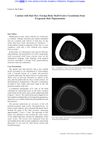
May 2020 in “Annals of the Academy of Medicine Singapore” Hair dye can cause serious scalp issues, including skull erosion.
 98 citations
,
November 2002 in “Contact Dermatitis”
98 citations
,
November 2002 in “Contact Dermatitis” This study found that adverse reactions to para-phenylenediamine in hair dye, including severe allergic contact dermatitis, may be more common than currently reported and often misdiagnosed.
 6 citations
,
December 2018 in “Medical principles and practice”
6 citations
,
December 2018 in “Medical principles and practice” This meta-analysis reported that individuals who frequently use hair dye or have used it for over 20 years have an increased risk of developing non-Hodgkin's lymphoma.
 1 citations
,
May 2023 in “Frontiers in medicine”
1 citations
,
May 2023 in “Frontiers in medicine” This review explores how hair dyes and perms can damage hair structure and notes that while some adverse outcomes like skin irritation and allergic reactions have been reported, evidence from human studies remains inconsistent regarding potential risks, including cancer.
 1 citations
,
July 2016 in “Cosmetics”
1 citations
,
July 2016 in “Cosmetics” This review highlights a case of cross sensitization to dyes from temporary henna tattoos and stresses the need for public awareness on the risks associated with these tattoos.
 July 2026 in “International Journal of Applied Pharmaceutics”
 This review discusses the dermatological and systemic adverse effects of hair dye use, particularly focusing on the common allergen para-phenylenediamine, and reports no new clinical data.
 December 2025 in “Applied and Computational Engineering”
 In this study, researchers explored the potential allergenicity and harmful effects of hair dyes, noting that adverse effects such as sensitization and potential carcinogenicity are not inevitable and can vary based on individual physiological differences.
 June 2021 in “Journal of emerging technologies and innovative research”
 This article reviews the potential hair-protective effects of Onion and Aloe vera against damage from hair dyes but reports no new experimental results.
 5 citations
,
June 2013 in “Fashion business”
5 citations
,
June 2013 in “Fashion business” This study found that adding rose hip extract to permanent wave solutions increased wave effectiveness and reduced hair damage, although variations in hair type may affect the results.
 12 citations
,
December 2017 in “Food and chemical toxicology”
12 citations
,
December 2017 in “Food and chemical toxicology” This study found that mixtures used in permanent hair dyes had irritant effects on reconstructed human epidermis, while individual ingredients alone did not.