 20 citations
,
February 2001 in “Dermatologic Surgery”
20 citations
,
February 2001 in “Dermatologic Surgery” This study reports that micropigmentation with iron oxide pigments is a safe and effective method for camouflaging scalp scars.
1 citations
,
May 2004 in “Hair transplant forum international” This piece outlines three aesthetic issues affecting patients after grafting but doesn't include any new results.
 December 2015 in “Dermatologic Surgery”
 Double trichophytic closure effectively repairs thin scalp scars, reducing financial burden.
 December 2025 in “Cureus”
 This study reports a case of traumatic anserine folliculosis in a young male, where treatment with topical retinoids and keratolytics combined with avoiding friction significantly improved symptoms after nine months.
January 2016 in “Georg Thieme Verlag eBooks” Understanding and careful application of dermabrasion and microdermabrasion can minimize risks and improve patient outcomes.
 26 citations
,
December 2013 in “Aesthetic Plastic Surgery”
26 citations
,
December 2013 in “Aesthetic Plastic Surgery” In this study, micropigmentation was reported to be an effective method for camouflaging hair loss and scalp scars in Korean patients, with high satisfaction in 42 out of 43 cases.
 4 citations
,
December 1992 in “The American Journal of Cosmetic Surgery”
4 citations
,
December 1992 in “The American Journal of Cosmetic Surgery” The modified S pattern for scalp reduction is effective for removing more bald scalp and hiding scars in hair restoration.
 1 citations
,
January 2008
1 citations
,
January 2008 This paper details the early stages of human scar regeneration using topical iodine and examines hair's role in the regeneration process, noting hair's ability to move freely and transport regenerative material.
 June 2026 in “Preprints.org”
 This review examines the mechanisms behind pathological scarring like hypertrophic scars and keloids, highlights the limitations of current treatments, and suggests that biomaterial-enabled delivery of anti-fibrotic statins, such as atorvastatin, may offer a promising therapeutic avenue for managing these scars.
28 citations
,
October 2024 in “Advanced Materials” This study reports that a new artificial skin system using multi-layered hydrogels can promote scarless wound healing and regenerate appendages like hair follicles without cell transplantation.
9 citations
,
July 1961 in “Journal of Investigative Dermatology” This study found that localized skin calcification could be induced in adult rats through dihydrotachysterol treatment combined with topical trauma, offering an experimental model for calcifying scleroderma.
 25 citations
,
January 2001 in “Facial Plastic Surgery”
25 citations
,
January 2001 in “Facial Plastic Surgery” This article reviews the history, methods, and complications of tissue expansion and serial excision for scar revision in the head and neck, and reports no new findings.
 June 2004 in “Dermatologic Surgery”
 The commentary suggests that using a single-scar technique for hair transplants can give good cosmetic results, but some surgeons hesitate to use it despite ways to address their concerns.
3 citations
,
January 2009 in “Medical Hypotheses” This study reports that topical iodine can initiate, control, and complete the regeneration of human scar tissue, with hair playing a key role in the process.
 October 2022 in “IntechOpen eBooks”
 This source highlights the challenges in treating cicatricial alopecia, noting that follicular unit extraction hair transplantation offers a minimally invasive and successful option to improve cosmetic outcomes for patients with permanent hair loss from scarring.

This case report describes a unique dermatologic condition called SCRATCH, occurring in a runner due to shirt friction, which resulted in clumped axillary hairs and temporary alopecia.
 28 citations
,
July 2013 in “Journal of Craniofacial Surgery”
28 citations
,
July 2013 in “Journal of Craniofacial Surgery” In this study, hair follicle transplantation on scars showed varied success rates, with burn scars achieving better results than incision scars, and often requiring multiple procedures for optimal outcomes.
36 citations
,
November 2011 in “Journal of the European Academy of Dermatology and Venereology” This study identified distinct microscopic characteristics of acne scars, including inflammatory infiltrates and insufficient collagen deposition, suggesting that treatment should consider these histopathological findings and employ combination therapy.
 3 citations
,
November 2018 in “PubMed”
3 citations
,
November 2018 in “PubMed” This study evaluated shaved style scalp medical tattoo (SMT) in individuals with advanced hair loss, reporting high patient and surgeon satisfaction scores.
August 2024 in “Skin Research and Technology” This report describes the diagnosis and treatment of traumatic anserine folliculosis in children, highlighting its distinct skin features and suggesting tretinoin cream as an effective remedy.
 November 2022 in “Archives of Plastic Surgery”
 This study found that follicular unit extraction is effective for treating scar alopecia after craniotomy, with better outcomes achieved when 1-year postoperative hair density exceeds 20 follicles per cm².
 November 2022 in “JAAD case reports”
 This case study reports a rare presentation of cutaneous sarcoidosis on the scalp, evidenced by scarring alopecia linked to non-caseating granulomas in a 48-year-old female with uveitis.
 January 2008 in “대한피부과학회지”
 This study found that micropigmentation effectively improved the cosmetic appearance of scalp and eyebrow scars in 94% of patients, with the pigments remaining safely in the superficial dermis after one year.
 39 citations
,
August 2005 in “Dermatologic surgery”
39 citations
,
August 2005 in “Dermatologic surgery” This review describes the expanding medical uses of micropigmentation, including for vitiligo, burn scars, and nipple-areola reconstruction, and highlights safety concerns related to sterilization practices.
81 citations
,
January 2000 in “American journal of clinical dermatology” Various treatments can improve post-acne scars, but results vary.
 8 citations
,
July 1984 in “The Journal of Dermatologic Surgery and Oncology”
8 citations
,
July 1984 in “The Journal of Dermatologic Surgery and Oncology” This study found that using a specific donor row configuration with suturing improves both short-term and long-term scarring, allowing 10-15% more grafts to be taken while maintaining finer donor scars.
10 citations
,
March 2001 in “Dermatologic Surgery” This article describes the ancient technique of sugaring for hair removal, highlighting its effectiveness in achieving hairless and exfoliated skin and noting its cost-effectiveness and practicality.
 June 1997 in “The American Journal of Cosmetic Surgery”
 This article discusses two donor site reharvesting methods that may allow further hair restoration sessions and improve donor scar aesthetics but reports no new clinical results.
 10 citations
,
May 2012 in “Journal of Plastic Reconstructive and Aesthetic Surgery”
10 citations
,
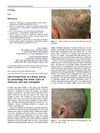
May 2012 in “Journal of Plastic Reconstructive and Aesthetic Surgery” This article discusses various methods for minimizing and repairing strip scars from follicular unit hair transplants but reports no new clinical results.
35 citations
,
October 2014 in “Wound Repair and Regeneration” This study developed a validated murine model of hypertrophic scar contraction, demonstrating similarities to human skin and observing graft contraction and tissue characteristics over time.