June 2025 in “Acta Dermato Venereologica” Low-dose Ritlecitinib may help children with stubborn Alopecia Areata.
 34 citations
,
July 2011 in “International journal of pharmaceutics”
34 citations
,
July 2011 in “International journal of pharmaceutics” This study found that ion-paired solutions significantly improved the skin penetration of risedronate in hairless mice compared to risedronate alone.
5 citations
,
June 2021 in “chemistry of plant raw material” This review provides information on the biological activity and chemical composition of various Rumex species, finding that some have pharmacological potential, but reports no new experimental results.
March 2008 in “Faculty Opinions – Post-Publication Peer Review of the Biomedical Literature” This study found that a positive feedback loop involving RHD2, reactive oxygen species, and calcium ions helps maintain root hair growth sites and influences cell shape in Arabidopsis thaliana.
May 2026 in “Dermatology and Therapy” This study reports that among adults with severe alopecia areata taking ritlecitinib, 49% saw hair regrowth within 3 months, increasing to 82% after more than 6 months; treatment satisfaction also rose with longer duration, indicating sustained efficacy and improved quality of life over time.
This case study reports a 60-year-old woman's clinical findings related to hypothyroidism and elevated prolactin levels but does not present new research results.
133 citations
,
November 2018 in “Aging” This study identified Azithromycin and Roxithromycin as novel senolytic antibiotics that effectively target and reduce senescent human fibroblast cells.
January 2026 in “Zenodo (CERN European Organization for Nuclear Research)” This document promotes an Erthwellness discount code that offers a 25% reduction on all their natural health products, without presenting any new research findings.
 6 citations
,
February 2016 in “British Journal of Dermatology”
6 citations
,
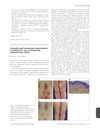
February 2016 in “British Journal of Dermatology” A woman with a drug allergy to anakinra was successfully desensitized, allowing her to continue treatment without allergic reactions.
 1 citations
,
March 2026 in “American Journal of Clinical Dermatology”
1 citations
,
March 2026 in “American Journal of Clinical Dermatology” In this Italian retrospective study, ritlecitinib 50 mg/day showed effectiveness and good tolerability for treating severe alopecia areata over 24 weeks, achieving significant hair regrowth particularly in adolescents, as well as improvements in eyebrows, eyelashes, nails, and quality of life, with mostly mild adverse effects.
 September 2026 in “Animals”
 This study found that Rex rabbits had significantly shorter fibre length and thinner fur compared to New Zealand White rabbits, and identified a gene-metabolite network that may influence fur quality and development.

This study by Arthritis Ireland highlights that individuals living with lupus in Ireland face widespread impacts on daily life, work, and mental health, with 70% experiencing frequent flares despite 93% being on medication; 45% also reported significant medication side effects.
September 2023 in “Journal of the American Academy of Dermatology” March 2026 in “SKIN The Journal of Cutaneous Medicine” This study found that ritlecitinib was well tolerated in children aged 6 to under 12 years with severe alopecia areata, with ongoing trials examining its efficacy and safety over a 24-week period and in long-term use up to 36 months.
210 citations
,
February 2008 in “Nature genetics” This study found mutations in the P2RY5 gene that are linked to autosomal recessive woolly hair in Pakistani families, implicating it in hair texture determination.
37 citations
,
September 2008 in “Plant Signaling & Behavior” In this study, overexpression of the gene OsPHR2 in rice led to increased root growth and phosphate accumulation in shoots, suggesting its role in phosphate signaling and homeostasis.
January 2026 in “Advanced Healthcare Materials” This study introduces a new multiaxial bioreactor system that uniformly stretches tissue-engineered skin grafts and improves skin tissue maturation through enhanced cellular distribution and environmental monitoring.
50 citations
,
April 2018 in “Cosmetics” This study found that a topical gel formulation containing rice water demonstrated in vitro antioxidant activity and elastase inhibition, suggesting its potential as an anti-aging skincare ingredient.
This study explored fermented rice water as a natural source of probiotics, finding that it contains beneficial microbes that may balance scalp microbiota, reduce dandruff, and support hair follicle health, offering a safe alternative to chemical treatments.
January 2025 in “Interdisciplinary Research in Medical Sciences Specialty” This article proposes a novel approach to remodel the microenvironment of radiotherapy-induced skin defects, highlighting the lack of a standardized animal model as a barrier to progress in this field.
 June 2025 in “Aesthetic Cosmetology and Medicine”
 This article reviews the potential uses of PDRN in regenerative and aesthetic medicine, noting promising results in various treatments but highlighting the need for further long-term studies to confirm their safety and effectiveness.
1 citations
,
January 2024 in “ACS Medicinal Chemistry Letters” This Patent Highlight discusses recent progress in developing TYK2 inhibitors, which show potential for treating conditions like cancer, alopecia areata, and psoriatic arthritis.
 6 citations
,
March 2016 in “PLoS ONE”
6 citations
,
March 2016 in “PLoS ONE” This study characterized hair from a patient with a ribosomopathy and identified distinct differences, including reduced hair thickness and lipid content, compared to family members.
21 citations
,
May 2024 in “American Journal of Medical Genetics Part A” This study observed that among patients with Myhre syndrome, those with the SMAD4 gene variant p.Arg496Cys experienced fewer symptoms like hearing loss, while those with the p.Ile500Thr variant often had severe aortic hypoplasia, highlighting the diverse symptom progression and genetic factors of this rare condition.
 1 citations
,
June 2018 in “Clinical and Investigative Medicine”
1 citations
,
June 2018 in “Clinical and Investigative Medicine” This article summarizes the 7th Annual Research Symposium of the Leaders in Medicine program at the University of Calgary, highlighting student research presentations and the program's goals, but reports no new research findings.
The researchers reported that yak hair fibers undergo macromolecular conformational changes and partial slippage of macromolecules during stretching, confirming this as the main stretching mechanism when the stretching ratio is large.
 November 2024 in “SKIN The Journal of Cutaneous Medicine”
 This study reports that ritlecitinib was prescribed to a diverse group of patients, including adolescents and adults with and without prior treatment for Alopecia Areata, in the first three months after FDA approval, potentially expanding care options for this condition.
July 2025 in “Journal of the European Academy of Dermatology and Venereology” This study reports no new findings but provides corrected figures for the long-term safety and efficacy of ritlecitinib in treating alopecia areata from the ALLEGRO-LT phase 3 study.
July 2025 in “SKIN The Journal of Cutaneous Medicine” This study describes characteristics and outcomes for adults initiating ritlecitinib for severe alopecia areata, highlighting increased hair regrowth and physician satisfaction with longer treatment durations, despite ongoing psychosocial impacts like embarrassment and anxiety among patients.
4 citations
,
November 2023 in “SKIN The Journal of Cutaneous Medicine” In this study, ritlecitinib, an oral JAK3/TEC inhibitor, was evaluated for safety in patients aged 12 and older with alopecia areata across four clinical trials up to 36 months, showing a safety profile with reported adverse events and lab abnormalities summarized per dosing groups.