 1 citations
,
March 2026 in “American Journal of Clinical Dermatology”
1 citations
,
March 2026 in “American Journal of Clinical Dermatology” In this Italian retrospective study, ritlecitinib 50 mg/day showed effectiveness and good tolerability for treating severe alopecia areata over 24 weeks, achieving significant hair regrowth particularly in adolescents, as well as improvements in eyebrows, eyelashes, nails, and quality of life, with mostly mild adverse effects.
March 2025 in “Journal of Investigative Dermatology” 15 citations
,
January 2025 in “Journal of the European Academy of Dermatology and Venereology” Ritlecitinib is effective and safe for treating alopecia areata, promoting significant hair regrowth.
June 2026 in “British Journal of Dermatology” This audit of ritlecitinib prescribing for severe alopecia areata found that regional practices largely followed national guidelines but highlighted the need for better psychological assessments and more consistent use of SALT scoring to inform treatment continuation decisions after 36 weeks.
 June 1997 in “The American Journal of Cosmetic Surgery”
 This article discusses two donor site reharvesting methods that may allow further hair restoration sessions and improve donor scar aesthetics but reports no new clinical results.
January 2026 in “Dermatologic Therapy” In this prospective study, ritlecitinib effectively reduced hair loss in patients with severe alopecia areata, with 43.3% of participants achieving a 20 or lower SALT score by week 24, and showed a good midterm safety profile.
 June 2026 in “Journal of health economics and outcomes research”
 In this study, researchers found that ritlecitinib 50 mg offered a lower cost per responder than baricitinib 2 or 4 mg at both 24 and 52 weeks for treating severe alopecia areata, suggesting potential implications for reimbursement or formulary decisions.
February 2026 in “The Journal of Dermatology” This study reports that ritlecitinib 50 mg, with or without an initial loading dose, demonstrated meaningful and sustained efficacy up to 24 months in the Asian subpopulation with severe alopecia areata, showing significant scalp, eyebrow, and eyelash hair regrowth, along with an acceptable safety profile.
February 2026 in “International Journal of Dermatology” In a single-center study, adolescents with moderate-to-severe alopecia areata treated with ritlecitinib 50 mg daily for 24 weeks showed significant hair regrowth, with 27.3% achieving near-complete regrowth and 45.5% substantial improvement, without serious safety concerns, according to these researchers.
 1 citations
,
January 2020 in “Research Square (Research Square)”
1 citations
,
January 2020 in “Research Square (Research Square)” This study found that inherited color dilution in Rex rabbit hair follicles is associated with DNA methylation changes, contributing to understanding the epigenetic regulation of rabbit pigmentation.
4 citations
,
September 2016 in “World Rabbit Science” This study observed that gene expression differences in Rex rabbits with varying wool densities suggest the involvement of specific genes and signaling pathways, including Shh and Eph, in hair follicle development.
 1 citations
,
June 2026 in “Dermato”
1 citations
,
June 2026 in “Dermato” This narrative review found that ritlecitinib shows consistent effectiveness and a favorable safety profile for treating alopecia areata in clinical trials and real-world settings, with progressive hair regrowth observed, particularly when treatment is initiated early and maintained appropriately.
11 citations
,
November 1948 in “Journal of Dairy Science” In this study, riboflavin deficiency symptoms were observed in Guernsey calves fed radiated milk, but adding riboflavin improved growth and health, indicating its essential dietary need for young calves.
6 citations
,
March 2024 in “SKIN The Journal of Cutaneous Medicine” In this ongoing phase 3 study, ritlecitinib demonstrated sustained efficacy up to 24 months in patients aged 12 or older with alopecia areata, showing increased response rates with or without an initial loading dose and supporting its long-term use.
 37 citations
,
January 2023 in “Ophthalmology and Therapy”
37 citations
,
January 2023 in “Ophthalmology and Therapy” In this study, more than 25% of children experienced axial length shortening greater than 0.05 mm/year following repeated low-level red-light therapy.
5 citations
,
August 1925 in “Archives of dermatology” This article presents a case of an 8-year-old boy with Recklinghausen's disease showing features such as café-au-lait spots, alopecia, and developmental anomalies, but reports no new findings beyond observation.
1 citations
,
January 2025 in “OALib” This study found that injecting Platelet-Rich Plasma into the anastomotic line during low anterior resection for rectal cancer eliminated anastomotic leakage, reducing its incidence from 13.3% in the control group to 0% in the PRP group.
 1 citations
,
July 2025 in “SKIN The Journal of Cutaneous Medicine”
1 citations
,
July 2025 in “SKIN The Journal of Cutaneous Medicine” In this study, ritlecitinib 50-mg showed clinically meaningful efficacy, with improvements in the Severity of Alopecia Tool score observed in patients with alopecia areata over a 3-year period, demonstrating long-term benefit in both clinician- and patient-reported outcomes.
 June 2020 in “The journal of investigative dermatology/Journal of investigative dermatology”
 This pilot study suggests that a new preparation of platelet-rich plasma gel may improve symptoms and tissue regeneration in patients with en coup de sabre scleroderma, though further trials are needed to clarify its role.
3 citations
,
November 2023 in “Journal of Investigative Dermatology” Over 45% of patients with alopecia areata benefit from ritlecitinib, mostly within a year.
November 2025 in “Journal of Investigative Dermatology” Ritlecitinib effectively treats severe Alopecia Areata by reducing harmful immune activity in the skin.
June 2026 in “British Journal of Dermatology” This study evaluated the real-world use of ritlecitinib for severe alopecia areata in the UK, reporting that 37% of patients achieved significant hair regrowth by week 36, with no serious adverse effects noted, although response varied with disease duration.
July 2026 in “Journal of the American Academy of Dermatology” November 2025 in “SKIN The Journal of Cutaneous Medicine” This study observed that adolescents with alopecia areata receiving ritlecitinib 50 mg daily showed notable hair regrowth over three years, as seen in both clinician- and patient-reported outcomes. However, the decreased number of participants at later stages limits the findings.
December 2025 in “The Journal of Dermatology” This study reported that ritlecitinib effectively improved hair regrowth in JAK inhibitor-naïve adolescent patients with severe alopecia areata, achieving significant reductions in SALT scores within 24 weeks, but was less effective for patients who had previously been treated with baricitinib.
419 citations
,
May 2002 in “British journal of dermatology/British journal of dermatology, Supplement” This study reports cases of arterial embolization occurring due to the injection of hyaluronic acid (Restylane®).
1 citations
,
January 2023 in “Frontiers in genetics” This study identified specific genetic markers related to wool quality in Rambouillet sheep, which may aid breeders in making informed selection and breeding decisions for improved fine wool production.
 November 2024 in “SKIN The Journal of Cutaneous Medicine”
 This study found that ritlecitinib, taken daily, led to scalp, eyebrow, and eyelash hair regrowth in patients aged 12 and older with severe and very severe alopecia areata over a 24-month period.
5 citations
,
February 2025 in “Pediatric Dermatology” In this study, ritlecitinib was generally well tolerated in pediatric alopecia areata patients aged 6 to <12 years, with no severe or serious adverse events reported, and the drug's pharmacokinetic parameters were successfully characterized.
 13 citations
,
August 2007 in “Bioorganic & medicinal chemistry letters”
13 citations
,
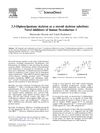
August 2007 in “Bioorganic & medicinal chemistry letters” This study developed a new competitive 5alpha-reductase inhibitor with an IC(50) of 0.84 microM using a novel chemical structure.