 October 2000 in “Pediatrics in Review”
 This report describes a case in which poststreptococcal reactive arthritis in a girl was effectively treated with naproxen, and highlights the importance of considering nongroup A Streptococcus in similar presentations.
56 citations
,
March 2003 in “Journal of Investigative Dermatology” This study found that 17β-estradiol inhibited RANTES production in human keratinocytes by suppressing nuclear factor κB activity, suggesting a potential mechanism for 17β-estradiol's modulation of psoriasis-related inflammation.
 10 citations
,
October 2015 in “Journal of the International Association of Providers of AIDS Care”
10 citations
,
October 2015 in “Journal of the International Association of Providers of AIDS Care” This case report describes a severe form of HIV-associated pityriasis rubra pilaris in a dark-skinned woman that improved rapidly and sustainably with combination antiretroviral therapy, despite atypical presentation without significant erythroderma.
 8 citations
,
January 2007 in “International journal of experimental pathology”
8 citations
,
January 2007 in “International journal of experimental pathology” This study observed that hairless HRS/J mice were resistant to Bacillus anthracis infection at the skin's surface, suggesting resistance may be due to increased dermal neutrophils rather than non-functional hair follicles.
March 2004 in “Journal of Investigative Dermatology” Razor bumps are linked to a genetic variant, misoprostol helps erythromelalgia pain, steroid ointments don't affect skin rhythms, and certain antibodies are common in localized scleroderma.
 2 citations
,
July 2008 in “Hair transplant forum international”
2 citations
,
July 2008 in “Hair transplant forum international” This article highlights the increasing impact of methicillin-resistant Staphylococcus aureus as the most significant multi-drug-resistant organism affecting surgical settings, but reports no new experimental results.
 August 2012 in “Nature Cell Biology”
 In this study, researchers found that β-catenin directly promotes TERT expression in stem and cancer cells by interacting with the Tert promoter, illustrating a mechanistic link between tumorigenesis and pluripotency.
 129 citations
,
November 2005 in “Internal Medicine Journal”
129 citations
,
November 2005 in “Internal Medicine Journal” This article reviews the recognition and management of Staphylococcus aureus toxin-mediated diseases, but it does not present new research findings.
September 2022 in “European Journal of Dermatology” This study identified a novel pathogenic splice-site variant of the LAMB3 gene in patients with junctional epidermolysis bullosa, highlighting the importance of gene sequencing for diagnosis.
1 citations
,
April 2014 in “Journal of the Korean Society of Food Science and Nutrition” This study found that unripe Rubus occidentalis extracts may inhibit benign prostatic hyperplasia development in a rat model by reducing prostate weight and androgen-related gene expression.
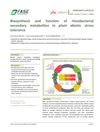 November 2025 in “Frontiers of Agricultural Science and Engineering”
 This study observed that rhizobacterial strain RT3 significantly improved drought tolerance in lettuce by increasing survival rates and fresh biomass after rewatering, with metabolites such as proline and glycine enhancing stress resilience.
34 citations
,
August 2015 in “Frontiers in Behavioral Neuroscience” This study found that augmenting or reducing allopregnanolone activity in the BNST affected contextual fear expression in rats, suggesting sex differences in anxiety may be linked to neuroactive steroid regulation.
 8 citations
,
January 2009 in “Journal of pediatric endocrinology & metabolism/Journal of pediatric endocrinology and metabolism”
8 citations
,
January 2009 in “Journal of pediatric endocrinology & metabolism/Journal of pediatric endocrinology and metabolism” This study reports a novel TRbeta gene mutation associated with resistance to thyroid hormone syndrome, which may contribute to various forms of alopecia in the affected family members.
36 citations
,
December 2021 in “The journal of allergy and clinical immunology/Journal of allergy and clinical immunology/The journal of allergy and clinical immunology” This study observed that both ritlecitinib and brepocitinib improved scalp biomarkers in patients with alopecia areata, with associations to hair regrowth seen in this phase 2a trial.
December 2018 in “Bioscience Journal” This study reports the first known occurrence of Leporacarus gibbus infestation alongside Cheyletiella parasitovorax and Psoropotes cuniculi in a domestic rabbit in Espírito Santo, Brazil.
February 2025 in “Journal of Paediatrics and Child Health” In this case report, a late preterm male infant presented with a pathogenic TP63 gene variant, consistent with Rapp-Hodgkin Syndrome, showing symptoms such as ichthyosiform erythroderma, cleft palate, and ankyloblepharon, highlighting the complex management and diagnostic challenges in such cases.
 September 2024 in “Cermin Dunia Kedokteran”
 This article reviews Frambusia, a skin-contact-spread tropical infection, and stresses improving medical professionals' diagnostic and treatment skills to achieve the WHO's eradication target by 2030, without reporting new results.
 April 2023 in “The journal of investigative dermatology/Journal of investigative dermatology”
 This study found that treatment with ritlecitinib led to significant scalp hair regrowth in patients with alopecia areata at Weeks 24 and 48, with higher response rates observed in those receiving 50 mg compared to 30 mg doses.
9 citations
,
August 1980 in “Journal of Cutaneous Pathology” This study found that Rhodamin B staining of keratin was inconsistent across normal skin, epithelial tumors, and dermatoses, with notable differences in staining intensity between tricho-hyalin and keratohyalin granules.
 January 2024 in “Genetics in Medicine Open”
 This case study of a patient with a variant in the extracellular region of IL6ST suggests a potential expansion of the phenotypic spectrum for autosomal dominant hyper-IgE syndrome, warranting further investigation.
June 2025 in “Acta Dermato Venereologica” Low-dose Ritlecitinib may help children with stubborn Alopecia Areata.
8 citations
,
December 2019 in “Molecular genetics and metabolism reports” This study found that early biochemical screening and molecular confirmation are crucial for distinguishing profound from partial biotinidase deficiency, which supports timely treatment and management in symptomatic children.
 3 citations
,
January 2019 in “Journal of Dermatology”
3 citations
,
January 2019 in “Journal of Dermatology” This letter to the editor discusses the natural course of epidermolysis bullosa simplex with mottled pigmentation in a Japanese family but does not present new clinical results.
2 citations
,
October 2016 in “OPAL (Open@LaTrobe) (La Trobe University)” This study reports that the Swedish newborn screening program for phenylketonuria, galactosaemia, and biotinidase deficiency is effective, with high sensitivity and specificity, and lower false positive rates compared to other countries, while genetic variants impact detection and incidence patterns in Sweden.
This case report describes a six-year-old child with congenital biotinidase deficiency whose symptoms, including breathlessness, alopecia, and hearing loss, were reversed with biotin supplementation.
November 2024 in “Skin Appendage Disorders” This review provides insights and guidelines for clinicians and patients on assessing the risks and benefits of ritlecitinib for adolescents with alopecia areata, emphasizing shared decision-making and management strategies.
 36 citations
,
July 2014 in “Neuromuscular Disorders”
36 citations
,
July 2014 in “Neuromuscular Disorders” This study investigated a patient with spinal and bulbar muscular atrophy who had 68 CAG repeats, revealing early onset and unique symptoms not previously documented in the condition.
7 citations
,
July 2023 in “Immunotherapy” Ritlecitinib works well and is safe for treating alopecia areata.
 75 citations
,
October 2010 in “Mammalian genome”
75 citations
,
October 2010 in “Mammalian genome” In this study, specific genetic polymorphisms in the KRT71 gene were associated with hairless and curly phenotypes in Sphynx and Devon Rex cats.
20 citations
,
December 2021 in “Journal of the American Academy of Dermatology” This study found that the oral JAK inhibitors ritlecitinib and brepocitinib were effective in maintaining hair regrowth in alopecia areata with continuous use, though efficacy decreased after withdrawal.