January 2024 in “Pharmaceutical journal/The pharmaceutical journal” In this report, NICE has approved ritlecitinib, an oral kinase inhibitor, as the first recommended treatment for severe alopecia areata in individuals aged 12 and older.
23 citations
,
October 2024 in “British Journal of Dermatology” In this study, ritlecitinib showed sustained effectiveness and a favorable safety profile in treating alopecia areata in patients aged 12 and older over 24 months, with improvements observed in hair and eyebrow regrowth and patient satisfaction.
3 citations
,
March 2025 in “Journal of Clinical Medicine” This study found that Ritlecitinib significantly reduced hair loss in patients with alopecia areata by lowering SALT scores at weeks 12 and 24 compared to placebo, with acceptable safety but increased minor side effects like headaches and acne.
January 2026 in “Dermatologic Therapy” This study found that elevated tissue RBP4 levels correlate with disease severity in alopecia areata and decrease after effective baricitinib treatment, while the rs3758539 polymorphism is linked to disease susceptibility but not to treatment response.
 November 2023 in “JEADV Clinical Practice”
 In this study, adults with severe alopecia areata experienced greater improvements in hair regrowth, health-related quality of life, and reduced anxiety and depression symptoms after 36 weeks of treatment with baricitinib compared to placebo.

Baricitinib helps regrow hair in teens with severe alopecia areata.
June 2025 in “Acta Dermato Venereologica” Low-dose Ritlecitinib may help children with stubborn Alopecia Areata.
 9 citations
,
March 2018 in “JEADV. Journal of the European Academy of Dermatology and Venereology/Journal of the European Academy of Dermatology and Venereology”
9 citations
,
March 2018 in “JEADV. Journal of the European Academy of Dermatology and Venereology/Journal of the European Academy of Dermatology and Venereology” This article is a letter to the editor discussing positive Jacquet's sign in traction alopecia and provides no new research results.
October 2024 in “BMJ Case Reports” This case report describes a patient with both rheumatoid arthritis and alopecia areata who showed improvement in both conditions after treatment with baricitinib monotherapy, highlighting the importance of personalized treatment approaches in managing co-occurring autoimmune diseases.
189 citations
,
July 2000 in “American Journal of Botany” In this study, wild-type Arabidopsis thaliana with responsive root hairs efficiently acquired phosphorus under low-phosphorus conditions compared to mutants, suggesting an adaptive advantage in nutrient-limited environments.
 December 2024 in “Clinical and Experimental Dermatology”
 In this study, researchers found that ritlecitinib, a JAK3/TEC inhibitor, significantly improves hair regrowth, quality of life, and psychological well-being in patients with severe alopecia areata who had inadequate or no response to baricitinib, a JAK1/2 inhibitor.
 January 2020 in “Journal of Current Medical Research and Practice”
 In this study, trichoscopy was found to be helpful in diagnosing the types of noncicatricial alopecia, and alopecia's negative impact on quality of life was highlighted through the correlation with clinical severity.
January 2018 in “Indian Dermatology Online Journal” This case report describes a rare instance of Olmsted syndrome with hypotrichosis in a 5-year-old boy, noting mild improvement in symptoms following treatment with oral acitretin and other interventions.
March 2025 in “Journal of Investigative Dermatology” 45 citations
,
January 2013 in “Dermatology Research and Practice” This study found that patients with alopecia areata experience significantly poorer quality of life compared to the general population, affecting mental health, social functioning, and overall health outcomes.
 June 2024 in “Dermatology and Therapy”
 In this study, patients with alopecia areata who experienced sustained hair regrowth while being treated with baricitinib showed improvements in health-related quality of life and reductions in anxiety and depression symptoms over 104 weeks, according to the BRAVE-AA phase III trials.
Ritlecitinib significantly regrows scalp hair in people with alopecia areata.
15 citations
,
April 1960 in “Journal of the American Medical Association” This article discusses cultural perspectives on hirsutism and hypertrichosis and reports no new clinical results.
11 citations
,
January 2015 in “Modern Chemistry & Applications” This study found hirsutism negatively affects quality of life and psychological wellbeing in women, suggesting effective medical treatment alongside psychotherapy might better address these issues than psychotherapy alone.
 October 2021 in “Meditsinskiy sovet = Medical Council”
 This study found that cyproterone acetate treatment improved quality of life and reduced anxiety and depressive symptoms in women with skin manifestations of hyperandrogenism.

The text is about acne, excessive hair growth, and hair loss due to hormones.
49 citations
,
February 2022 in “Drug Design Development and Therapy” This study found that treatment with ritlecitinib improved hair regrowth in alopecia areata patients, with many achieving significant results after 24 weeks compared to placebo.
3 citations
,
November 2023 in “Journal of Investigative Dermatology” Over 45% of patients with alopecia areata benefit from ritlecitinib, mostly within a year.
 13 citations
,
January 2011 in “International Journal of Trichology”
13 citations
,
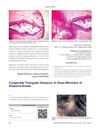
January 2011 in “International Journal of Trichology” CTA is often mistaken for AA but doesn't respond to steroids and may require hair transplantation.
 April 2018 in “The journal of investigative dermatology/Journal of investigative dermatology”
 This study found that in a mouse model of Focal Dermal Hypoplasia, treatment with lithium carbonate improved skin disease symptoms compared to controls, though disease severity varied and posed interpretation challenges.
 52 citations
,
May 2003 in “The journal of investigative dermatology/Journal of investigative dermatology”
52 citations
,
May 2003 in “The journal of investigative dermatology/Journal of investigative dermatology” This study found that overexpression of parathyroid hormone-related protein in mice resulted in 30–40% shorter hair due to premature transition into the catagen phase of the hair cycle.
 November 2024 in “Medicina”
 This case report details a unique instance of pityriasis rubra pilaris affecting only the scalp, highlighting novel trichoscopic features and emphasizing the importance of recognizing this rare presentation for improved diagnosis and treatment.
July 2025 in “Journal of the European Academy of Dermatology and Venereology” This study reports no new findings but provides corrected figures for the long-term safety and efficacy of ritlecitinib in treating alopecia areata from the ALLEGRO-LT phase 3 study.
 October 2024 in “Journal of the European Academy of Dermatology and Venereology”
 This study reported that ritlecitinib 50 mg and baricitinib 4 mg showed similar efficacy in treating severe alopecia areata, with no significant difference in hair regrowth outcomes at Week 24, but there remains considerable uncertainty and a need for further research.
 1 citations
,
July 2022 in “British Journal of Dermatology”
1 citations
,
July 2022 in “British Journal of Dermatology” Baricitinib was effective in treating hair loss in adults with alopecia areata according to patient feedback.