35 citations
,
May 2006 in “Journal of Investigative Dermatology” Monilethrix involves multiple genes affecting hair structure, including DSG4 mutations.
 20 citations
,
July 2013 in “European Journal of Oral Sciences”
20 citations
,
July 2013 in “European Journal of Oral Sciences” This study found a novel PAX9 gene mutation that may cause tooth agenesis and trichodysplasia in a studied family.
 May 2024 in “Frontiers in medicine”
 In this study, a 3-year-old Japanese child with autosomal recessive woolly hair was found to have a distinctive irregular and rough cuticle on the hair shaft, along with a homozygous pathogenic LIPH variant, suggesting a critical role for genetic analysis in understanding rare hair conditions.
 94 citations
,
July 2020 in “European Journal of Human Genetics”
94 citations
,
July 2020 in “European Journal of Human Genetics” This article provides guidelines for molecular genetic testing of congenital adrenal hyperplasia due to 21-hydroxylase deficiency, focusing on quality requirements, methodologies, and variant classification; it reports no new clinical results.
 65 citations
,
February 2009 in “The journal of investigative dermatology/Journal of investigative dermatology”
65 citations
,
February 2009 in “The journal of investigative dermatology/Journal of investigative dermatology” This paper discusses the hypothesis that anti-acne agents may work by reducing FGFR2 signaling, and emphasizes FGFR2's potential role in acne pathogenesis, but it reports no new experimental findings.
 53 citations
,
August 2019 in “American journal of human genetics”
53 citations
,
August 2019 in “American journal of human genetics” This study found that FOXN1 haploinsufficiency is a significant genetic factor causing T cell lymphopenia at birth, linked to reduced thymic function in both humans and mice.

research Acne
2 citations
,
May 2011 in “Harper's Textbook of Pediatric Dermatology” Acne is a common skin condition linked to diet, hormones, and genetics, and early treatment can prevent scarring.
 December 2025 in “Frontiers in Medicine”
 This review details the global mutation patterns of genes associated with autosomal recessive woolly hair/hypotrichosis and highlights potential, yet unproven, treatments like minoxidil and regenerative therapies, reporting no new clinical results.
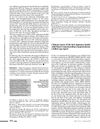 May 2018 in “European Journal of Dermatology”
 The first Japanese family with Marie Unna hereditary hypotrichosis showed hair condition improvement in a child and highlighted the risk of misdiagnosis.
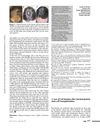 May 2018 in “European Journal of Dermatology”
 Adjusting the medication tacrolimus resolved a boy's red nail beds after a stem cell transplant.
53 citations
,
May 1996 in “The Journal of Clinical Endocrinology & Metabolism” This study identified multiple mutations in the 5 alpha-reductase-2 gene among male pseudohermaphrodites in the Dominican Republic, suggesting they do not share a common ancestry.
5 citations
,
February 2022 in “Molecular genetics & genomic medicine” This study identified genetic variants in the DSG4 gene associated with the autosomal recessive form of monilethrix in Chinese patients, expanding the understanding of its phenotypic spectrum and clinical features.
 26 citations
,
July 2019 in “Dermatology and Therapy”
26 citations
,
July 2019 in “Dermatology and Therapy” This article discusses genetic hair disorders in children, outlining diagnostic approaches and highlighting the significance of distinguishing isolated hair defects from those associated with syndromes, but it reports no new clinical results.
2 citations
,
September 2024 in “Asian Journal of Andrology” In a retrospective cohort of patients with steroid 5 α-reductase 2 deficiency, this study identified seven novel genetic variants in the SRD5A2 gene, expanding the variant database and contributing to improved diagnostic and therapeutic approaches for the condition.
July 2025 in “Human Genomics” This source reports that a comprehensive review of LSS gene variant phenotypes enhances understanding of congenital hypotrichosis 14 and could guide more precise genetic counseling and future research into disease mechanisms and potential therapies.
 January 2025 in “Clinical Cosmetic and Investigational Dermatology”
 This article reports the first documented cases of Marie-Unna hereditary hypotrichosis in Egypt, highlighting the variability of genetic mutations in this rare form of congenital hair loss.
In this study, a newly designed protein degrader targeting androgen receptors showed promise in reversing hair regrowth inhibition in a mouse model of androgenetic alopecia, suggesting potential as a novel and safe treatment strategy.
 March 2011 in “European Urology Supplements”
 Gene variation affects prostate issues and hair loss.
August 2026 in “Ebers Papyrus” This study concluded that allele-specific PCR (AS-PCR) is more reliable than tetra-primer ARMS-PCR for genotyping the SNP rs1998076 due to better stability and interpretability.
 September 2024 in “Journal of Medicine and Life”
 In this study, researchers identified a recurrent nonsense mutation, c.409C>T (p.Arg137*), in the COL7A1 gene through whole exome sequencing in a family with autosomal recessive dystrophic epidermolysis bullosa, demonstrating the importance of this method for diagnosing genetically complex conditions.
 76 citations
,
April 2005 in “Cancer Epidemiology, Biomarkers & Prevention”
76 citations
,
April 2005 in “Cancer Epidemiology, Biomarkers & Prevention” This study found that the AR-E211 A allele is associated with a lower risk of both metastatic prostate cancer and androgenetic alopecia in an Australian population.
 16 citations
,
September 2014 in “International Journal of Biological Markers”
16 citations
,
September 2014 in “International Journal of Biological Markers” This study found that the less common CAG-rs4045402 and GGN-rs3138869 polymorphisms were more frequent in patients with post-finasteride syndrome and androgenetic alopecia, suggesting a genetic predisposition to AGA development.
April 2023 in “Journal of Investigative Dermatology” In this study, a novel AR protein degrader was shown to reverse DHT-induced hair regrowth delay in a mouse model of androgenetic alopecia, with minimal circulation and potential side effects.
August 2022 in “Dermatologic Therapy” This letter discusses the use of the 2940 nm Er: YAG fractional laser for male androgenetic alopecia but provides no new clinical findings.
May 2026 in “Journal of Medicinal Chemistry” In this study, the authors developed a novel PROTAC named dAR-6–1, which demonstrated superior hair regeneration in an AGA mouse model compared to minoxidil, highlighting its promise as a therapy due to potent AR degradation and excellent skin permeability.
January 2026 in “SSRN Electronic Journal” 
This study found that arginine deficiency in androgenetic alopecia patients is linked to increased oxidative stress and impaired hair follicle regeneration, with targeted arginine supplementation showing promise as a therapeutic strategy.
January 2002 in “映像情報メディア学会技術報告” This study found that 60% of examined prostate tumors had new somatic substitutions in the SRD5A2 gene, affecting enzyme activity and potentially influencing prostate cancer progression.
January 2026 in “OSF Preprints (OSF Preprints)” In this study, researchers presented a novel therapeutic approach for androgenetic alopecia combining AR-PROTAC degradation with regenerative strategies and evaluated the potential of GT20029 as a topical treatment, proposing a three-phase protocol and future research hypotheses.