 58 citations
,
September 2012 in “Dermatologic Clinics”
58 citations
,
September 2012 in “Dermatologic Clinics” This article reviews current knowledge on the causes, diagnosis, and medical treatments for androgenetic alopecia, particularly in men, and reports no new findings.
 57 citations
,
January 1986 in “The Prostate”
57 citations
,
January 1986 in “The Prostate” This article discusses the role of dihydrotestosterone in human prostatic adenocarcinoma growth and suggests that 6-methyleneprogesterone could be used to inhibit DHT for treating hormone-responsive prostate cancer, without new clinical findings.
 54 citations
,
October 2019 in “Cochrane library”
54 citations
,
October 2019 in “Cochrane library” This study found low- to very low-quality evidence suggesting that several pharmacological treatments, including alpha blockers and antibiotics, may reduce prostatitis symptoms without significantly increasing adverse events in the short term, although more rigorous trials are needed.
 54 citations
,
April 2010 in “Baillière's best practice and research in clinical endocrinology and metabolism/Baillière's best practice & research. Clinical endocrinology & metabolism”
54 citations
,
April 2010 in “Baillière's best practice and research in clinical endocrinology and metabolism/Baillière's best practice & research. Clinical endocrinology & metabolism” This review discusses 46,XY disorders of sex development caused by defects in androgen production and highlights the need for long-term care from experienced multidisciplinary teams, but it reports no new clinical findings.
 54 citations
,
June 1985 in “American Journal of Dermatopathology”
54 citations
,
June 1985 in “American Journal of Dermatopathology” This abstract does not provide specific findings or results.
 53 citations
,
February 2020 in “Expert Opinion on Pharmacotherapy”
53 citations
,
February 2020 in “Expert Opinion on Pharmacotherapy” This review discusses pharmacologic and non-pharmacologic treatments for androgenetic alopecia, noting that current medications like finasteride and minoxidil can slow hair loss but only partially restore hair growth, with early treatment offering better outcomes.
 51 citations
,
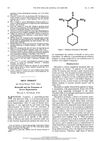
October 1980 in “The New England Journal of Medicine”
51 citations
,
October 1980 in “The New England Journal of Medicine” Minoxidil lowers blood pressure effectively but may cause unwanted hair growth and other side effects.
 50 citations
,
September 2016 in “The Journal of Clinical Endocrinology and Metabolism”
50 citations
,
September 2016 in “The Journal of Clinical Endocrinology and Metabolism” This study found no evidence of androgen deficiency or decreased peripheral androgen action in men with persistent sexual symptoms after finasteride use, but identified links to depressed mood and abnormal brain function.
 50 citations
,
July 2014 in “International Journal of Clinical Pharmacology and Therapeutics”
50 citations
,
July 2014 in “International Journal of Clinical Pharmacology and Therapeutics” This study found that both topical and oral finasteride significantly reduced plasma DHT after one week, with lower finasteride plasma exposure for the topical formulation.
 48 citations
,
February 2025 in “Nano-Micro Letters”
48 citations
,
February 2025 in “Nano-Micro Letters” This review summarizes the application of microneedles in treating various skin diseases and highlights challenges like low drug loading, noting no new clinical results are reported.
 45 citations
,
January 2008 in “Drugs”
45 citations
,
January 2008 in “Drugs” This study found that dutasteride effectively improved urinary symptoms, reduced acute urinary retention risk, and decreased prostate volume in men with moderate to severe BPH over two years.
 41 citations
,
September 2014 in “JAMA Facial Plastic Surgery”
41 citations
,
September 2014 in “JAMA Facial Plastic Surgery” This review discusses current medical and surgical treatments for androgenetic alopecia, highlighting the use of finasteride and minoxidil for men and the role of hair transplantation techniques, without providing new clinical results.
 41 citations
,
October 2011 in “Journal of Dermatology”
41 citations
,
October 2011 in “Journal of Dermatology” This study observed that long-term use of finasteride in Japanese men with androgenetic alopecia was associated with progressive hair regrowth in 87.1% of participants without significant safety concerns.
 38 citations
,
July 2012 in “international journal of endocrinology and metabolism”
38 citations
,
July 2012 in “international journal of endocrinology and metabolism” This review discusses the clinical use of anti-androgen medications and highlights emerging evidence supporting plant-derived anti-androgens like spearmint tea for managing PCOS, but reports no new clinical results.
 38 citations
,
June 2003 in “Journal of Investigative Dermatology Symposium Proceedings”
38 citations
,
June 2003 in “Journal of Investigative Dermatology Symposium Proceedings” This review summarizes existing research on the use of finasteride for treating androgenetic alopecia in men, reporting its effectiveness at 1 mg/day and a strong safety profile, but presents no new findings.
 36 citations
,
June 2018 in “Journal of Dermatology”
36 citations
,
June 2018 in “Journal of Dermatology” This article updates Japanese guidelines for diagnosing and treating male and female-pattern hair loss, recommending specific drugs and therapies while advising against certain treatments for female-pattern hair loss.
33 citations
,
August 2024 in “Frontiers in Drug Discovery” In this article, the authors describe how drug repurposing, supported by large-scale data and artificial intelligence, can make drug discovery more cost-effective and expedient compared to traditional methods, despite certain regulatory challenges.
 32 citations
,
January 2018 in “American Journal of Clinical Dermatology”
32 citations
,
January 2018 in “American Journal of Clinical Dermatology” This article provides a framework for understanding hair disorders and treatment options in transgender individuals undergoing hormonal therapy and reports no new clinical results.
 31 citations
,
January 2017 in “Advances in Experimental Medicine and Biology”
31 citations
,
January 2017 in “Advances in Experimental Medicine and Biology” This review discusses the negative health impacts of testosterone deficiency and the potential adverse effects of 5α-reductase inhibitors, emphasizing the need for patient-physician discussions regarding these treatments.
 30 citations
,
September 2016 in “BMJ”
30 citations
,
September 2016 in “BMJ” This study found that 5-α reductase inhibitors do not significantly increase the risk of erectile dysfunction in men with benign prostatic hyperplasia or alopecia, although duration of benign prostatic hyperplasia may elevate risk.
 28 citations
,
August 2011 in “Journal of The American Academy of Dermatology”
28 citations
,
August 2011 in “Journal of The American Academy of Dermatology” This study found that men with early-onset androgenetic alopecia had significantly larger prostate volumes and lower urinary flow rates compared to healthy controls, suggesting a possible link between AGA and prostate-related urinary symptoms.
 23 citations
,
August 2005 in “Expert opinion on pharmacotherapy”
23 citations
,
August 2005 in “Expert opinion on pharmacotherapy” This review examines the benefits and potential risks of androgen replacement therapy for male hypogonadism but reports no new clinical results; the authors highlight the need for careful risk assessment, especially in older men.
 23 citations
,
February 2004 in “Clinical and Experimental Ophthalmology”
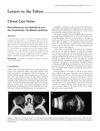
23 citations
,
February 2004 in “Clinical and Experimental Ophthalmology” This case report describes a 68-year-old woman with metastatic breast cancer who experienced significant improvement in visual acuity after stopping tamoxifen, which was associated with bilateral optic neuropathies.
 23 citations
,
June 1999 in “Clinical Therapeutics”
23 citations
,
June 1999 in “Clinical Therapeutics” In this study, finasteride was found to reduce costs associated with benign prostatic hyperplasia compared to watchful waiting and terazosin, especially in men with higher prostate-specific antigen levels.
 22 citations
,
August 2011 in “Journal of Supercritical Fluids”
22 citations
,
August 2011 in “Journal of Supercritical Fluids” In this study, fraction No. 3 of Oryza sativa bran extract demonstrated high unsaturated fatty acid content and significant 5α-reductase inhibition, suggesting potential for developing anti-androgenic alopecia products.
 21 citations
,
July 2018 in “The Journal of Sexual Medicine”
21 citations
,
July 2018 in “The Journal of Sexual Medicine” This article updates the process of care model for evaluating erectile dysfunction, emphasizing comprehensive evaluation and a combination of pharmacotherapy and counseling tailored to patient dynamics.
 21 citations
,
April 2016 in “Journal of Dermatological Treatment”
21 citations
,
April 2016 in “Journal of Dermatological Treatment” This paper discusses the potential relationship between finasteride's adverse effects and factors like hand preference and sexual orientation, suggesting these could influence risk in male androgenic alopecia treatment, but reports no new clinical results.
 20 citations
,
August 2019 in “Expert Opinion on Drug Safety”
20 citations
,
August 2019 in “Expert Opinion on Drug Safety” This review examines the cognitive effects of medications for lower urinary tract symptoms and indicates that muscarinic antagonists, particularly oral oxybutynin, pose the highest risk for cognitive impairment.
 20 citations
,
January 2018 in “Expert Opinion on Drug Safety”
20 citations
,
January 2018 in “Expert Opinion on Drug Safety” This review discusses androgenetic alopecia management with 5α-reductase inhibitors, emphasizing that while dutasteride shows superior efficacy, finasteride is suggested as preferable due to predictable adverse effects and preservation of physiological roles.
 20 citations
,
June 2017 in “Hormone Molecular Biology and Clinical Investigation”
20 citations
,
June 2017 in “Hormone Molecular Biology and Clinical Investigation” This study found that long-term dutasteride therapy in men with benign prostatic hyperplasia worsened erectile dysfunction, reduced testosterone levels, and increased blood glucose and lipid profile, indicating negative metabolic impacts.