31 citations
,
November 1991 in “Brain Research” Aδ-LTMRs have complex synapses with glycine, while Aβ-LTMRs have simpler ones.
 April 2026 in “Human Genome Variation”
 In this study, researchers identified a recurrent MBTPS2 splice-site variant as a mutational hotspot in IFAP syndrome across diverse families, with phenotype severity suggesting the influence of additional modifiers.
91 citations
,
May 1972 in “Journal of Biological Chemistry” This research found that the transfer reaction catalyzed by human plasma and guinea pig hair follicle transglutaminases aligns with a ping-pong mechanism involving peptide-bound glutamine.
This study mapped the curly mutation in mice to a specific region on chromosome 11, identifying it as a candidate model for studying human genetic hair disorders.
11 citations
,
April 2012 in “Journal of Investigative Dermatology” A specific mutation in PA-PLA1α causes abnormal hair growth.
3 citations
,
January 1984 17 citations
,
June 2003 in “The journal of investigative dermatology. Symposium proceedings/The Journal of investigative dermatology symposium proceedings” This study found that genes in the human keratin-associated protein 1 family may have evolved mainly through gene duplication of cysteine-repeat motifs.
 10 citations
,
June 2001 in “Annals of neurology”
10 citations
,
June 2001 in “Annals of neurology” This study reports that patients with Alzheimer's disease have increased levels of polyamines in their hair.
 2 citations
,
September 2022
2 citations
,
September 2022 In this study, researchers found that a PER3 gene SNP may be pathogenic for a new subtype of dyschromatosis universalis hereditaria, especially when combined with a SASH1 mutation.
 2 citations
,
March 2024 in “International Journal of experimental research and review”
2 citations
,
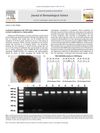
March 2024 in “International Journal of experimental research and review” This study found that more than 14% of idiopathic recurrent early pregnancy loss cases were associated with chromosomal heteromorphisms, predominantly 9qh+, suggesting a genetic component in these unexplained cases.
 13 citations
,
November 2009 in “Journal of Dermatological Science”
13 citations
,
November 2009 in “Journal of Dermatological Science” This article discusses various dermatological studies cited by previous authors and reports no new clinical results.
 23 citations
,
December 2013 in “British Journal of Dermatology”
23 citations
,
December 2013 in “British Journal of Dermatology” This study identified a new PNPLA1 mutation in a Spanish family with autosomal recessive congenital ichthyosis.
 February 2024 in “BMC genomics”
 This study identified a gene variant in the TRPV3 gene that may explain the suri alpaca phenotype, characterized by longer and less crimped fleece, suggesting this variant's involvement in the development of these hair characteristics compared to the huacaya phenotype.
39 citations
,
December 2012 in “The American Journal of Human Genetics” This study identified mutations in the SNRPE gene that may disrupt hair growth, linking a spliceosome component to hereditary hair loss disorders.
54 citations
,
January 1984 in “Molecular and Cellular Biochemistry”  6 citations
,
September 2023 in “Experimental physiology”
6 citations
,
September 2023 in “Experimental physiology” In this study, researchers identified the PLD-mGluR protein in primary mechanosensory terminals as the homomeric GluK2 kainate receptor, functioning purely metabotropically, which is suggested to be common to various sensory endings.

In this thesis, researchers explored ways to enhance the management of myotonic dystrophy type 1 by investigating the genetic inheritance patterns, especially small-sized repeat expansions, and assessing cardiac care, energy expenditure, and body composition in affected individuals.
September 2021 in “The journal of investigative dermatology/Journal of investigative dermatology” This study identified a germline variant in PLCD1 as a major risk allele for familial trichilemmal cysts, requiring a subsequent somatic mutation in the same allele for cyst formation.
 31 citations
,
July 2004 in “Molecular Medicine”
31 citations
,
July 2004 in “Molecular Medicine” This study found that mutant glucocorticoid receptors have defective transcriptional activity and dynamic motility issues in the nucleus, likely due to impaired interactions with nuclear molecules necessary for gene activation.
20 citations
,
August 2003 in “Clinical and Experimental Dermatology” In this study, a novel E583V missense mutation in the hairless gene was identified in an Italian family with atrichia with papular lesions, reinforcing the significance of zinc-finger and LXXLL domains in this condition.
118 citations
,
June 1993 in “Journal of Biological Chemistry” This study found that mouse and human protransglutaminase 3 enzymes require calcium-regulated activation for their role in later stages of cell envelope formation in the epidermis and hair follicle.
 91 citations
,
May 2005 in “The Journal of Clinical Endocrinology & Metabolism”
91 citations
,
May 2005 in “The Journal of Clinical Endocrinology & Metabolism” In this study, a novel mutation in the glucocorticoid receptor gene was identified in a young woman, impairing glucocorticoid signaling and leading to generalized glucocorticoid resistance.
 1 citations
,
January 1971 in “Acta dermato-venereologica”
1 citations
,
January 1971 in “Acta dermato-venereologica” Mice hair follicles take in the amino acid cystine.
 September 2016 in “Journal of Dermatological Science”
 This study reports a case of GGCX syndrome in a 55-year-old Japanese male, characterized by PXE-like symptoms and coagulation deficiency, with an unreported phenotype of possible spinocerebellar degeneration.
 2 citations
,
August 2022 in “The journal of investigative dermatology/Journal of investigative dermatology”
2 citations
,
August 2022 in “The journal of investigative dermatology/Journal of investigative dermatology” This review discusses the genetic origins of autosomal recessive woolly hair with hypotrichosis and reports no clinical results; it highlights the link to homozygous variants in the K25 keratin gene.
33 citations
,
September 2017 in “Journal of Investigative Dermatology” A mutation in the KRT25 gene causes woolly hair and hair loss.
 May 2022 in “Experimental dermatology”
 In this study, hair shafts from trichothiodystrophy patients with ERCC2 mutations revealed abnormal cuticle structures and protein imbalances compared to normal hair shafts.
56 citations
,
January 2014 in “Journal of Investigative Dermatology” Olmsted syndrome can be inherited as an autosomal recessive trait due to a rare TRPV3 gene mutation.
 4 citations
,
January 2017 in “Journal of pediatric endocrinology & metabolism/Journal of pediatric endocrinology and metabolism”
4 citations
,
January 2017 in “Journal of pediatric endocrinology & metabolism/Journal of pediatric endocrinology and metabolism” This study identified two distinct VDR gene mutations among Lebanese families with hereditary vitamin D-resistant rickets, noting varied treatment responses and promising outcomes despite severe phenotypes.
53 citations
,
May 1996 in “The Journal of Clinical Endocrinology & Metabolism” This study identified multiple mutations in the 5 alpha-reductase-2 gene among male pseudohermaphrodites in the Dominican Republic, suggesting they do not share a common ancestry.