 29 citations
,
July 2010 in “Journal of Cutaneous Medicine and Surgery”
29 citations
,
July 2010 in “Journal of Cutaneous Medicine and Surgery” This study reported no significant improvement in patients with frontal fibrosing alopecia treated with various therapeutic agents, highlighting the need for more evidence-based treatments, especially in those with active disease.
 15 citations
,
October 2010 in “International Journal of Dermatology”
15 citations
,
October 2010 in “International Journal of Dermatology” Women with AGA have higher lipid levels, increasing heart disease risk.
 12 citations
,
January 2016 in “Journal of Orofacial Orthopedics / Fortschritte der Kieferorthopädie”
12 citations
,
January 2016 in “Journal of Orofacial Orthopedics / Fortschritte der Kieferorthopädie” This study identified a novel mutation in the EDA gene, which may impair protein stabilization and be involved in the development of oligodontia and mild ectodermal dysplasia phenotypes.
 12 citations
,
November 2014 in “Journal of Cutaneous Medicine and Surgery”
12 citations
,
November 2014 in “Journal of Cutaneous Medicine and Surgery” This report describes a case where oral valganciclovir treatment led to improved skin texture and hair regrowth in a patient with trichodysplasia spinulosa.
 10 citations
,
January 2003 in “Journal der Deutschen Dermatologischen Gesellschaft”
10 citations
,
January 2003 in “Journal der Deutschen Dermatologischen Gesellschaft” In this study, hydroxychloroquine treatment in patients with scleromyxoedema led to complete or partial remission of skin symptoms and improved mobility, though it did not affect paraproteinaemia.
 8 citations
,
August 2016 in “Annales de Dermatologie et de Vénéréologie”
8 citations
,
August 2016 in “Annales de Dermatologie et de Vénéréologie” This case report details a rare instance of scurvy linked to anorexia nervosa in a 48-year-old woman, characterized by atypical symptoms and successfully treated with vitamin C supplements.
 7 citations
,
October 2020 in “Wiener medizinische Wochenschrift”
7 citations
,
October 2020 in “Wiener medizinische Wochenschrift” This paper presents a case study of a 21-year-old male with thyroid hemiagenesis, where the left thyroid lobe and isthmus are absent, and discusses the anomaly's potential clinical consequences based on existing literature.
 4 citations
,
August 2011 in “Aktuelle Dermatologie”
4 citations
,
August 2011 in “Aktuelle Dermatologie” This study found that topical melatonin significantly improved hair density and reduced the severity of androgenetic alopecia in men and women.
 4 citations
,
May 2002 in “Therapeutische Umschau”
4 citations
,
May 2002 in “Therapeutische Umschau” AGA treated with finasteride, minoxidil, and hair transplantation.
 3 citations
,
February 2005 in “Aktuelle Dermatologie”
3 citations
,
February 2005 in “Aktuelle Dermatologie” This study found that prolactin can induce premature catagen in both mouse and human hair follicles and suggests that targeting prolactin and TGF-β receptors may be promising for treating androgenetic alopecia.
 2 citations
,
January 2012 in “Journal für Kardiologie (Krause & Pachernegg GmbH)”
2 citations
,
January 2012 in “Journal für Kardiologie (Krause & Pachernegg GmbH)” This review discusses therapeutic principles for managing hirsutism and androgenetic alopecia during the menopausal transition and peri-/postmenopause but reports no new clinical results.
 2 citations
,
August 2002 in “Zeitschrift für Hautkrankheiten”
2 citations
,
August 2002 in “Zeitschrift für Hautkrankheiten” This review discusses the concept of telogen effluvium and emphasizes that its diagnosis requires detailed clinical evaluation and tests to identify underlying causes; no new clinical results are reported.
 1 citations
,
October 2021 in “Deleted Journal”
1 citations
,
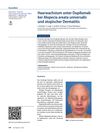
October 2021 in “Deleted Journal” This case report details a 46-year-old woman with severe atopic dermatitis and alopecia areata universalis who experienced renewed hair growth and improved skin symptoms after starting dupilumab therapy.
 1 citations
,
May 2002 in “Therapeutische Umschau”
1 citations
,
May 2002 in “Therapeutische Umschau” This review discusses common hair diseases in children, highlighting diagnostic tools and treatments, but reports no new clinical results.
 November 2023 in “Research Portal Denmark”
 This review highlights the variability and unpredictability of alopecia areata, ranging from single scalp patches to total body hair loss, and notes the 2022 approval of the first AA-specific drug, baricitinib, potentially spurring new research into targeted treatments.
 October 2023 in “Urologie in der Praxis”
 This article reviews the diagnostics and medical transition options for adults with gender incongruence, reports no new clinical results, and highlights the importance of primary care knowledge in managing these patients.
 July 2021 in “Journal Für Ästhetische Chirurgie”
 Effective hair loss treatments require medical diagnosis and realistic expectations, with hair transplants offering improved, natural-looking results.
 January 2021 in “Online Publication Service of Würzburg University (Würzburg University)”
 This study examines the use of diphenylcyclopropenone in treating alopecia areata patients at the University Hospital Würzburg and investigates how the treatment affects patients' quality of life.
 January 2017 in “Qucosa (Saxon State and University Library Dresden)”
 This study found that plasma protein binding significantly contributes to the shifts in glucocorticosteroid concentration ratios among blood, saliva, and hair, challenging prior assumptions about enzyme inactivation as the main factor.
 September 2015 in “University of Southern Denmark Research Portal (University of Southern Denmark)”
 This guideline provides a concise evidence-based overview of various aspects of polycystic ovary syndrome, including diagnosis and follow-up of secondary effects, but reports no new clinical results.
 October 2014 in “Aktuelle Dermatologie”
 This study reports that elderly men with baldness and comorbid conditions experienced persistent scalp erosions following topical treatment with imiquimod or diclofenac, suggesting alternative therapies should be considered for this group.
 November 2013 in “Annales de Dermatologie et de Vénéréologie”
 This study found that extracts of Punica granatum L. improved hair growth and demonstrated significant anti-lice and antidandruff activity in a mouse model.
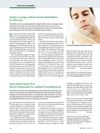
Early balding may be a sign of future prostate problems.
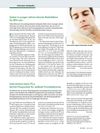
Men with early balding may have a higher risk of prostate issues, and surgery for prostate cancer has a slight survival benefit over radiation.
 September 2009 in “Annales D Endocrinologie”
 This article reviews the clinical signs, diagnostic approaches, and treatment options for hyperandrogenism in women, focusing on hirsutism and specifies that cyproterone acetate is effective for severe cases, but reports no new clinical results.
 January 2008 in “Journal für Kardiologie (Krause & Pachernegg GmbH)”
 Healthy aging can be promoted through physical activity, lifestyle changes, and certain treatments.
 November 2007 in “Journal of Generic Medicines”
 Europe strengthened medicine regulations, increased protection against counterfeit drugs, and made it tougher to challenge comparative advertising, while also focusing on patent law enforcement and updating plant protection rules.
 January 2005 in “Elektronische Hochschulschriften der LMU München (Ludwig-Maximilians-Universität München)”
 This study found that a significant portion of alopecia areata patients achieved at least partial hair regrowth with diphenylcyclopropenon therapy, which was more effective in certain subtypes and disease durations.
 883 citations
,
August 2016 in “Nature Reviews Disease Primers”
883 citations
,
August 2016 in “Nature Reviews Disease Primers” This review discusses the current understanding of polycystic ovary syndrome, focusing on its epidemiology, pathophysiology, diagnosis, management, and future research directions, but reports no new clinical results.
 227 citations
,
January 1998 in “Journal of Endocrinology”
227 citations
,
January 1998 in “Journal of Endocrinology” This study found that dermal papilla cells from balding scalp hair follicles have significantly higher levels of androgen receptors than those from non-balding follicles, supporting their in vivo androgen response.