Hair movement can indicate hair quality and health.
27 citations
,
February 2003 in “Cell and Tissue Research” This study found that FM dyes are effective markers for tracing live Merkel cells in in vitro experiments, as they remain visible for at least seven days and highlight cell shape better than quinacrine.
May 2026 in “Colloids and Surfaces B Biointerfaces”  May 2026 in “Zenodo (CERN European Organization for Nuclear Research)”
 Minoxidil may help facial hair grow, but more research is needed.

Activin A and Follistatin affect how mouse hair follicles grow.
 12 citations
,
July 2016 in “Forensic science international”
12 citations
,
July 2016 in “Forensic science international” This study found that postmortem root banding in hair is likely due to the degradation of the intermacrofibrillar matrix in the cortex, with no damage to the cuticle observed.
 3 citations
,
June 2004 in “Annales De Dermatologie Et De Venereologie”
3 citations
,
June 2004 in “Annales De Dermatologie Et De Venereologie” This review summarizes the adverse effects associated with 5α‐reductase inhibitors, noting slightly increased rates of decreased libido, erectile and ejaculatory dysfunction, gynecomastia, depression, and anxiety, with further studies needed to explore symptom prevalence and persistence.
March 2018 in “Chin J Reprod Contracep” This review outlines chlormadinone acetate's contraceptive and non-contraceptive applications but reports no new clinical findings, emphasizing its potential in treating dysmenorrhea and androgen-related conditions.
 33 citations
,
January 2015 in “Journal of Cosmetic Dermatology”
33 citations
,
January 2015 in “Journal of Cosmetic Dermatology” This study reports that familial frontal fibrosing alopecia was diagnosed earlier in premenopausal women compared to postmenopausal women, though long-term outcomes remain uncertain without a definitive treatment.
 39 citations
,
July 2015 in “British Journal of Dermatology”
39 citations
,
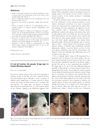
July 2015 in “British Journal of Dermatology” This article discusses the pseudo 'fringe sign' in frontal fibrosing alopecia, highlighting that it is not solely related to traction, and it reports no new clinical results.
7 citations
,
July 2021 in “The Journal of Dermatology” This study in Asian females found that higher use of moisturizers and sunscreen among FFA patients may reflect appearance concerns rather than indicating a direct link to the disease mechanism.
36 citations
,
February 1998 in “Journal of Anatomy” This study used fibre optic confocal imaging to visualize subsurface structures in live mouse skin, revealing cellular details and blood vessel networks that dynamic events could be studied in vivo.
 17 citations
,
February 2018 in “British Journal of Oral & Maxillofacial Surgery”
17 citations
,
February 2018 in “British Journal of Oral & Maxillofacial Surgery” This paper reviews the evolution and classification of forehead reduction and orbital contouring techniques in transgender females, but reports no new clinical findings.
 123 citations
,
August 2005 in “Journal of the European Academy of Dermatology and Venereology”
123 citations
,
August 2005 in “Journal of the European Academy of Dermatology and Venereology” In this study, the researchers observed that treatment with intralesional and topical corticosteroids, finasteride, and minoxidil may stop the progression of frontal fibrosing alopecia in postmenopausal and premenopausal women.
 July 2017 in “Reactions Weekly”
 Finasteride may cause serious muscle-related side effects.
January 2012 in “Open MIND” This case report details a 61-year-old Afro-Caribbean man with pseudofolliculitis barbae induced by oral minoxidil.
 August 2022 in “MEDICINUS”
 This case study reports a 22-year-old homosexual man coinfected with secondary syphilis, condyloma acuminata, and HIV, highlighting the coexistence and increased STI risks associated with HIV and HPV infection.
January 2006 in “Linchuang pifuke zazhi” This study found that stem cell factor combined with fibronectin and type IV collagen promotes migration of amelanotic melanocytes, which may help explain their movement during vitiligo repigmentation.
 July 2018 in “Elsevier eBooks”
 This review discusses the evolving understanding of frontal fibrosing alopecia as a generalized skin condition with diverse manifestations, and reports no new clinical results.

This dissertation examines how The Body Politic newspaper shaped and challenged concepts of gay male masculinity and identity in Toronto's gay community from 1971 to 1987.
 10 citations
,
June 2005 in “The journal of investigative dermatology/Journal of investigative dermatology”
10 citations
,
June 2005 in “The journal of investigative dermatology/Journal of investigative dermatology” This study identified FP-1 as a highly specific extracellular matrix protein in follicular papilla cells, which may play a role in hair growth regulation during specific hair cycle phases.
 June 2026 in “Drug Delivery and Translational Research”
 This study developed a spring-driven microneedle booster that improved early and cumulative delivery of minoxidil, accelerating hair regrowth compared to traditional roller methods in an androgenetic alopecia model.
December 2023 in “Plants” The researchers investigated the phytochemical content and pharmacological properties of Fissistigma oldhamii and found multiple compounds, primarily in roots and stems, that may contribute to the plant's traditional anti-inflammatory uses in China, including potential antioxidant, anticancer, and antimicrobial effects.
110 citations
,
January 1984 in “Progress in brain research” This chapter reviews the potential role of gonadal hormones in sex differences in play and spatial behavior, noting a lack of conclusive evidence but suggesting perinatal androgen exposure might contribute to observed differences. It reports no new research results.
May 2023 in “Reactions Weekly” January 2013 in “Reactions Weekly” 8 citations
,
March 2023 in “BMC Research Notes” This pilot study explored a new method using laser-capture microdissection and 16S rRNA gene sequencing to analyze the human scalp hair follicle microbiome more accurately, revealing region-specific variations in microbial diversity and abundance.
 November 2022 in “bioRxiv (Cold Spring Harbor Laboratory)”
 This study found that conditional deletion of Mof in mice resulted in severe defects in skin development, including compromised epidermal differentiation and hair growth, leading to perinatal lethality.
 February 2026 in “Zenodo (CERN European Organization for Nuclear Research)”
 This review discusses the epidemiology, pathophysiology, diagnosis, and management of male androgenetic alopecia, noting that combination treatments, including FDA-approved and emerging therapies, may improve outcomes without added side effects.