 5 citations
,
July 2021 in “medRxiv (Cold Spring Harbor Laboratory)”
5 citations
,
July 2021 in “medRxiv (Cold Spring Harbor Laboratory)” This study found that proxalutamide treatment significantly reduced 30-day hospitalization rates in women with mild-to-moderate COVID-19 compared to placebo, with no safety issues identified.
3 citations
,
September 2016 in “Dermatologic Therapy” In this study, Deplanque et al. (2016) explored doxycycline's role in preventing erlotinib-induced folliculitis in patients with non-small-cell lung cancer, highlighting skin toxicity as a common side effect that can affect patient adherence to treatment.
March 2014 in “Oxford University Press eBooks” This narrative review explores the failure of fludalanine as an orally active antibiotic and highlights valuable insights into problem-solving strategies in drug discovery, without reporting new clinical results.
39 citations
,
August 2022 in “Pharmaceutics” This study found that the combination of letrozole and quercetin loaded in spanlastics showed enhanced cytotoxicity and other anticancer effects against MCF-7 breast cancer cells compared to individual treatments.
 1 citations
,
December 2023 in “Revista médica de Chile”
1 citations
,
December 2023 in “Revista médica de Chile” This review examines the dermatologic side effects of lithium, noting it can cause or worsen skin conditions like psoriasis and acne, potentially affecting medication adherence, but reports no new clinical results.
March 2003 in “International Journal of Antimicrobial Agents” 2 citations
,
April 2025 in “Plants” This study found that lambertianic acid from Platycladus orientalis leaves may protect against dexamethasone-induced skeletal muscle atrophy by reducing atrophy-related proteins without affecting cell viability.
2 citations
,
September 2023 in “Journal of the American Academy of Dermatology” Baricitinib is a safe and effective treatment for severe alopecia areata.
22 citations
,
May 2011 in “European Journal of Cancer” This phase I study determined that a combination of oral SU-014813 and docetaxel is a feasible treatment with a manageable safety profile and potential anti-tumor activity, particularly noted in melanoma and GIST patients.
 April 2026 in “International Journal of Drug Delivery Technology”
 This study found that Lactobacillus acidophilus cell-free supernatant caused significant cytotoxicity, reduced migratory ability, and induced apoptosis in cervical cancer cell lines, suggesting its potential as a non-toxic adjunct therapy for cervical cancer.
 November 2025 in “Mendeley Data”
 This study found that tofacitinib and baricitinib, when administered with unorthodox weight-stratified dosing in pediatric patients with moderate-to-severe AA, showed comparable efficacy and tolerability, though baricitinib's efficacy decreased with non-standard dosing.
21 citations
,
August 1987 in “Archives of Dermatology” This communication reports previously unreported side effects, severe bullous dermatosis and onycholysis, in three patients undergoing high-dose methotrexate and leucovorin calcium therapy, impacting their chemotherapy schedules.
2 citations
,
May 2025 in “Journal of the European Academy of Dermatology and Venereology” In this study, daily treatment with ritlecitinib for up to 24 months led to significant reductions in high-severity alopecia areata SALT scores among patients aged ≥12 years, including those with severe forms such as alopecia totalis and universalis.
 15 citations
,
January 2024 in “The AAPS Journal”
15 citations
,
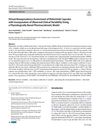
January 2024 in “The AAPS Journal” This study demonstrates that bioequivalence for proposed 50-mg ritlecitinib capsules versus clinical 100-mg capsules can be supported using a PBPK model-based biowaiver, achieving over 90% probability of success.
19 citations
,
April 2016 in “Case Reports in Dermatology” This case report highlights an instance of nilotinib-induced keratosis pilaris without alopecia or pruritus, emphasizing the need for awareness to optimize patient outcomes.
 34 citations
,
July 2011 in “International journal of pharmaceutics”
34 citations
,
July 2011 in “International journal of pharmaceutics” This study found that ion-paired solutions significantly improved the skin penetration of risedronate in hairless mice compared to risedronate alone.
 January 2016 in “The Australian Pharmacist”
 Tofacitinib might be used to treat hair loss.
September 2013 in “Oncology Times” This article discusses the discontinuation of the Bexxar regimen for non-Hodgkin's lymphoma, noting that despite its effectiveness, it was under-prescribed due to marketing and development challenges without reporting new clinical results.
 November 2025 in “SKIN The Journal of Cutaneous Medicine”
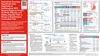
 This phase 3 trial found that over 50% of adolescents with severe alopecia areata achieved successful hair regrowth after 52 weeks on baricitinib 4-mg, with no new safety concerns reported compared to existing safety profiles.
October 2023 in “IP Indian Journal of Clinical and Experimental Dermatology” This study demonstrated that a 12-week treatment with luliconazole-containing shampoo significantly reduced scalp scaling, erythema, and itching in adults with seborrheic dermatitis, achieving high tolerability and progressive symptom improvement without reported intolerance or recurrences.
65 citations
,
April 1999 in “Journal of Parasitology” This study found that all lesions in mice treated with a new topical formulation, WR 279,396, healed completely without relapse, outperforming other formulations and showing no toxicity.
 32 citations
,
September 2015 in “Dermatology”
32 citations
,
September 2015 in “Dermatology” This study describes a newly recognized skin reaction associated with dasatinib, nilotinib, and ponatinib, marked by a lichenoid exanthem with severe pruritus that may necessitate discontinuation of therapy.
 2 citations
,
January 1990 in “Leukemia & Lymphoma”
2 citations
,
January 1990 in “Leukemia & Lymphoma” This study reported a 74% overall response rate for a new combination chemotherapy of mitoxantrone, etoposide, and prednisolone in patients with relapsed or refractory Hodgkin's disease or non-Hodgkin's lymphoma.
4 citations
,
January 2022 in “Dermatology Research and Practice” In this study, methotrexate therapy with or without corticosteroids showed similar efficacy and safety in treating patients with lichen planopilaris, with no significant differences in the primary outcome or adverse effects between the two groups.
 13 citations
,
July 2019 in “Toxicology research”
13 citations
,
July 2019 in “Toxicology research” In this study, ethanamizuril was found to cause alopecia, biochemical changes, and organ damage at higher doses in rats, with a no-observed-adverse-effect level of 20 mg/kg over 30 days.
 February 2026 in “Indian Journal of Dermatology”
 This case report found that a 48-year-old woman with idiopathic twenty-nail dystrophy experienced significant improvement in nail appearance after six months of treatment with oral Upadacitinib.
 November 2025 in “SKIN The Journal of Cutaneous Medicine”
 In this open-label study of post-menopausal women with frontal fibrosing alopecia, researchers found that 12 weeks of baricitinib monotherapy significantly reduced disease activity as measured by the Lichen Planopilaris Activity Index, improved patient-reported scalp hair growth, but showed no significant change in eyebrow growth.
February 2023 in “Reactions Weekly”  June 2026 in “Journal of General-Procedural Dermatology & Venereology Indonesia”
 This study concluded that oral tofacitinib significantly improved symptoms in patients with lichen planus pigmentosus who did not respond to conventional treatments, showing it as a viable alternative.
1 citations
,
August 2024 in “British Journal of Dermatology” This study found that after 15 months of treatment with ritlecitinib, patients with alopecia areata and less than 95% initial hair loss experienced significant hair regrowth, though those with more extensive hair loss showed more variable improvement.