55 citations
,
December 1987 in “Archives of Dermatology” This review discusses two genetic disorders affecting biotin metabolism, each resulting in distinctive skin and hair manifestations, and outlines the associated serious metabolic complications.
43 citations
,
January 1970 in “Acta Medica Scandinavica” This study found that obese patients experienced similar weight loss on a very low-calorie diet and total fast, but the diet was associated with fewer complications.
 38 citations
,
July 2010 in “Clinical, cosmetic and investigational dermatology”
38 citations
,
July 2010 in “Clinical, cosmetic and investigational dermatology” This review discusses systemic antifungal treatments for tinea capitis in children, noting that newer agents like terbinafine and itraconazole require shorter courses than the traditional griseofulvin, but may be more costly.
 36 citations
,
June 2012 in “PubMed”
36 citations
,
June 2012 in “PubMed” This review discusses various treatments for androgenetic alopecia, including minoxidil, finasteride, dutasteride, ketoconazole, and experimental options, but reports limited clinical trial evidence for efficacy.
 35 citations
,
November 1996 in “Journal of the American Academy of Dermatology”
35 citations
,
November 1996 in “Journal of the American Academy of Dermatology” This study reports two HIV-infected men with a rare M. canis infection unresponsive to ketoconazole and terbinafine, where itraconazole was effective but prolonged treatment led to only one cure.
 33 citations
,
June 2007 in “International Journal of Pharmaceutics”
33 citations
,
June 2007 in “International Journal of Pharmaceutics” This study found that the sebum partition coefficient (K(sebum)) for some drugs differs from the stratum corneum partition coefficient (K(sc)), indicating its importance for targeted drug delivery into hair and sebaceous follicles.
 33 citations
,
February 1996 in “Journal of The American Academy of Dermatology”
33 citations
,
February 1996 in “Journal of The American Academy of Dermatology” Treat scalp and beard fungal infections early with oral antifungal medication and sometimes topical therapy, avoiding unnecessary allergy tests and surgery.
 32 citations
,
November 1996 in “International Journal of Dermatology”
32 citations
,
November 1996 in “International Journal of Dermatology” This review discusses the use of antiandrogen therapy in dermatology, covering treatments for conditions like acne, hirsutism, and androgenic alopecia but reports no new clinical findings.
 32 citations
,
November 2005 in “Journal of Investigative Dermatology Symposium Proceedings”
32 citations
,
November 2005 in “Journal of Investigative Dermatology Symposium Proceedings” Most women preferred the 1% pyrithione zinc shampoo for better hair smoothness and less frizz while controlling dandruff.
25 citations
,
January 2019 in “Journal of Pharmacy And Bioallied Sciences” This study concluded that the formulated polyherbal shampoo is a chemical-free product with nourishing, conditioning, cleansing, and antimicrobial effects.
24 citations
,
July 2009 in “Mycoses” This case report describes an adult patient with tinea capitis due to Microsporum canis who experienced complete hair regrowth following treatment with fluconazole and ketoconazole shampoo.
 24 citations
,
March 1998 in “Mycoses”
24 citations
,
March 1998 in “Mycoses” In this study, 31 children with kerion Celsi were treated successfully with antifungal medications, emphasizing the importance of early diagnosis and treatment to prevent scarring and hair loss.
 22 citations
,
January 2009 in “Medical mycology”
22 citations
,
January 2009 in “Medical mycology” In this case report, researchers identified Arthroderma vanbreuseghemii as the cause of a familial fungal infection, which was successfully treated with itraconazole and topical terbinafine cream.
21 citations
,
January 2008 in “Journal of Pediatric Endocrinology and Metabolism” This study found that combined treatment with anastrozole and cyproterone acetate improved the adult height prognosis in testotoxicosis, as observed in two brothers, with good tolerance reported.
 20 citations
,
February 2016 in “American Journal of Pathology”
20 citations
,
February 2016 in “American Journal of Pathology” This study indicates that the OVOL1-OVOL2 axis may play a significant role in hair follicle differentiation and growth, potentially serving as therapeutic targets for hair disorders like alopecia and in the tumorigenesis of pilomatricoma.
18 citations
,
November 1989 in “Clinical and experimental dermatology” This case report describes a 5-year-old girl with an extensive Microsporum canis scalp infection, highlighting griseofulvin as the preferred treatment and noting corticosteroids' benefit in severe inflammatory cases.
17 citations
,
October 2001 in “Veterinary dermatology” This case report indicates that epidermal dysplasia in two West Highland White Terriers might be caused by a reaction to Malassezia infection or self-trauma, rather than being congenital.
15 citations
,
March 2019 in “Veterinary Dermatology” This study found that three mousse products containing chlorhexidine and varying antifungal components maintained significant antibacterial activity against S. pseudintermedius in vitro for up to 10 days, while other mousses did not show significant differences.
 14 citations
,
September 2015 in “Expert Opinion on Therapeutic Targets”
14 citations
,
September 2015 in “Expert Opinion on Therapeutic Targets” This review discusses potential treatments for androgen excess in polycystic ovary syndrome and reports no new findings, emphasizing the importance of individualized antiandrogenic management to minimize side effects.
13 citations
,
December 2012 in “Medical mycology case reports” In this case report, an atypical form of tinea favosa in an 11-year-old girl was initially misdiagnosed, highlighting the importance of mycological examination for accurate diagnosis, especially when diffuse scalp scaling is present.
12 citations
,
August 2016 in “Mycopathologia” This case study reports a 36-year-old man's fungal infection, identified as Trichosporon inkin, which was treated with shaving and antifungal therapy.
 11 citations
,
January 1998 in “Dermatology”
11 citations
,
January 1998 in “Dermatology” This review explores various substances with potential antiandrogenic effects for treating acne, highlighting evidence for isotretinoin, and discusses the future consideration of 5 alpha-reductase inhibitors as antiandrogens.
11 citations
,
June 2016 in “European Journal of Medicinal Chemistry” This study found that two synthesized androst-4-ene-3-one derivatives, 6f and 6g, exhibited stronger anti-proliferative effects than common drugs on prostate cancer cell lines, with low toxicity to rat cells.
 11 citations
,
December 2014 in “Clinical Obstetrics and Gynecology”
11 citations
,
December 2014 in “Clinical Obstetrics and Gynecology” This article presents a systematic approach for obstetricians/gynecologists to diagnose and manage common types of nonscarring hair loss in women, reporting no new clinical results.
 10 citations
,
January 2013 in “International journal of trichology”
10 citations
,
January 2013 in “International journal of trichology” This article describes a rare case of mixed black and white piedra in a patient's scalp hair, which is unusual as these two types of piedra rarely occur together.
This pilot study found that a novel regimen including NuH Hair led to significant hair growth in male patients with androgenic alopecia, regardless of atopy status, with quicker results when additional treatment components were used.
 10 citations
,
January 2010 in “PubMed”
10 citations
,
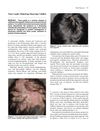
January 2010 in “PubMed” This article reviews current hair loss treatments, proposing a hypothesis that a combination of drugs, supplements, and therapies may effectively manage hair loss, but presents no new clinical results.
 9 citations
,
October 2013 in “Pediatric dermatology”
9 citations
,
October 2013 in “Pediatric dermatology” This study highlights a dissecting cellulitis-like presentation of tinea capitis in children that should be identified to ensure correct diagnosis and treatment to prevent scarring alopecia.
 9 citations
,
June 2019 in “Mycopathologia”
9 citations
,
June 2019 in “Mycopathologia” This study found that the presence of Malassezia fungi in the scalp's hairy roots was more pronounced in individuals with androgenetic alopecia than in healthy controls, suggesting a potential link to the condition.
 9 citations
,
January 2008 in “Medical mycology”
9 citations
,
January 2008 in “Medical mycology” In this study, ketoconazole treatment successfully cured a dog with erythematous epilation caused by Chaetomium globosum, with new hair growth observed 9 weeks later.