This article discusses the effects of ablative carbon dioxide laser treatment for skin rejuvenation, noting it requires only a single treatment but involves more complex postoperative management, without reporting new clinical outcomes.
This abstract discusses the mechanism and effects of ablative carbon dioxide laser treatment for skin tightening, reporting no new clinical results but noting the need for involved postoperative management.
13 citations
,
July 2024 in “Medicina” This review investigates laser-induced Koebner-related reactions and highlights how different laser types, targets, and session frequencies affect the development of these skin responses, particularly in individuals with darker skin phototypes.
 20 citations
,
May 2007 in “Asian-Australasian Journal of Animal Sciences”
20 citations
,
May 2007 in “Asian-Australasian Journal of Animal Sciences” This study found that polymorphisms in the KAP8.2 gene in Chinese Inner Mongolia cashmere goats are associated with variations in cashmere fibre diameter, suggesting its potential as a molecular marker for this trait.
387 citations
,
November 2003 in “Journal of Investigative Dermatology” The K15 promoter effectively targets stem cells in the hair follicle bulge.
27 citations
,
November 1991 in “Journal of Investigative Dermatology”  1 citations
,
January 2018 in “Journal of Cosmetic and Laser Therapy”
1 citations
,
January 2018 in “Journal of Cosmetic and Laser Therapy” The editorial introduces various topics on laser and cosmetic treatments in a medical journal.
11 citations
,
January 2022 in “Journal of Healthcare Engineering” In this study, PRP and Yifu combined with ultrapulsed CO2 lattice laser were found to improve sunken acne scars more effectively than laser alone, enhancing patients' quality of life and reducing adverse events, with a higher effective rate compared to the laser-only group.
November 2013 in “Faculty Opinions – Post-Publication Peer Review of the Biomedical Literature” Keratin 79 cells help form and regenerate hair canals.
37 citations
,
November 2007 in “Journal of Biological Chemistry” This study found that increased intracellular expression of thymosin β4 is necessary and sufficient to induce PAI-1 gene expression in endothelial cells, potentially mediated through Ku80 as a novel receptor.
 May 2023 in “Journal of animal science/Journal of animal science ... and ASAS reference compendium”
 In this study, purebred Dexter cows with higher levels of winter hair shedding weaned heavier calves and had better reproductive success compared to cows with lower shedding levels.
June 2025 in “Rapid Communications in Mass Spectrometry”  March 2026 in “Frontiers in Cell and Developmental Biology”
 This review synthesizes evidence that photobiomodulation may provide robust symptomatic relief for knee osteoarthritis but indicates its potential for structural regeneration remains speculative and needs further long-term validation.
 February 1996 in “International Journal of Dermatology”
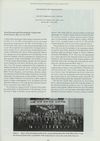
 This article offers a summary of the Seoul International Dermatology Symposium held in May 1995, but reports no new clinical findings.
 18 citations
,
September 2020 in “BMC Public Health”
18 citations
,
September 2020 in “BMC Public Health” This study found that non-Kuwaiti COVID-19 patients in Kuwait had higher odds of death, ICU admission, ARDS, and pneumonia compared to Kuwaiti patients.
207 citations
,
September 1973 in “Entomologia Experimentalis et Applicata” In this study, the researchers found that female Pieris brassicae butterflies have more "B-type" chemoreceptory hairs on their forelegs, which may be involved in selecting oviposition sites through detecting mustard oil glucosides.
 September 2025 in “Institutional Repositories DataBase (IRDB)”
 Lactic acid bacteria fermentation can turn waste into valuable skincare ingredients.
 37 citations
,
January 2015 in “Evidence-based Complementary and Alternative Medicine”
37 citations
,
January 2015 in “Evidence-based Complementary and Alternative Medicine” This study found that Bokusoku extract and its compound pentagalloyl glucose inhibited testosterone metabolism and sebum synthesis, suggesting potential therapeutic use for androgen-related acne.
 10 citations
,
October 2017 in “BMJ Open”
10 citations
,
October 2017 in “BMJ Open” This article outlines the first prospective cohort study examining whether bariatric surgery can induce satisfactory weight loss in obese Koreans, with no new results reported yet.
109 citations
,
November 2011 in “Nature Neuroscience”  1 citations
,
August 2024 in “Polymers”
1 citations
,
August 2024 in “Polymers” This study observed that dissolving microneedles made from PVP-K90 and HPMC E50, incorporating Oryza sativa L. extract complex, showed enhanced transfollicular skin penetration and maintained safety for keratinocytes, with the P25H5 formulation demonstrating faster dissolution and greater effectiveness.
16 citations
,
January 2010 in “Springer eBooks” March 2010 in “European Journal of Cancer Supplements”  19 citations
,
August 2007 in “Seminars in Plastic Surgery”
19 citations
,
August 2007 in “Seminars in Plastic Surgery” This review discusses five popular resurfacing technologies for facial rejuvenation, highlighting their role in achieving smoother, healthier, and younger-looking skin, and reports no new clinical results.
 February 2026 in “Zenodo (CERN European Organization for Nuclear Research)”
 This study introduces the N-K Healing Series, an alternative geometric approach to medicine, claimed to restore tissue fully and eliminate pain without the traditional drawbacks, allegedly achieving results beyond mainstream medical treatments in simulated injury scenarios.
28 citations
,
March 1993 in “Journal of Cell Science” In this study, rabbit esophageal epithelial cells were found to produce K4 and K13 keratins in suprabasal cells, forming disulfide-crosslinked dimers that may support the physical stability of the esophageal lining.
 2 citations
,
January 2017 in “Folia biologica”
2 citations
,
January 2017 in “Folia biologica” This study identified two single-nucleotide polymorphisms and three haplotypes in the KRTAP7-1 gene across yak, taurine, and zebu cattle, with the BOVIN-KRTAP7-1*A haplotype most prevalent.
1 citations
,
April 2013 in “Journal of Investigative Dermatology”  16 citations
,
January 2017 in “Physical chemistry chemical physics/PCCP. Physical chemistry chemical physics”
16 citations
,
January 2017 in “Physical chemistry chemical physics/PCCP. Physical chemistry chemical physics” This study presents computational modeling and experimental analysis of the HGT protein KAP8.1, identifying key structural features that may influence hair's response to environmental conditions.
 February 2026 in “Zenodo (CERN European Organization for Nuclear Research)”
 This study presents the N‑K Healing Series, a geometric approach to medicine that claims to restore tissue geometry, eliminate pain, and regenerate burns more effectively than traditional treatments, with simulations demonstrating significant improvements in healing outcomes and reduced scarring.