 2 citations
,
November 2022 in “IP Indian journal of clinical and experimental dermatology”
2 citations
,
November 2022 in “IP Indian journal of clinical and experimental dermatology” This study observed that specific dermoscopic features, such as altered pigmentary network and yeast invasion of hair follicles, along with certain histopathological features, assist in diagnosing pityriasis versicolor.
 1 citations
,
October 2022 in “Asian journal of medical sciences”
1 citations
,
October 2022 in “Asian journal of medical sciences” This study found trichoscopy to be a highly sensitive, non-invasive method for diagnosing tinea capitis in children, which could be valuable in resource-limited settings lacking mycological culture facilities.

This study found that dermoscopy combined with calcium fluorescent white staining effectively aided in the early diagnosis and treatment evaluation of tinea capitis by highlighting specific hair changes and fluorescent patterns associated with different dermatophyte infections in a sample of 20 patients.
5 citations
,
April 1992 in “Pediatrics in review” This review discusses diagnostic methods for superficial cutaneous fungus infections in children and reports no new clinical results; the authors emphasize affordable, simple testing for confirmation.
January 2022 in “Clinical Cases in Dermatology” This case report describes successful treatment of a 7-year-old girl with gray patch tinea capitis using oral micronized griseofulvin and topical ketoconazole shampoo, resulting in complete clinical and microscopic clearance.
 22 citations
,
December 2003 in “Veterinary clinical pathology”
22 citations
,
December 2003 in “Veterinary clinical pathology” This case study reported a diagnosis of dermatophytic pseudomycetoma in a Persian cat with dermal nodules, highlighting potential heritable predisposition and suggesting systemic antifungal therapy for fair prognosis.
April 1992 in “Pediatrics in Review” This review discusses diagnostic methods for superficial fungal infections in children and does not report new clinical results; the authors note the ease and simplicity of these diagnostic approaches.
 2 citations
,
January 2022 in “Eduvest”
2 citations
,
January 2022 in “Eduvest” This report of a 90-year-old girl with tinea capitis indicates that griseofulvin remains the main treatment, showing improvement after eight weeks of therapy.
 January 2022 in “Eduvest”
 This case report discusses the clinical features and management of tinea capitis, highlighting its occurrence in adults and the continued preference for griseofulvin treatment.
 1 citations
,
July 2023 in “Journal of Clinical Medicine”
1 citations
,
July 2023 in “Journal of Clinical Medicine” This review provides a detailed overview of the causes, prevalence, pathophysiology, clinical presentation, and treatment of beard alopecia, highlighting conditions such as alopecia areata, pseudofolliculitis barbae, and tinea barbae, and aims to serve as a resource for clinicians handling such cases.
 11 citations
,
July 2008 in “International Journal of Dermatology”
11 citations
,
July 2008 in “International Journal of Dermatology” This article discusses a case of patchy alopecia areata that spares greying hairs but reports no new findings; it refers to existing literature for context.
 6 citations
,
January 2023 in “Medical Mycology Journal”
6 citations
,
January 2023 in “Medical Mycology Journal” In this case study of a 64-year-old woman with kerion celsi caused by Microsporum canis, treatment with the oral antifungal fosravuconazole resulted in symptom resolution without scarring or side effects over 12 weeks, suggesting its potential effectiveness for various dermatomycoses.
 1 citations
,
January 2015 in “Indian journal of dermatology, venereology, and leprology”
1 citations
,
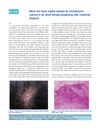
January 2015 in “Indian journal of dermatology, venereology, and leprology” A woman's scalp infection caused by a fungus led to permanent hair loss and was hard to treat but responded to a specific antifungal.
 38 citations
,
July 2010 in “Clinical, cosmetic and investigational dermatology”
38 citations
,
July 2010 in “Clinical, cosmetic and investigational dermatology” This review discusses systemic antifungal treatments for tinea capitis in children, noting that newer agents like terbinafine and itraconazole require shorter courses than the traditional griseofulvin, but may be more costly.
 1 citations
,
January 1980 in “Archives of Dermatology”
1 citations
,
January 1980 in “Archives of Dermatology” This exchange discusses interpretations of syphilitic chancres, noting disagreement over whether multiple lesions are atypical given historical references that describe primary chancres as often being single.
 February 2026 in “International Journal of Research in Dermatology”
 In this report, two adult cases of tinea capitis with unusual symptoms like pustules and non-scarring alopecia were diagnosed based on clinical and pathological findings, and successfully treated with oral Griseofulvin and topical luliconazole cream.
 January 2019 in “Elsevier eBooks”
 Early detection and skin biopsies are crucial for treating skin cancer and diagnosing various skin conditions.

This case report describes a 21-year-old man with alopecia areata presenting as a U-shaped hair loss pattern resembling Hamilton grade VII male-pattern baldness, with no signs of inflammation or related conditions.
 22 citations
,
April 2000 in “International Journal of Dermatology”
22 citations
,
April 2000 in “International Journal of Dermatology” This case report describes a 78-year-old farmer with idiopathic pulmonary fibrosis who developed cutaneous Alternaria alternata infections, which improved with reduced prednisolone and itraconazole treatment, with no recurrence after two years.
 October 2019 in “Asian Journal of Research in Animal and Veterinary Sciences”
 This review discusses dermatophytosis in equines, caused primarily by T. equinum, noting its global prevalence and highlighting diagnostic methods; it reports no new clinical results.
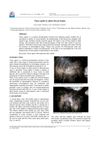
This report presents the first known case of tinea capitis caused by Microsporum canis in an adult female in the authors' locality, responsive to oral fluconazole treatment.
 89 citations
,
May 1999 in “Allergy”
89 citations
,
May 1999 in “Allergy” This article reviews the role of Pityrosporum (Malassezia) in skin conditions such as pityriasis versicolor, seborrheic dermatitis, and atopic dermatitis, and discusses treatment approaches; it reports no new clinical results.
 73 citations
,
July 2016 in “Cosmetics”
73 citations
,
July 2016 in “Cosmetics” This review discusses the use of mushrooms and their bioactive compounds in cosmeceuticals and nutricosmetics and reports no new clinical findings, highlighting potential areas for future research and development.
 33 citations
,
February 1996 in “Journal of The American Academy of Dermatology”
33 citations
,
February 1996 in “Journal of The American Academy of Dermatology” Treat scalp and beard fungal infections early with oral antifungal medication and sometimes topical therapy, avoiding unnecessary allergy tests and surgery.
 10 citations
,
January 2013 in “International journal of trichology”
10 citations
,
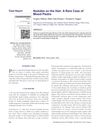
January 2013 in “International journal of trichology” This article describes a rare case of mixed black and white piedra in a patient's scalp hair, which is unusual as these two types of piedra rarely occur together.
 8 citations
,
January 2000
8 citations
,
January 2000 This study found that terbinafine prevented the invasion of keratin by Trichophyton mentagrophytes in experimental models replicating human dermatomycoses.
 September 2023 in “Small animal advances”
 This case report from Veterinary Clinical Complex, Kurumbapet, India, described a kitten with superficial dermatophytosis caused by Microsporum spp., which was successfully treated using itraconazole syrup, cetirizine, and a liver-supportive syrup, achieving complete recovery by the third week without adverse effects.
 September 2024 in “Journal of Medical Case Reports”
 This case report suggests that patients with a history of keratosis pilaris might be predisposed to developing follicular centration in conditions like follicular tinea versicolor, though the exact cause remains unclear.
 December 2014 in “Berkala Ilmu Kesehatan Kulit dan Kelamin”
 This case report describes successful treatment of a four-year-old boy with kerion-type tinea capitis caused by T. mentagrophytes using griseofulvin, erythromycin, wet dressing, and ketokonazole shampoo, with improvement after 8 weeks.
 131 citations
,
January 2018 in “Scientific Reports”
131 citations
,
January 2018 in “Scientific Reports” In this study, mycorrhizal fungal inoculation was associated with increased root-hair growth and enhanced drought tolerance in trifoliate orange by modulating auxin synthesis and transport under water stress conditions.