 March 2026 in “Psychosomatic Medicine and General Practice”
 This study found that women with mixed alopecia had significantly lower levels of hardiness and resilience compared to those with metabolic alopecia, and these lower adaptive resources were associated with increased psychological maladaptation.
January 1996 in “International Society of Hair Restoration Surgery” This letter from a practitioner about the 1995 Las Vegas hair restoration meeting expresses concerns but offers no new research findings or data.
This study found that deleting the Twist1 gene in skin keratinocytes significantly reduced UVB-induced skin cancer and hyperproliferation in mice and suggested Twist1 as a target for skin cancer prevention.
1 citations
,
November 2023 in “Journal of Investigative Dermatology” Farudodstat may effectively treat alopecia areata without harming hair follicles.
 January 2024 in “Collagen and leather”
 This study observed that using an environmentally friendly bovine milk permeate effectively and cleanly removes wool from sheepskins without harming the skin, and results in smoother leather compared to traditional chemical methods.
18 citations
,
December 2016 in “European journal of pharmacology” In this study, 12-Chloracetyl-PPD showed anti-cancer activity by inhibiting cancer cell viability and inducing apoptosis through reactive oxygen species production without harming normal cells.
 11 citations
,
August 2018 in “Asian-Australasian journal of animal sciences”
11 citations
,
August 2018 in “Asian-Australasian journal of animal sciences” This study found that a short daily photoperiod increased crude protein digestibility, secondary hair follicle activity, and cashmere quality in Inner Mongolia white cashmere goats without harming fiber characteristics.
 1 citations
,
January 2018 in “AUSTRALIAN JOURNAL OF BASIC AND APPLIED SCIENCES”
1 citations
,
January 2018 in “AUSTRALIAN JOURNAL OF BASIC AND APPLIED SCIENCES” In this study, the ethanol extract of Zapoteca portoricensis stem significantly reduced markers of testosterone-induced benign prostate hyperplasia in male albino rats without harming liver and kidney function.
April 2019 in “National Journal of Research in Ayurved Science” This abstract describes how triphala, a traditional Ayurvedic remedy composed of three fruits, is widely regarded as an effective and safe laxative and colon cleanser with potential cancer-fighting properties, supporting the body's strength and overall health without harming nutritional reserves.
 19 citations
,
July 2015 in “Journal of Ginseng Research”
19 citations
,
July 2015 in “Journal of Ginseng Research” In this study, Korean Red Ginseng showed protective effects against chemotherapy-induced premature hair follicle aging in an in vitro model by modulating specific cellular protein expressions.
57 citations
,
December 2011 in “Lasers in Surgery and Medicine” This study suggests that selective photothermolysis of sebaceous glands using free electron laser pulses may offer a novel approach to treating acne by causing targeted thermal damage without affecting the epidermis.
36 citations
,
October 2019 in “Cell Proliferation” This study reported that tryptanthrin, a compound found in indigo naturalis, effectively suppresses non-melanoma skin cancer in mice by reducing inflammation, inhibiting cell proliferation, and blocking specific signaling pathways associated with tumor growth.
 13 citations
,
November 2021 in “Biomedicines”
13 citations
,
November 2021 in “Biomedicines” This review discusses the potential of plasma-activated liquid (PAL) in medical applications and highlights recent studies to inform researchers of its usage possibilities, but reports no new clinical findings.
 11 citations
,
June 2005 in “Journal of Cosmetic Dermatology”
11 citations
,
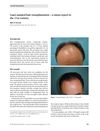
June 2005 in “Journal of Cosmetic Dermatology” Lasers in hair transplantation show promise but are not yet standard, with current methods causing some side effects and needles still being preferred for creating recipient sites.
9 citations
,
July 2025 in “Pharmaceuticals” This review highlights the therapeutic potential of plant-derived exosomes, noting their larger size compared to animal-derived exosomes and usefulness in targeted drug delivery and inter-kingdom communication. It summarizes existing research on their biogenesis, characterization, and engineering for drug delivery, indicating significant opportunities for biotechnological advancements.
2 citations
,
March 2025 in “Nanoenergy Advances” This review examines recent advances in bioelectronic nanogenerators for anti-cancer therapy, highlighting various transducing strategies such as photodynamic therapy and electrical stimulation, while also discussing the potential mechanisms for tissue repair and the challenges that lie ahead.
 January 2022 in “International Journal of Biology Pharmacy and Allied Sciences”
 This article discusses autoimmune diseases, detailing their types, symptoms, and potential management strategies, without providing new clinical findings.
 December 2021 in “International Journal of Biology Pharmacy and Allied Sciences”
 This article discusses various autoimmune diseases, including their symptoms and management, and reports no new clinical findings.
 August 2016 in “Journal of Investigative Dermatology”
 This study suggests that enhancing endocannabinoid tone with an EMT-inhibitor may have anti-inflammatory effects and slightly increase sebaceous lipid production, which could be beneficial for dry skin conditions.
 13 citations
,
March 2018 in “Journal of Sociology”
13 citations
,
March 2018 in “Journal of Sociology” This article argues that the promissory discourse in the anti-ageing treatments market exploits societal anxieties about ageing, but its long-term sustainability is questionable as many promises remain undeliverable.
November 2024 in “Journal of Investigative Dermatology” Reducing neutrophils or inhibiting NETs improves wound healing in sickle cell disease.
 February 2024 in “Scientific Reports”
 The wolves suspected of man-eating in the 1880s likely ate very little human flesh and mostly consumed a diet similar to herbivores and omnivores.
28 citations
,
October 1984 in “Journal of Investigative Dermatology”  September 2024 in “arXiv (Cornell University)”
 This study evaluated various NLP models for detecting bias in medical curricula, finding that fine-tuned BERT models perform well, whereas LLMs, despite being state-of-the-art in many tasks, are unsuitable for this application.
 27 citations
,
November 2008 in “Facial Plastic Surgery”
27 citations
,
November 2008 in “Facial Plastic Surgery” This article outlines the technical aspects, benefits, and challenges of follicular unit extraction for hair transplantation, but it reports no new clinical findings.
 18 citations
,
October 2017 in “Drug Design Development and Therapy”
18 citations
,
October 2017 in “Drug Design Development and Therapy” The study found that finasteride increased endoplasmic reticulum stress and reduced fertility in rats, effects that were alleviated by the administration of DA-9401.
 13 citations
,
January 2017 in “Molecules”
13 citations
,
January 2017 in “Molecules” This study reported that compounds isolated from Alpinia zerumbet significantly promoted hair cell growth and exhibited anticancer activity in cell cultures, suggesting potential as treatments for alopecia and cancer.
 2 citations
,
January 2023 in “Bioresource Technology Reports”
2 citations
,
January 2023 in “Bioresource Technology Reports” This study suggests that using glycosidases to lyse the polysaccharides of Botryoccocus braunii may allow for the semi-continuous recovery of hydrocarbons while keeping the cells viable.

This study reviews the potential of rosemary extract for promoting hair growth and reducing hair fall, noting that its efficacy is comparable to minoxidil and that it is generally safe for topical use, though further clinical trials are needed to standardize formulations and dosages.
 September 2025 in “Journal of Medical Internet Research”
 This study in Japan found that increased telemedicine use during the COVID-19 pandemic was linked to a significant reduction in both inpatient and total health care expenditures, without negatively impacting health outcomes such as mortality or common chronic condition indicators.