 1 citations
,
May 2023 in “Prospects in Pharmaceutical Sciences”
1 citations
,
May 2023 in “Prospects in Pharmaceutical Sciences” This study reviews current treatments for alopecia areata, highlighting that despite various options like corticosteroids and immunosuppressives, their limited efficacy and potential side effects are challenges, while targeting specific cytokines has shown promise except with TNF inhibitors, which may worsen the condition.
 1 citations
,
February 2023 in “Daehan ui'sa hyeobhoeji/Daehan uisa hyeopoeji”
1 citations
,
February 2023 in “Daehan ui'sa hyeobhoeji/Daehan uisa hyeopoeji” This article reviews strategies for managing the side effects of cytotoxic chemotherapy in primary healthcare settings and reports no new clinical findings.
1 citations
,
January 2021 in “Open Access Journal of Cancer & Oncology” In this study, the Trivedi Effect®-Consciousness Energy Healing Treatment was reported to significantly increase the solubility and isotopic abundance ratios of flutamide, potentially improving its stability and efficacy.
 1 citations
,
January 2013 in “Mayo Clinic Proceedings”
1 citations
,
January 2013 in “Mayo Clinic Proceedings” This case study details a 31-year-old woman diagnosed with secondary syphilis that presented with chronic headaches and hair loss, ultimately attributed to neurosyphilis and alopecia syphilitica.
This chapter reviews various types of aromatic compounds and provides references, but reports no new experimental results.
 July 2026 in “International Journal of Applied Pharmaceutics”
 This review discusses the dermatological and systemic adverse effects of hair dye use, particularly focusing on the common allergen para-phenylenediamine, and reports no new clinical data.
 May 2026 in “AAPS PharmSciTech”
 This study found that PEGylated LUT-Aspasomes significantly improved neuroprotective effects in stressed rats, enhancing spatial memory, reducing depressive-like behavior, and preserving hippocampal architecture better than free luteolin. Additionally, it increased brain delivery and stability, suggesting potential for treating stress-related neurobehavioral disorders.
 August 2025 in “Fabad Journal of Pharmaceutical Sciences”
 This review highlights the potential medicinal benefits of Cuscuta reflexa, a parasitic plant known for its bioactive compounds, while emphasizing the need for further research to fully understand its therapeutic mechanisms and integrate its use into mainstream medicine.
 December 2024 in “International Journal of Research in Ayurveda and Pharmacy”
 This review highlights the potential benefits of Sowbhagya Chundi Legiyam, a Siddha herbal formulation containing Zingiber officinale, for supporting women's health during the puerperal period, suggesting it may strengthen the uterus and prevent diseases due to improper postnatal care.
This study focused on extracting compounds from curry leaves using various methods and evaluated the extract's purity, solubility, and stability, suggesting potential health benefits like improved digestion and hair growth.
 January 2024 in “International Research Journal of Modernization in Engineering Technology and Science”
 In this study, researchers examined common chemotherapy side effects among 100 Pakistani cancer patients and explored the potential side effect reduction through hunger-based differential chemotherapy. They found widespread adverse reactions, with only 18% willing to fast for over 24 hours.
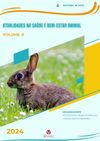 January 2024 in “Editora In Vivo eBooks”
 In this case report, a female mixed-breed dog was observed with dermatophytosis, presenting with alopecia in the neck and ear, highlighting the zoonotic nature of the infection caused by fungi that can affect both animals and humans.
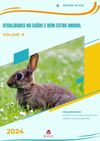 January 2024 in “Editora In Vivo eBooks”
 In this case report, the authors describe a female dog with alopecia in the neck and ear region, affected by dermatophytosis caused by the zoophilic fungus Microsporum canis, highlighting its zoonotic potential and prevalence in certain climates.
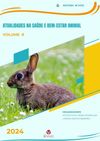 January 2024 in “Editora In Vivo eBooks”
 This case report documents a dog with dermatophytosis, caused by the fungus Microsporum canis, presenting symptoms like alopecia in the neck and ear, highlighting the condition's prevalence in tropical and temperate climates and its zoonotic nature.
 January 2024 in “Editora In Vivo eBooks”
 This study reports a case of dermatophytosis in an 11-month-old spayed female dog, which exhibited alopecia in the neck and ear tip regions, a condition common in tropical and temperate climates and caused by fungi affecting both animals and humans.
 January 2024 in “Editora In Vivo eBooks”
 In this case report, a dog was diagnosed with dermatophytosis, a zoonotic fungal infection common in humid climates, presenting with alopecia in the neck and ear regions.
 January 2024 in “Editora In Vivo eBooks”
 This study reports a case of dermatophytosis, a zoonotic fungal infection, in an eleven-month-old spayed female dog, characterized by alopecia on the neck and ear, highlighting the condition's prevalence in hot, humid climates.
 January 2024 in “Editora In Vivo eBooks”
 In this case report, researchers document a female dog in tropical conditions with dermatophytosis, a zoonotic fungal infection common in hot and humid climates, showing symptoms like alopecia on the neck and ear tips.
 January 2024 in “Editora In Vivo eBooks”
 This report describes a case of dermatophytosis, a zoonotic fungal infection common in tropical and temperate climates, affecting a female dog with alopecia on its neck and ear tip.
 December 2023 in “Migration letters”
 This meta-analysis reviewed 25 studies and suggested that herbal interventions could improve reproductive health in women with PCOS, showing benefits across measures such as Body Mass Index, hirsutism, and insulin levels, although results were mixed for fasting glucose and FSH levels.
 August 2023 in “International Ayurvedic medical journal”
 This case study describes the successful treatment of a 7-year-old girl with alopecia areata using Ayurvedic approaches targeting skin and autoimmune issues, suggesting a potential alternative to long-term oral corticosteroids, which can cause undesirable side effects.
 February 2023 in “Asian journal of pharmaceutical research and development”
 This survey reports on the types and extraction factors of flavonoids in three aquatic plants from Iraqi marshlands but notes limited information on individual flavonoid profiles and their biological impacts.
In this thesis, researchers explored ways to enhance the management of myotonic dystrophy type 1 by investigating the genetic inheritance patterns, especially small-sized repeat expansions, and assessing cardiac care, energy expenditure, and body composition in affected individuals.
 May 2022 in “Acta Scientific Women's Health”
 This case report describes a 45-year-old unvaccinated woman who experienced severe telogen effluvium, losing over 80% of her hair, about three months after recovering from COVID-19.
 January 2022 in “International Research Journal of Ayurveda & Yoga”
 This paper reviews Ayurvedic theories and practices in understanding and treating PCOS, suggesting it can be addressed with tridosha pacifying, agnivardhak chikitsa, and uttarvasti based on pathogenesis insights.
 December 2021 in “International Journal of Science and Research (IJSR)”
 This study explored Ayurvedic treatments for Khalitya (Alopecia areata) and found that using Virechana Karma, along with systemic medicines and Rasayan drugs, may be extremely beneficial in managing this condition.
 March 2021 in “Revista Colombiana de Cancerología”
 This report details the first two cancer patients with COVID-19 and co-infection cases at the Instituto Nacional de Cancerología, ESE, and presents their clinical symptoms and complications.
 December 2020 in “Nigerian journal of animal production”
 This study found that dexamethasone may induce diabetes in albino rats and Annona muricata methanolic bark extract resulted in significantly reduced blood sugar levels in dexamethasone-induced diabetic rats.
 February 2020 in “Scholars international journal of traditional and complementary medicine”
 This article explores Ayurvedic approaches to treating hair disorders and provides no new clinical results, highlighting practices like using herbal treatments for hair loss and greying.

This book reviews evidence-based medicine practices in obstetrics and gynecology but reports no new clinical findings.