31 citations
,
November 2009 in “European journal of dermatology/EJD. European journal of dermatology” This paper presents a consensus-driven diagnostic evaluation form for assessing hirsutism in premenopausal women, developed by The Skin Academy for use in clinical practice.
April 2026 in “Journal of the European Academy of Dermatology and Venereology” This study highlights the necessity for regionally tailored dermatology guidelines in Africa, given that existing international guidelines often overlook the continent's unique dermatological challenges, such as diverse skin presentations, cultural practices, and limited healthcare resources.
 January 1994 in “European Journal of Cancer”
 The European School of Oncology organized various educational events in 1994, highlighting important cancer research findings.
 8 citations
,
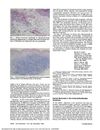
November 1990 in “Archives of Dermatology”
8 citations
,
November 1990 in “Archives of Dermatology” This case report details a woman with eosinophilia-myalgia syndrome associated with L-tryptophan ingestion, highlighting skin lesions with abundant dermal mucin.
10 citations
,
June 2019 in “Journal of the European Academy of Dermatology and Venereology” This article discusses the updated European Training Requirements for the specialty of Dermatology and Venereology, emphasizing the harmonization of curriculum to improve specialist training across Europe, and reports no new clinical results.
 1 citations
,
April 2023 in “Frontiers in Genetics”
1 citations
,
April 2023 in “Frontiers in Genetics” This report on individuals with AEBP1-related classical-like EDS confirmed previous findings and identified hair loss as a potential characteristic feature of this rare condition for the first time. Additionally, cardiovascular complications observed in some individuals suggest that cardiovascular monitoring may be necessary.
 August 2025 in “International Journal of Research in Dermatology”
 This case report highlights an atypical presentation of acrodermatitis enteropathica in an 18-year-old male, exhibiting symptoms like erythrokeratoderma variabilis with a positive response to high-dose oral zinc, underscoring the importance of considering zinc deficiency in unusual skin conditions.

Hair properties change under electromagnetic fields and are influenced by individual characteristics and the environment.
 May 2014 in “Journal of Aesthetic Nursing”
 This summary reflects on the success of the Health Education England stakeholder summit on non-surgical cosmetic interventions and outlines future training plans without reporting new research results.
 2 citations
,
January 2019 in “Annals of Dermatology”
2 citations
,
January 2019 in “Annals of Dermatology” Certain gene variations in EGF and EGFR may increase the risk of alopecia areata in Koreans.
 August 2025 in “Frontiers in Pharmacology”
 In this study, PA-011, a traditional Chinese medicine extract, was shown to improve hair growth in alopecia areata model mice by reducing skin inflammation and altering skin microbiota, indicating its potential therapeutic role for this condition.
 May 2026 in “International Journal of Drug Delivery Technology”
 This case study highlights Erythromelanosis follicularis faciei et colli as an easily overlooked pigmentary disorder characterized by a distinctive triad requiring precise diagnosis for effective patient counseling and cosmetic management.
22 citations
,
February 2023 in “European Journal of Neurology” This study found that fremanezumab was effective in reducing migraine headache days by at least 50% for the majority of patients with high-frequency episodic or chronic migraine who had failed previous treatments.
249 citations
,
May 2003 in “Developmental Biology” Ectodysplasin-A1 is crucial for developing hair, teeth, and glands.
March 2026 in “Experimental Dermatology” This study developed an in vitro model using NTERT keratinocytes expressing AEC-related TP63 mutations, which replicated skin defects observed in AEC patients and offers a valuable tool for understanding the disorder and developing new treatments.
 82 citations
,
April 2008 in “Journal of Investigative Dermatology”
82 citations
,
April 2008 in “Journal of Investigative Dermatology” EDA2R gene linked to hair loss.
 4 citations
,
March 2009 in “British Journal of Dermatology”
4 citations
,
March 2009 in “British Journal of Dermatology” This article discusses the highlights and key topics from the 17th Congress of the European Academy of Dermatology and Venereology but reports no new results.
 January 2011 in “Journal of Society of Cosmetic Chemists of Japan”
 This study found that a conditioner containing 18-MEA and SPDA can improve hair's smoothness and reduce flyaways, enhancing hair manageability.
 12 citations
,
January 2007 in “Acta dermato-venereologica”
12 citations
,
January 2007 in “Acta dermato-venereologica” This review discusses the classification and regulation challenges of anti-ageing cosmetics in Europe and reports no new findings; it calls for increased transparency to help consumers make informed choices.
January 2024 in “Biomedicines” This review discussed the cutaneous manifestations of APECED, highlighting chronic mucocutaneous candidiasis, alopecia areata, and vitiligo, while emphasizing the importance of early detection and monitoring for accurate diagnosis and patient care in various populations.
 2 citations
,
August 2024 in “Animal Bioscience”
2 citations
,
August 2024 in “Animal Bioscience” This study suggests that m6A-circHECA may influence the physiology of cashmere goats' SHFs both through miRNA pathways and interactions with target proteins, with promoter methylation potentially inhibiting its gene expression.
 January 2021 in “Social Science Research Network”
 This review discusses the ethical and legal challenges faced by practitioners who conscientiously object to participating in euthanasia and assisted suicide, reporting no new clinical results.
 March 2024 in “Royal Society of Chemistry eBooks”
 This book chapter reviews the regulatory frameworks for natural products used as cosmeceuticals across various countries, noting that major markets like the EU and USA influence emerging markets such as Japan, China, and India, which are now establishing or updating their own regulations.
 2 citations
,
December 2021
2 citations
,
December 2021 This study found that the observed isotropic ss-ECD spectrum of finasteride is influenced by the anisotropy of locally oriented crystals, offering new possibilities for analyzing solid-state chiral materials.
35 citations
,
March 2010 in “Journal of Dermatological Science” Ebastine may help regrow hair in alopecia areata patients.
 22 citations
,
November 2013 in “Clinical and experimental dermatology (Print)”
22 citations
,
November 2013 in “Clinical and experimental dermatology (Print)” This study suggests that Ecklonia cava, particularly its component dioxinodehydroeckol, may promote hair growth by enhancing dermal papilla and outer root sheath cell activity in culture and mice models.
May 2025 in “Journal of the European Academy of Dermatology and Venereology” This study reported that etrasimod did not achieve significant improvements in hair regrowth for moderate to severe alopecia areata at 24 weeks, although it showed a dose-dependent trend and was safe and well-tolerated over 52 weeks.
October 2021 in “European urology open science”  4 citations
,
July 1994 in “Clinics in Dermatology”
4 citations
,
July 1994 in “Clinics in Dermatology” This review discusses the emergence and impact of eosinophilia-myalgia syndrome related to L-tryptophan and offers insights into environmental factors affecting sclerodermatous conditions, with no new research findings presented.
 September 2000 in “Hair transplant forum international”
 This conference summary describes the third ESHRS meeting held in Istanbul in June 2000, featuring a multicultural gathering with historical context but reports no new scientific results.