24 citations
,
January 2018 in “Development” This study found that Frizzled genes Fzd3 and Fzd6 are redundantly involved in controlling hair follicle polarity in mice, but operate through distinct mechanisms, highlighting their complex role in hair orientation.
27 citations
,
February 2006 in “International Journal of Dermatology” This study concluded that isolated trichotillomania of the eyebrows and eyelashes, identified by specific hair characteristics, may be linked to underlying obsessive-compulsive disorders in affected patients.
7 citations
,
March 2004 in “Journal of the American Academy of Dermatology” Tiger tail banding and hair abnormalities are reliable indicators for diagnosing trichothiodystrophy.
3 citations
,
December 1991 in “PubMed” This report describes an infant who was diagnosed with Rothmund-Thomson syndrome, a rare genetic disorder characterized by diverse skin changes, short stature, and other developmental anomalies.
2 citations
,
February 2013 in “Journal of the Saudi Society for Dermatology & Dermatologic Surgery” This case study describes an acquired localized form of trichorrhexis nodosa resulting from physical-chemical trauma.
June 2018 in “International Journal of Dermatology”  February 2026 in “bonndoc (University of Bonn)”
 This study identified novel genetic variants related to rare skin and hair disorders, expanding the understanding of conditions like COLED, EV, and monilethrix, including a newly discovered type I keratin gene, KRT31, as a cause for monilethrix.
 21 citations
,
July 2005 in “European Journal of Emergency Medicine”
21 citations
,
July 2005 in “European Journal of Emergency Medicine” This case report discusses hair-tourniquet syndrome in infants, emphasizing the importance of early diagnosis and treatment to prevent serious complications.
14 citations
,
March 2018 in “The American journal of case reports” This study highlights the phenotypic variability in 5 patients with Woodhouse-Sakati syndrome carrying the c.436delC mutation, suggesting a broader range of clinical presentations than previously recognized.
 5 citations
,
January 1998 in “Clinical and experimental dermatology”
5 citations
,
January 1998 in “Clinical and experimental dermatology” This article discusses the late presentation of myotonic dystrophy but reports no new clinical findings.
8 citations
,
November 2009 in “The Neurologist/The neurologist” This case report highlights a 21-year-old woman with seizures, mental retardation, spastic diplegia, and ichthyosis consistent with Sjogren-Larsson syndrome, and emphasizes the importance of differential diagnosis when additional symptoms are present.
 19 citations
,
May 2006 in “Clinical and Experimental Dermatology”
19 citations
,
May 2006 in “Clinical and Experimental Dermatology” This study identified a novel insertion mutation in the hairless gene that may contribute to the development of congenital atrichia with papular lesions in a Pakistani family.
 January 2022 in “European journal of anatomy”
 This study reports a rare case of polyorchidism in a 96-year-old male cadaver, suggesting a new classification based on anatomical and histological findings to aid in accurate diagnosis.
 April 2025 in “Dermatology Practical & Conceptual”
 UV-enhanced trichoscopy helps diagnose hair shaft disorders like pili annulati.
 13 citations
,
June 2006 in “Pituitary”
13 citations
,
June 2006 in “Pituitary” This article reports on a case where a 26-year-old woman with acromegaloidism was found to have X-tetrasomy, suggesting it should be considered in differential diagnoses due to its potential impact on growth-related genes.
January 2026 in “Clinical Case Reports” This case report describes a 6-year-old girl diagnosed with the rare concurrence of monilethrix and trichorrhexis nodosa, characterized by sparse, brittle hair, who showed minimal clinical improvement with low-dose oral and topical minoxidil treatment.
2 citations
,
September 2021 in “JAAD case reports” This report describes a case of trichodysplasia spinulosa in a renal transplant patient, characterized by unique dermatoscopic features and highlighting the need for timely diagnosis.
 13 citations
,
January 2012 in “International journal of trichology”
13 citations
,
January 2012 in “International journal of trichology” This case study describes a 14-year-old girl with pili annulati who had fragile hair, which may be due to cavities within the hair shafts as seen in electron microscopic examinations.
12 citations
,
May 2006 in “Journal of Neurology Neurosurgery & Psychiatry” Neuromyotonia and morphoea can occur together in the same body areas.
October 2025 in “OPAL (Open@LaTrobe) (La Trobe University)” In this case study, a 10-month-old minority infant from Xinjiang, China, with acrodermatitis enteropathy caused by an SLC39A4 gene mutation showed clinical improvement and increased zinc levels following zinc supplementation, highlighting the importance of early genetic testing and customized treatment in managing the disorder.
 42 citations
,
September 2000 in “British Journal of Dermatology”
42 citations
,
September 2000 in “British Journal of Dermatology” This report describes two children with congenital hypotrichosis and found their short hair is due to a shortened anagen phase, with the condition resolving spontaneously during puberty.
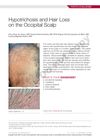 September 2023 in “Cutis”
 This study presents a case of a 6-month-old infant girl with hypotrichosis and an alopecic plaque in the occipital region, characterized by broken and dystrophic hairs with follicular papules and perifollicular hyperkeratosis, suggesting a diagnostic consideration.
 1 citations
,
April 2016 in “British Journal of Dermatology”
1 citations
,
April 2016 in “British Journal of Dermatology” Buschke-Ollendorff syndrome is a rare genetic disorder causing skin and bone changes, with some cases also showing ADHD or developmental delays.
July 2025 in “Journal of Cutaneous Pathology” In this case report, a newborn with Conradi-Hünermann-Happle syndrome was diagnosed through early skin biopsy, which revealed unique histopathological features, including dystrophic calcifications, confirming a pathogenic variant in the EBP gene.
 6 citations
,
July 2011 in “British Journal of Dermatology”
6 citations
,
July 2011 in “British Journal of Dermatology” This paper reports a case of sebaceous carcinoma developing at the site of chronic candidiasis in a patient with keratitis–ichthyosis–deafness syndrome, without presenting new generalizable findings.
April 2015 in “Our Dermatology Online” This report presents a case of acrodermatitis enteropathica in a 22-year-old female, highlighting the absence of underlying comorbid conditions.
 June 2023 in “British Journal of Dermatology”
 In this case report, researchers described a female child with total alopecia due to a mutation in the SNRPE gene, emphasizing the need for updated genetic testing as knowledge advances to avoid diagnostic delays in hereditary nonsyndromic hypotrichosis.
 February 2024 in “Journal of Dermatological Science”
 This study examined the formation of acquired curved hair and found that the fusion of hair matrix cells during follicle regeneration contributes to asymmetric follicle shapes and curved hair, potentially linked to changes in type IV collagen and protein expression levels.
3 citations
,
February 2013 in “Actas dermo-sifiliográficas/Actas dermo-sifiliográficas” A 6-year-old boy developed excessive hair growth after taking diazoxide for low blood sugar.
April 2024 in “Anais Brasileiros de Dermatologia”