 2 citations
,
June 1987 in “British Journal of Dermatology”
2 citations
,
June 1987 in “British Journal of Dermatology” This study demonstrates that warming hands can restore normal blood flow in patients with systemic sclerosis, making their response to cooling similar to that of healthy controls.
September 2024 in “Journal of the American Academy of Dermatology” Generic topical and transdermal systems usually cause minimal irritation or sensitization.
41 citations
,
April 2009 in “Journal of comparative neurology” In this study, researchers observed that P2X3-immunoreactive fibers extensively innervate the epidermis of rats, suggesting a primary role in detecting noxious stimuli in cutaneous tissue.
22 citations
,
March 1999 in “International Journal of Clinical Practice” This review discusses the use of topical immunotherapy for severe alopecia areata and resistant viral warts, highlighting diphencyprone's advantages and the need for careful handling to avoid staff sensitisation; it reports no new clinical results.
2 citations
,
October 2013 in “Journal of Veterinary Internal Medicine” This study reports the first documented case of sweat hypersensitivity and progressive sebaceous adenitis in a horse, highlighting the potential for sweat-induced urticaria when exercising or under sedation.
12 citations
,
May 2006 in “Journal of Neurology Neurosurgery & Psychiatry” Neuromyotonia and morphoea can occur together in the same body areas.
 1 citations
,
March 2023 in “Frontiers in Cardiovascular Medicine”
1 citations
,
March 2023 in “Frontiers in Cardiovascular Medicine” A specific gene variant is linked to heart disease, increased heart muscle, curly hair, and thick skin on palms and soles.
 February 2026 in “Journal of Cutaneous and Aesthetic Surgery”
 In this study, a case of a 20-year-old woman revealed ectopic acanthosis nigricans at a post-syndactyly-release surgical site, suggesting this rare condition could result from epidermal–dermal mismatch and altered growth factor signaling in grafted skin, without indicating any metabolic or malignancy concerns.
 2 citations
,
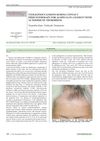
July 2014 in “Our Dermatology Online”
2 citations
,
July 2014 in “Our Dermatology Online” This case report documents the development of vitiligo-like lesions in a patient with autoimmune thyroiditis following the use of topical squaric acid dibutylester for alopecia.
July 2025 in “Indian Dermatology Online Journal” In this case report, researchers documented a rare instance of trans-epidermal elimination of insulin formulation in a 45-year-old woman with diabetes, suggesting that insulin or its excipients may have caused a granulomatous reaction leading to skin lesions at injection sites and impaired diabetes control.
 2 citations
,
April 2015 in “Journal of Evolution of Medical and Dental Sciences”
2 citations
,
April 2015 in “Journal of Evolution of Medical and Dental Sciences” This study found that patients with hypothyroidism at a tertiary hospital in South India most commonly exhibited skin dryness (xerosis/ichthyosis) and swelling of the feet (pedal oedema).
60 citations
,
September 2001 in “British journal of dermatology/British journal of dermatology, Supplement” This review discusses the use of contact sensitizers in topical immunotherapy for conditions like alopecia areata and viral warts, focusing on treatment methods, efficacy, and potential adverse effects, and reports no new clinical results.
 23 citations
,
July 2008 in “British journal of dermatology/British journal of dermatology, Supplement”
23 citations
,
July 2008 in “British journal of dermatology/British journal of dermatology, Supplement” This review discusses the use of contact sensitizers for topical immunotherapy in dermatological conditions such as alopecia areata and viral warts, but it reports no new clinical findings.
 98 citations
,
November 2002 in “Contact Dermatitis”
98 citations
,
November 2002 in “Contact Dermatitis” This study found that adverse reactions to para-phenylenediamine in hair dye, including severe allergic contact dermatitis, may be more common than currently reported and often misdiagnosed.
7 citations
,
January 2020 in “Dermatology online journal” In this case report, adult-onset porokeratotic eccrine ostial and dermal duct nevus improved with topical tazarotene treatment, as evidenced by dermatoscopic images.
 4 citations
,
December 2020 in “Neuropsychiatric Disease and Treatment”
4 citations
,
December 2020 in “Neuropsychiatric Disease and Treatment” In this study, body dysmorphic disorder symptoms in dermatological patients were strongly linked to psychiatric issues and reduced quality of life, particularly among those with unclassified dermatoses.
 9 citations
,
March 2011 in “Clinical and experimental dermatology”
9 citations
,
March 2011 in “Clinical and experimental dermatology” This paper discusses the concept of "coudability," a characteristic of alopecia areata, and provides a historical perspective, but it reports no new clinical results.

This case study documents a 55-year-old male with advanced NSCLC who experienced toe-predominant paronychia and a papulopustular rash following dacomitinib treatment, with the causality tools indicating a "probable" link, yet the therapy continued successfully without dosage alteration.
 August 2018 in “Journal of Investigative Dermatology”
 This case report describes the first known instance of dermatomyositis-related panniculitis in the neck and mediastinal region, effectively treated with corticosteroids, dapsone, and colchicine.
September 2024 in “Actas Dermo-Sifiliográficas” This study discusses trichodynia, a painful scalp condition often linked to various forms of alopecia and psychiatric comorbidities, highlighting its clinical diagnosis, lack of specific treatments, and suggesting the need for more research to explore effective therapies.
6 citations
,
October 2016 in “Pediatric Dermatology” This case report describes a unique instance of a 6-year-old girl developing angioedema after treatment with squaric acid dibutylester for alopecia areata.
January 1998 in “The Nishinihon Journal of Dermatology” A 7-year-old girl was diagnosed with Netherton's Syndrome, shown by skin and hair symptoms.
 January 2009 in “Springer eBooks”
 Skin problems can be a sign of hormone-related diseases.
 2 citations
,
January 2014 in “Elsevier eBooks”
2 citations
,
January 2014 in “Elsevier eBooks” This review discusses drug-induced hypersensitivity syndrome and drug reaction with eosinophilia and systemic symptoms, highlighting clinical features, potential viral reactivations, and treatment, but reports no new clinical findings.
 8 citations
,
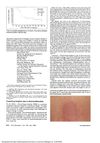
July 1990 in “Archives of Dermatology”
8 citations
,
July 1990 in “Archives of Dermatology” This case report details a fixed-drug eruption in a woman linked to the use of dextromethorphan, marking it as a previously unreported skin reaction to this medication.
47 citations
,
September 1995 in “British Journal of Dermatology” This review discusses the complication of vitiligo in patients undergoing diphencyprone sensitization therapy for alopecia universalis and reports no new clinical findings.
122 citations
,
June 1998 in “PubMed” This study found that sensory and sympathetic innervation in the mystacial pads of mice is governed by a balance of neurotrophin signaling, highlighting the roles of NGF/trkA and NT-3/trkC pathways.
 31 citations
,
October 2013 in “Psychosomatics”
31 citations
,
October 2013 in “Psychosomatics” This review discusses cutaneous adverse effects of psychotropic medications and reports no new findings, emphasizing the importance of psychiatrists being aware of these potential skin reactions.

This study identified the TALE homeodomain transcription factor Meis2 as a crucial regulator for the maturation and end-organ innervation of certain mechanoreceptors in mice, with its absence leading to altered sensory neuron structure and impaired touch sensitivity.
 15 citations
,
October 2006 in “Journal of the American Academy of Dermatology”
15 citations
,
October 2006 in “Journal of the American Academy of Dermatology” This case report describes subcutaneous emphysema in a patient's forearm as a rare complication of liquid nitrogen spray used on hypertrophic actinic keratosis, resolving spontaneously within a day.