This article reviews the history and characteristics of the rare nude phenotype SCID, primarily distinguished by severe T cell immunodeficiency and notable skin and hair abnormalities, but reports no new clinical findings.
32 citations
,
November 2020 in “UNC Libraries” This study identified a mutation in the steroid-binding domain of the androgen receptor gene associated with complete androgen insensitivity syndrome, impairing male sexual development due to altered androgen receptor protein function.
20 citations
,
October 2005 in “Archives of Dermatological Research” 11 citations
,
February 1982 in “Mutation Research/Fundamental and Molecular Mechanisms of Mutagenesis” This study reports that treatment with X-rays or procarbazine induced dose-dependent mutations in melanocytes in mouse hair follicles, showing similar mutation rates to previous methods.
59 citations
,
November 2002 in “Pediatric Dermatology” This article describes a case of dyschromatosis universalis in a young Saudi Arabian girl, discussing similar cases reported outside the Far East where the condition was initially identified, but provides no new research findings.
 August 2022 in “Frontiers in genetics”
 This study identified a novel bi-allelic missense variant in the DSC3 gene linked to severe Hypotrichosis with Recurrent Skin Vesicles in a Saudi child, supporting its role in the condition.
2 citations
,
December 2013 in “Journal of dermatology” This letter reports a homozygous missense mutation in the LIPH gene causing autosomal recessive hypotrichosis simplex in a Chinese patient.
11 citations
,
December 2013 in “Clinical and experimental dermatology” This study reports a case of a child with congenital skin fragility, alopecia, and cardiomyopathy due to compound heterozygous mutations in the DSP gene causing desmoplakin deficiency.
 1 citations
,
January 2020 in “Research Square (Research Square)”
1 citations
,
January 2020 in “Research Square (Research Square)” This study found that inherited color dilution in Rex rabbit hair follicles is associated with DNA methylation changes, contributing to understanding the epigenetic regulation of rabbit pigmentation.
 November 2025 in “International Journal of Clinical Obstetrics and Gynaecology”
 This study found evidence for a genetic basis of polycystic ovary syndrome, indicating an autosomal dominant pattern of inheritance among first-degree relatives.
5 citations
,
July 2017 in “International journal of endocrinology and metabolism/International journal of endocrinology and metabolism.” This study described the clinical and genetic features of two Iranian siblings with hereditary vitamin D resistant rickets, identifying a specific VDR gene mutation contributing to their symptoms.
37 citations
,
October 2006 in “Archives of Biochemistry and Biophysics” This study describes a patient with hereditary vitamin D resistant rickets (HVDRR) who, despite having a truncated vitamin D receptor, did not exhibit typical hair or skin abnormalities, suggesting possible compensation via interactions with other proteins.
53 citations
,
May 1996 in “The Journal of Clinical Endocrinology & Metabolism” This study identified multiple mutations in the 5 alpha-reductase-2 gene among male pseudohermaphrodites in the Dominican Republic, suggesting they do not share a common ancestry.
36 citations
,
January 2010 in “Journal of Pediatric Endocrinology and Metabolism” This study identified a novel nonsense mutation in the VDR gene in two patients with hereditary vitamin D resistant rickets and alopecia, leading to resistance to 1,25-dihydroxyvitamin D3.
 7 citations
,
January 2015 in “Case reports in genetics”
7 citations
,
January 2015 in “Case reports in genetics” This case report illustrates how SNP array testing helped identify a DCAF17 mutation linked to Woodhouse-Sakati syndrome in consanguineous Qatari siblings with shared features including alopecia and hypogonadotropic hypogonadism.
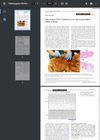 May 2024 in “Animal genetics”
 The researchers investigated a Maine Coon cat with suspected classical Ehlers-Danlos Syndrome and discovered a heterozygous deletion in the COL5A1 gene, underscoring the value of whole-genome sequencing for precise veterinary diagnostics.
 November 2022 in “Journal of Investigative Dermatology”
 In this study, analysis of over 800 Iranian patients with epidermolysis bullosa identified 15 with pathogenic PLEC variants, highlighting a correlation between variant locations and phenotypic manifestations of plectinopathies.
January 2026 in “American Journal of Medical Genetics Part A” The researchers reported two brothers with a new variant of X-linked trichothiodystrophy associated with an RNF113A gene mutation, highlighting features such as intellectual disability and growth failure, but without previously reported endocrinological or genital abnormalities, underlining the importance of genetic counseling for such variants.
61 citations
,
September 1994 in “Journal of Medical Genetics” This study found strong evidence linking a keratin gene anomaly to pachyonychia congenita, supporting its role in affecting skin, nails, hair, and mucosa.
 57 citations
,
July 2005 in “Genetics”
57 citations
,
July 2005 in “Genetics” In this study on Drosophila wings, researchers identified 435 genes with significant expression changes during wing hair morphogenesis, and found new phenotypes for 9 genes through functional validation.
 52 citations
,
November 2003 in “Journal of Investigative Dermatology”
52 citations
,
November 2003 in “Journal of Investigative Dermatology” In this study, mutations in the CDH3 gene were identified as the cause of hypotrichosis with juvenile macular dystrophy, and the researchers observed substantial phenotypic variability among affected individuals.
1 citations
,
September 2021 in “Journal of Cosmetic Dermatology” This study found that the ACE gene I/D polymorphism may serve as a genetic susceptibility indicator for androgenetic alopecia in an Egyptian patient group.
 6 citations
,
January 2014 in “Journal of pediatric endocrinology & metabolism/Journal of pediatric endocrinology and metabolism”
6 citations
,
January 2014 in “Journal of pediatric endocrinology & metabolism/Journal of pediatric endocrinology and metabolism” This case series describes three siblings with hereditary vitamin D-resistant rickets, highlighting variations in their clinical presentations.
 2 citations
,
July 2011 in “AFRICAN JOURNAL OF BIOTECHNOLOGY”
2 citations
,
July 2011 in “AFRICAN JOURNAL OF BIOTECHNOLOGY” This study identified genetic variations in the DSG4 gene among sheep, revealing valuable markers for assessing their impact on wool traits.
 1 citations
,
February 2013 in “InTech eBooks”
1 citations
,
February 2013 in “InTech eBooks” Genetic mutations cause various hair diseases, and whole genome sequencing may reveal more about these conditions.
 97 citations
,
March 2002 in “Molecular and cellular biology”
97 citations
,
March 2002 in “Molecular and cellular biology” This study found that mice with a mutant CDP/Cux protein lacking the homeodomain showed severely impaired growth, high postnatal mortality, and reduced fertility, highlighting CDP/Cux's role in developmental regulation.
12 citations
,
March 2012 in “JEADV. Journal of the European Academy of Dermatology and Venereology/Journal of the European Academy of Dermatology and Venereology” This study observed that some patients with homozygous c.736T>A mutation in LIPH may have mild hypotrichosis with long hairs in adulthood.
35 citations
,
May 2006 in “Journal of Investigative Dermatology” Monilethrix involves multiple genes affecting hair structure, including DSG4 mutations.
46 citations
,
December 1992 in “The Journal of Steroid Biochemistry and Molecular Biology” In this study, researchers observed that testicular 17β-hydroxysteroid dehydrogenase deficiency in an inbred Arab population in Israel leads to genital ambiguity at birth and progressive virilization after puberty.
6 citations
,
June 2018 in “bioRxiv (Cold Spring Harbor Laboratory)” This study found that human centromeric regions exhibit large-scale haplotypes with significant diversity, including entire Neanderthal haplotypes, which may affect chromosome transmission.