 July 2021 in “Indian Journal of Animal Research”
 This study reports that among rats with penile fractures, those treated with primary repair plus homologous platelet-rich plasma showed the best healing compared to other treatment methods.
 July 2021 in “European Journal of Plastic Surgery”
 Modern society values both traditional beauty and imperfections, but media pressures lead to more cosmetic enhancements and ethical concerns.
This abstract suggests that cost barriers limit the application of standard aesthetic procedures in developing countries, while exploring platelet-rich plasma as a potentially safer and less invasive option in geriatric aesthetics. Detailed results were not reported.

This article reviews knowledge-sharing efforts in pharmaceutical sciences at the University of Sorocaba, highlighting global collaboration on rational medicine use, without reporting new study results.
This article discusses the Graduate Program in Pharmaceutical Sciences at the University of Sorocaba and emphasizes collaborating internationally to improve health policies and practices but reports no new research findings.
 July 2020 in “Nepalese journal of ophthalmology”
 This case report from Nepal describes a five-year-old boy with Hutchinson Gilford Progeria Syndrome experiencing ocular manifestations, highlighting the role of ocular senescence in this genetic disorder.

This article introduces geriatric aesthetics and discusses the potential of platelet-rich plasma as a cost-effective solution in developing countries, but reports no new clinical results.
 January 2020 in “Durham e-Theses (Durham University)”
 This study concluded that UK law falls short in ensuring effective workplace equality for individuals with visible differences, suggesting amendments to the definition of disability and other legal reforms as potential solutions.
 January 2020 in “Asian journal of applied science and technology”
 This source provides an overview of the dietary recommendations for macronutrient intake and the benefits of plant-based diets, including meeting essential amino acid needs through combining plant proteins and the advantages of consuming complex carbohydrates and adequate fiber for health.
 August 2019 in “International journal of contemporary pediatrics”
 This case study reports that a 3 ½ year-old male with vitamin D-dependent type II rickets showed partial improvement in alopecia and rickets when treated with high doses of 1,25(OH)2 vitamin D3.
 March 2019 in “Journal of medical science and clinical research”
 This study found that cutaneous manifestations, including specific skin lesions and oral ulceration, are common early indicators of SLE and may aid in its diagnosis and management.
 December 2018 in “Neuroradiology”
 MRI helps distinguish between pituitary adenomas and craniopharyngiomas, guides treatment for pediatric CNS tumors, and assesses rhinocerebral mucormycosis with a high mortality rate in transplanted patients.
 October 2018 in “Journal of Clinical Research in Pediatric Endocrinology”
 This study found that children with classic congenital adrenal hyperplasia had elevated epicardial fat thickness, which was associated with increased carotid intima media thickness, left ventricular mass, and mitral deceleration time.
 July 2018 in “British Journal of Dermatology”
 Hair regrowth was seen in 83% of children with alopecia, immune system plays a role in the condition, and various treatments showed effectiveness for hair and nail disorders.
 June 2018 in “Acta Scientiae Veterinariae”
 This study describes three cases of dermatomyositis-like disease in mongrel dogs with compatible clinical findings and outcomes following slightly different treatment protocols.
This reference list, part of a book by Alex Gough, Alison Thomas, and Dan O'Neill, compiles citations from veterinary journals on various canine and feline health issues, but reports no new research findings.
This study found that proretinal nanoparticles, applied topically, are safe and effective for penetration into hair follicles, enhancing retinoid biological activity in the skin while reducing irritation compared to conventional retinal formulations.
 January 2018 in “Springer eBooks”
 This study discusses how dermatological issues in athletes can arise from or be exacerbated by mechanical trauma, infections, and environmental factors, highlighting the importance of thorough history and examination to differentiate these from other skin conditions.
 January 2018 in “Skin appendage disorders”
 The document focused on hair disorders, especially alopecia, and discussed treatments and impacts on quality of life.
 January 2018 in “Georg Thieme Verlag eBooks”
 There are several educational routes to become a facial surgeon, each with different specializations and fellowships.
 November 2017 in “International journal of research in dermatology”
 This case report describes a rare instance of nevus comedonicus with a multi-dermatomal unilateral pattern along the lines of Blaschko, treated unsuccessfully with topical tretinoin and oral retinoids.
 May 2017 in “InTech eBooks”
 This article reviews the follicular unit extraction technique in hair transplantation for androgenetic alopecia and other hair loss conditions, noting it can effectively meet patient expectations but reports no new clinical data.
 October 2016 in “Elsevier eBooks”
 This article reviews the most common skin diseases worldwide and reports no new clinical findings.
 January 2016 in “Georg Thieme Verlag eBooks”
 More East Asians are accepting and getting facial plastic surgery, with a focus on natural-looking results and using both surgical and nonsurgical methods.
 January 2016 in “Georg Thieme Verlag eBooks”
 Facelift surgery has evolved to focus on natural results and safety, with patient selection and postoperative care being key to success.
 January 2016 in “Springer eBooks”
 A 19-year-old male with delayed puberty was successfully treated for a condition that prevents normal hormone production.
 September 2014 in “Journal der Deutschen Dermatologischen Gesellschaft”
 Diabetes can cause a variety of skin disorders, some of which may signal more serious health issues.
 November 2013 in “International Journal of Medical and Health Sciences”
 This review discusses hair tourniquet syndrome, highlighting its potential for delayed diagnosis and the association with maternal telogen effluvium, but reports no new clinical results.
 January 2013 in “Journal of dermatology”
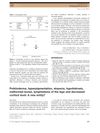
 This letter to the editor raises the possibility of a new medical entity characterized by symptoms such as poikiloderma, hyperpigmentation, alopecia, malformed bones, lymphedema, and decreased cortisol, but provides no clinical results.
This study found that low-level laser therapy (LLLT) may enhance hearing recovery after noise-induced hearing loss in rats.