990 citations
,
October 1999 in “Development” This study found that LEF1/TCF3 is necessary but not sufficient for TOPGAL activation in hair follicle development, indicating complex regulation in the skin.
65 citations
,
September 2014 in “BMC genomics” This research found that variations in the KRTAP gene family are likely responsible for the diverse hair phenotypes seen among mammals, influenced by gene repertoire differences, expression, and evolutionary factors.
December 2025 in “Zenodo (CERN European Organization for Nuclear Research)” This abstract describes the intended benefits of Kerablak Calcium Pantothenate Tablet for hair health but reports no new clinical study findings.
45 citations
,
April 2009 in “Journal of anatomy” This study examined the complex morphology of the cornified claw sheath in domesticated cats, uncovering structures and growth patterns that help maintain sharp claw tips essential for climbing and prey capture.
2 citations
,
December 1973 in “Calcified tissue research” This study proposed a hypothesis for cutaneous calcinosis, suggesting that feeding DHT and subsequent epilation lead to ATP release and calcium orthophosphate formation, initiating calcification in rats.
2 citations
,
September 2023 in “Journal of the American Academy of Dermatology” CTP-543 effectively promotes hair regrowth in adults with moderate to severe alopecia areata.
 April 2017 in “The journal of investigative dermatology/Journal of investigative dermatology”
 This study identified intramembrane proteolysis as a key feature of Astrotactin2 maturation, providing insights into its role in planar cell polarity hair patterning.
 43 citations
,
July 1984 in “Clinical and Experimental Dermatology”
43 citations
,
July 1984 in “Clinical and Experimental Dermatology” This study found that women with common baldness treated with cyclical antiandrogen therapy for 52 weeks experienced increased hair density and a higher percentage of hairs in the anagen growth phase.
 1 citations
,
April 2015 in “Current problems in dermatology”
1 citations
,
April 2015 in “Current problems in dermatology” The document concludes that the trichogram is a useful tool for diagnosing hair loss and suggests semi-organ cultures for practical trichological research.
February 2005 in “Journal of the American Academy of Dermatology”  January 2026 in “Frontiers in Public Health”
 This study observed distinct post-marketing safety signal patterns for baricitinib and tofacitinib in adult AA, influenced by their differing regulatory uses and real-world contexts, and emphasizes the need for future studies to validate these findings.
17 citations
,
September 2009 in “British Journal of Dermatology” This study suggests that clinically apparent fragile hair in children is rarely linked to trichothiodystrophy, and the tiger-tail pattern is not wholly specific to this diagnosis.
1 citations
,
March 2013 in “Revista de Investigaciones Veterinarias del Perú” This study found that a single application of 0.1% aqueous benzalkonium chloride solution effectively treated dermatomycosis caused by Trichophyton species in guinea pigs.
1 citations
,
September 2017 in “Zhonghua neifenmi daixie zazhi” This article discusses the importance of routine karyotyping in patients with congenital adrenal hyperplasia, as it may reveal the presence of Turner syndrome and recommends early diagnosis and treatment; it reports no new clinical results.
 July 2005 in “Journal of The American Academy of Dermatology”
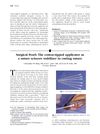
 This article discusses the various uses of the cotton-tipped applicator in dermatologic surgery, highlighting its innovative role as a suture scissors stabilizer, but reports no clinical results.
 April 2018 in “Journal of Investigative Dermatology”
 This paper presents a new methodology combining magnetic tweezers and traction force microscopy to study keratinocyte mechanobiology, but reports no experimental results yet.
 41 citations
,
December 2015 in “JAMA Dermatology”
41 citations
,
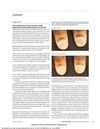
December 2015 in “JAMA Dermatology” Tofacitinib citrate improved nail dystrophy and pain in patients with alopecia universalis without causing side effects.
4 citations
,
November 2018 in “Postgraduate Medical Journal” This report highlights that trichoscopy is a useful, non-invasive tool for diagnosing tinea capitis in children, particularly in areas where lab facilities are limited.

Baricitinib may reactivate trichilemmal cysts in people with a history of these cysts.
42 citations
,
July 2017 in “Molecular therapy” This study found that applying a tocotrienol-rich phytochemical topically induced hair follicle development in adult mice, revealing a new epidermal pathway involving E-cadherin and β-catenin.
 September 2022 in “Piretc”
 This article reviews the physical factors influencing the growth of fungi, focusing on the genus Trametes and their ecological roles, but reports no new empirical findings.
10 citations
,
January 1997 in “Dermatology” This case report details two siblings with trichothiodystrophy, identifying reduced hair sulfur content as essential for diagnosis despite varied symptoms complicating recognition.
May 2019 in “Journal of clinical oncology” This Phase 1 study reported that topical application of BPM31543 was safe and well-tolerated in patients receiving taxane-based chemotherapy, with some experiencing less than 50% hair loss, suggesting potential efficacy in reducing chemotherapy-induced alopecia, although no maximum tolerated dose was identified.
January 2002 in “Linchuang pifuke zazhi” This report describes an unusual case of proliferating trichilemmal cyst with trichoepitheliomatous change in a young woman, differing from its typical presentation in elderly women.
 March 2022 in “Berkala Ilmu Kesehatan Kulit dan Kelamin/Berkala ilmu kesehatan kulit dan kelamin (Periodical of dermatology and venerology)”
 This study found that nearly half of the tinea capitis patients at a Surabaya hospital had cat contact, with the most common symptoms being crust and hair loss.
January 2003 in “Dermatology”  April 2023 in “Journal of Investigative Dermatology”
 This study suggests that the CsA-induced inactivation of the CaN/NFAT pathway may suppress TGF-β2 expression in dermal papilla cells, potentially contributing to CsA-associated hypertrichosis.
October 2025 in “Diagnostics” In this case study, an 18-year-old woman's triangular alopecic patch diagnosed as temporal triangular alopecia was considered non-progressive and had no impact on her quality of life, so no treatment was initiated.