 3 citations
,
April 1978 in “PubMed”
3 citations
,
April 1978 in “PubMed” This article discusses the causes and diagnosis of telogen effluvium, highlighting traction alopecia as a useful model for studying hair loss, but reports no new clinical results.
112 citations
,
September 1968 in “PubMed” In this study, irreversible alopecia on the crown of the scalp in Black women using hot combs was associated with chronic inflammation and follicle damage leading to scarring.
May 2010 in “Faculty Opinions – Post-Publication Peer Review of the Biomedical Literature” A mutation in the KRT74 gene causes woolly hair by affecting hair texture.
This article reviews a clinical case of pseudofolliculitis, highlighting its chronic nature, commonality in individuals with curly hair, and suggests management strategies, but reports no new clinical results.
 3 citations
,
May 2019 in “Australasian Journal of Dermatology”
3 citations
,
May 2019 in “Australasian Journal of Dermatology” This letter to the editors discusses the nature of alopecia in Cronkhite–Canada syndrome and questions whether it is truly telogen effluvium, but it reports no new clinical findings.
29 citations
,
January 2003 in “Genomics” A new mouse mutation causes skin and hair issues, influenced by another gene.
 4 citations
,
March 2016 in “DOAJ (DOAJ: Directory of Open Access Journals)”
4 citations
,
March 2016 in “DOAJ (DOAJ: Directory of Open Access Journals)” This study found that a self-emulsifying formulation with eugenol in emu oil improved hair conditioning and growth in rats, showing rapid hair increase after an initial delay compared to minoxidil.

This research addresses the common concern of hair loss, often seen in post-COVID syndrome and other systemic conditions, and highlights uncertainties around its causes, diagnostic criteria, and the necessity for medical consultation, with implications for patient psychological wellbeing.
 17 citations
,
June 2012 in “Journal of experimental zoology. Part B, Molecular and developmental evolution”
17 citations
,
June 2012 in “Journal of experimental zoology. Part B, Molecular and developmental evolution” This review explores theories on the evolution of hair from synapsid scales and glands, proposing mechanisms supported by comparative studies, but reports no new experimental findings.
February 2026 in “Journal of the American Academy of Dermatology” June 2026 in “Journal of Clinical Practice and Medical Case Report.” This case report described a 16-year-old girl with trichotillomania, highlighting the challenges in diagnosing the condition due to its similarity with alopecia areata and the sociocultural barriers preventing acceptance of psychiatric treatment.
17 citations
,
July 1984 in “British journal of dermatology/British journal of dermatology, Supplement” This study describes a distinctive form of ichthyosis characterized by abnormal epidermal differentiation mainly within hair follicles in four patients with congenital follicular hyperkeratosis.
10 citations
,
November 2008 in “Veterinary Dermatology” In this study, the misshaped and hairy ear phenotype in mutant mice was linked to mis-expression of certain Hoxc genes due to a chromosomal inversion.
 May 2026 in “Research Square”
 This research reports that the polyG fragment within the Hoxc13 protein alters its gene regulatory functions, which could have influenced mammalian hair evolution by affecting pathways related to hair follicle development.
 1 citations
,
May 2003 in “Archives of Pathology & Laboratory Medicine”
1 citations
,
May 2003 in “Archives of Pathology & Laboratory Medicine” This report discusses a case of pediatric trichotillomania, detailing its clinical presentation and distinguishing histopathological characteristics, ultimately diagnosing the condition in a 7-year-old boy with nonscarring alopecia.
 3 citations
,
January 2019 in “Indian Journal of Dermatology”
3 citations
,
January 2019 in “Indian Journal of Dermatology” This study observed that transverse sectioning of scalp biopsies may aid in diagnosing different types of alopecia by revealing distinct histopathological features like follicle miniaturization and specific inflammatory patterns.
7 citations
,
May 2021 in “General and comparative endocrinology” This study concluded that qiviut cortisol can be used as a measure of HPA axis activity in muskoxen, with hair growth phase and body region affecting cortisol levels.
January 2025 in “Animal Science Journal” This study reported that the coat hairs of golden takin, living in harsh environments, have unique structural features compared to cattle, with overcoat hairs having continuous medullated tissue and undercoat hairs being finely crimped, potentially contributing to temperature regulation in cold conditions.
 27 citations
,
February 2017 in “Biomedicine & Pharmacotherapy”
27 citations
,
February 2017 in “Biomedicine & Pharmacotherapy” This study found that white wax and its extract may promote hair growth in a mouse model of androgenetic alopecia by inhibiting 5α-reductase activity and increasing cell proliferation, with efficacy surpassing finasteride.
 June 1995 in “Archives of Dermatology”
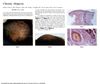
 This case report describes a 27-year-old woman with a family history of hair thinning and a 6-year history of alopecia on the scalp.
49 citations
,
April 2007 in “Pediatric Dermatology” This study describes a family with uncombable hair syndrome, suggesting autosomal dominant inheritance, and reports that oral biotin improved hair appearance in two young patients.
1 citations
,
July 2017 in “Skin appendage disorders” A 9-year-old Hispanic girl has Uncombable Hair Syndrome, which may improve with age and biotin treatment.
April 2024 in “Journal of Pakistan Association of Dermatologists” In this study of male patients with non-curly hair, the researchers observed a significant occurrence of folliculitis nuchae linked to close haircuts and shaving, with treatment effectiveness varying by disease phase and best results seen in early stages.
44 citations
,
July 2013 in “Journal of the American Academy of Dermatology” This review discusses various genetic and acquired conditions associated with poliosis circumscripta and reports no new clinical results.
 January 2015 in “Turkiye Klinikleri Journal of Dermatology”
 This case report highlights a 34-year-old woman with traction alopecia, where diagnosis was clarified by the presence of peripilar keratin sheaths, a useful dermoscopic clue.
 2 citations
,
August 2023 in “Development”
2 citations
,
August 2023 in “Development” In this study, researchers explored how hair follicle orientation is affected in the rosette fancy mouse and found that a mutation in the PCP gene Fzd6 caused reversed hair orientations in the posterior region, leading to the formation of unique whorls.
8 citations
,
October 2024 in “Developmental Cell” 20 citations
,
October 1996 in “Journal of the American Academy of Dermatology”  90 citations
,
January 1979 in “International review of cytology”
90 citations
,
January 1979 in “International review of cytology” This chapter reviews the complexity of hair and wool follicle formation, emphasizing the importance of cytological studies to understand the relationship between cellular components.