 5 citations
,
April 2013 in “Current Problems in Pediatric and Adolescent Health Care”
5 citations
,
April 2013 in “Current Problems in Pediatric and Adolescent Health Care” This review discusses the prevalence and management of polycystic ovary syndrome in women, particularly noting gaps in understanding its presence in adolescents, and reports no new clinical findings.
 4 citations
,
September 2011 in “American Journal of Clinical Dermatology”
4 citations
,
September 2011 in “American Journal of Clinical Dermatology” This case series suggests that EE/CMA 0.03mg/2mg may help manage dermatological disorders related to androgen excess, as evidenced by symptomatic improvements in the four patients treated.
 1 citations
,
February 2025 in “Journal of Endocrinological Investigation”
1 citations
,
February 2025 in “Journal of Endocrinological Investigation” This review discusses the prevalence and clinical impact of menstrual abnormalities, acne, and hirsutism in young women with Cushing's syndrome and reports no new clinical results.
 1 citations
,
November 2021 in “Biomedicines”
1 citations
,
November 2021 in “Biomedicines” This review elaborates on the concept of cutaneous mosaicism and its link to acneiform conditions, but it reports no new clinical results.
 September 2025 in “Editora Pasteur eBooks”
 This abstract discusses the broad scope of dermatology and aesthetic procedures, highlighting their significant multidisciplinary evolution within the health sciences, but it does not report specific study results.
 January 2020 in “International journal of current research and review”
 This study found that high exposure to plastics was associated with increased chances of irregular menstrual cycles and symptoms similar to polycystic ovary syndrome in adolescent girls.
 January 2011 in “Journal of pediatric endocrinology & metabolism/Journal of pediatric endocrinology and metabolism”
 This case study reported hyperandrogenism in non-obese triplet sisters with one sister's hyperthyroidism masking its clinical and biochemical signs until treatment increased her androgen levels and hirsutism.
 June 2010 in “Expert Review of Dermatology”
 Scientists found key proteins and genes that affect skin and hair health, and identified potential new treatments for hair loss, skin disorders, and wound healing.

research TOC
September 2003 in “Clinics in Family Practice” The document lists dermatology topics across life stages and notes hair loss can affect self-esteem and early skin cancer treatment is crucial.
 January 1982 in “Journal of The American Academy of Dermatology”
 Experts discussed treatments for skin conditions in children, emphasizing hydration, cautious medication use, and early intervention for infections.
 18 citations
,
June 2019 in “Clinical research in dermatology”
18 citations
,
June 2019 in “Clinical research in dermatology” This review discusses psychological impacts associated with facial acne, noting that high levels of anxiety and depression among these patients are not linked to oxidative stress, and reports no new clinical results.
 10 citations
,
January 2014 in “Indian Dermatology Online Journal”
10 citations
,
January 2014 in “Indian Dermatology Online Journal” This study found that skin disorders, particularly cosmetic issues like acne and hair loss, are very common among medical students, with gender and place of origin significantly influencing the development of certain conditions.
 1265 citations
,
October 2013 in “The Journal of Clinical Endocrinology and Metabolism”
1265 citations
,
October 2013 in “The Journal of Clinical Endocrinology and Metabolism” This guideline from the Endocrine Society recommends using the Rotterdam criteria for diagnosing polycystic ovary syndrome and outlines first-line treatments, emphasizing hormonal contraceptives and lifestyle intervention.
 989 citations
,
August 2007 in “The Lancet”
989 citations
,
August 2007 in “The Lancet” This article reviews the clinical features, diagnostic criteria, and possible genetic and environmental influences of polycystic ovary syndrome but provides no new research findings.
 238 citations
,
November 2016 in “Journal of The American Academy of Dermatology”
238 citations
,
November 2016 in “Journal of The American Academy of Dermatology” In this study, tofacitinib was reported to improve scalp hair regrowth in patients with severe alopecia areata, alopecia totalis, and alopecia universalis, showing a higher response in alopecia areata.
 151 citations
,
December 2004 in “Annals of the New York Academy of Sciences”
151 citations
,
December 2004 in “Annals of the New York Academy of Sciences” This review discusses nonclassical 21-hydroxylase deficiency as the most common autosomal recessive disorder in humans and highlights the effectiveness of glucocorticoid treatment in reversing related symptoms.
 139 citations
,
February 2014 in “Journal of Advanced Research”
139 citations
,
February 2014 in “Journal of Advanced Research” This review explores the impact of vitamin D deficiency on the skin from a dermatological perspective, but reports no new clinical results.
 130 citations
,
January 2005 in “American Journal of Clinical Dermatology”
130 citations
,
January 2005 in “American Journal of Clinical Dermatology” This review discusses the dermatologic symptoms associated with severe eating disorders like anorexia nervosa and bulimia nervosa and how they can aid in early diagnosis, without reporting new results.
 101 citations
,
April 1994 in “Baillière's clinical endocrinology and metabolism”
101 citations
,
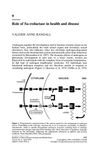
April 1994 in “Baillière's clinical endocrinology and metabolism” This review discusses the role of 5α-reductase enzymes in androgen action and related disorders, noting that their specific inhibitory drugs show promise for conditions like benign prostatic hypertrophy; it reports no new clinical results.
 100 citations
,
May 2011 in “Journal of Pediatric and Adolescent Gynecology”
100 citations
,
May 2011 in “Journal of Pediatric and Adolescent Gynecology” This review covers the pathophysiology, diagnosis, and treatment of congenital adrenal hyperplasia due to 21-hydroxylase deficiency and reports no new findings.
 87 citations
,
July 2018 in “Nursing Clinics of North America”
87 citations
,
July 2018 in “Nursing Clinics of North America” This review discusses the diagnostic criteria and treatment options for polycystic ovary syndrome focusing on metabolic subtypes and reports no clinical results.
 86 citations
,
October 2017 in “Translational pediatrics”
86 citations
,
October 2017 in “Translational pediatrics” This review discusses how ophthalmic findings can reveal key endocrine disorders and reports no new clinical results, emphasizing the eye's role in diagnosing and managing systemic diseases like diabetes and Graves' ophthalmopathy.
 85 citations
,
June 2008 in “Annals of the New York Academy of Sciences”
85 citations
,
June 2008 in “Annals of the New York Academy of Sciences” This article proposes a hypothesis that hyperandrogenemia is the final common pathway for developing adolescent PCOS and emphasizes the importance of reducing androgen levels to mitigate risks of metabolic syndrome, diabetes, and infertility in adulthood.
 81 citations
,
May 2007 in “Fertility and Sterility”
81 citations
,
May 2007 in “Fertility and Sterility” This review discusses the safety of testosterone therapy for postmenopausal women and concludes that, aside from hirsutism and acne, it appears safe at physiological doses for several years, though more long-term studies are needed.
 75 citations
,
June 1999 in “Pediatric Clinics of North America”
75 citations
,
June 1999 in “Pediatric Clinics of North America” This review discusses the clinical features and therapeutic goals for teenagers with PCOS, emphasizing the need for further research into its causes and potential long-term health risks, but reports no new clinical results.
 72 citations
,
October 1998 in “Baillière's clinical endocrinology and metabolism”
72 citations
,
October 1998 in “Baillière's clinical endocrinology and metabolism” This article discusses the potential effects of exogenous testosterone, highlighting that its impact on prostate cancer progression, cardiovascular health, and behavior remains uncertain and needs further investigation.
 71 citations
,
August 2019 in “The journal of sexual medicine”
71 citations
,
August 2019 in “The journal of sexual medicine” In this study, transgender adolescents treated with testosterone for a median of 12 months experienced effective virilization, including voice deepening and increased hair growth, but also showed decreased HDL cholesterol and BMD z-scores, and increased hematocrit, with no short-term safety issues reported.
 67 citations
,
July 2006 in “Clinics in Dermatology”
67 citations
,
July 2006 in “Clinics in Dermatology” This review discusses the dermatologic manifestations of hyperandrogenism in women and outlines the diagnostic approach and treatment options, reporting no new clinical results.
 55 citations
,
August 2008 in “Reviews in endocrine and metabolic disorders”
55 citations
,
August 2008 in “Reviews in endocrine and metabolic disorders” This review discusses clinical, hormonal, and genetic aspects of nonclassic adrenal hyperplasia and reports no new findings; the condition is highlighted as a potential cause of premature adrenarche and other symptoms in young people.
 53 citations
,
May 1986 in “Clinics in endocrinology and metabolism”
53 citations
,
May 1986 in “Clinics in endocrinology and metabolism” This review discusses the influence of androgens on hair and sebaceous growth, emphasizing that response may depend more on peripheral sensitivity than on hormone levels; it reports no new empirical results.