 1 citations
,
May 2016 in “Dermatologic Surgery”
1 citations
,
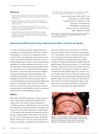
May 2016 in “Dermatologic Surgery” The document concludes that using a phototrichogram with a protractor and tapeline is a reliable and noninvasive way to measure hair loss.
 7 citations
,
November 2011 in “Skin Research and Technology”
7 citations
,
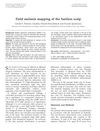
November 2011 in “Skin Research and Technology” The authors observed that the patterned melanoderma on the hairless scalp of fair-skinned Caucasian men with androgenic alopecia resembled similar patterns seen on facial skin.
 September 1997 in “Journal of The European Academy of Dermatology and Venereology”
 Examining scalp tissue under a microscope helps diagnose and understand hair loss diseases.
 143 citations
,
October 2008 in “Journal of The American Academy of Dermatology”
143 citations
,
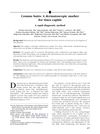
October 2008 in “Journal of The American Academy of Dermatology” This study found that comma hairs are a distinctive feature of tinea capitis caused by Microsporum canis, distinguishing it from alopecia areata, which is characterized by exclamation mark hairs.
4 citations
,
February 2022 in “Journal of Cosmetic Dermatology” This study found that dermatoscopic features can distinguish between tinea capitis and alopecia areata in children, with tinea capitis commonly showing comma hairs and alopecia areata showing exclamation mark hairs.
 April 2018 in “Journal of Investigative Dermatology”
 This article proposes a new classification system for cutaneous adnexal cysts based on their origin in the folliculo-sebaceous unit and sweat glands, aiming to clarify their categorization and origins.
 316 citations
,
June 2004 in “The journal of investigative dermatology/Journal of investigative dermatology”
316 citations
,
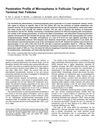
June 2004 in “The journal of investigative dermatology/Journal of investigative dermatology” This study found that using a standardized protocol with microspheres of approximately 1.5 micrometers enhances penetration into hair follicles, particularly when skin is treated with cyanoacrylate skin surface stripping.
 1 citations
,
January 2024 in “Annals of Dermatology”
1 citations
,
January 2024 in “Annals of Dermatology” This study suggests that analyzing microscopic hair morphology, particularly loss of typical clubbing and proximal tapering, may help predict the clinical course of alopecia areata.
 April 2026 in “International Journal of Drug Delivery Technology”
 This study found trichoscopy to be a reliable non-invasive method for diagnosing various forms of alopecia, aiding in clinical management and reducing the need for biopsies in a hospital-based setting with 90 patients, including those with uncertain diagnoses.
 October 2021 in “Cosmoderma”
 This review summarizes existing knowledge on diffuse and patterned alopecia, emphasizing recent advancements in treatment beyond FDA-approved options, but it reports no new clinical findings.
 47 citations
,
September 2008 in “British Journal of Dermatology”
47 citations
,
September 2008 in “British Journal of Dermatology” This study found that women with androgenetic alopecia experience diffuse hair loss due to a decrease in terminal hairs and an increase in vellus hairs per follicular unit.
December 2021 in “Digital Doctor”  38 citations
,
January 2016 in “Indian Journal of Dermatology, Venereology and Leprology”
38 citations
,
January 2016 in “Indian Journal of Dermatology, Venereology and Leprology” This study found that trichoscopy was useful in diagnosing different types of alopecia, with specific trichoscopic features aiding in the differential diagnosis.
 November 2022 in “The journal of investigative dermatology/Journal of investigative dermatology”
 This study generated a transcriptomic map of human hair follicles, identifying compartment-specific gene expression profiles that can aid in developing targeted therapies for hair follicle disorders.
 January 2023 in “Springer eBooks”
 Most older adults experience pattern hair loss due to shrinking hair follicles, with men and women showing different balding patterns.
 July 2023 in “Journal of Clinical Medicine”
 This paper identifies challenges in diagnosing alopecia variants, emphasizing the importance of pathologists understanding hair follicle histology, biopsy types, and collaborating with dermatologists to improve diagnostic accuracy.
 September 2024 in “Skin Research and Technology”
 This study used atomic force microscopy to identify significant morphological differences in hair from patients with lichen planopilaris compared to healthy controls, noting more scratches, uneven edges, and pitted scales in affected hair, which may aid future research on the condition.
February 2024 in “Medicina” In this study, researchers used atomic force microscopy to capture and analyze morphological changes in the surface of healthy hair, identifying features such as pitting and rod-shaped macro-fibrillar elements, which could inform future research on hair conditions and care.
2 citations
,
September 2024 in “Lasers in Surgery and Medicine” This study concluded that noninvasive imaging techniques offer potential benefits in managing scalp conditions by potentially reducing the need for biopsies and minimizing patient morbidity, each technique having unique advantages and limitations for specific conditions.
July 2021 in “British Journal of Dermatology” In this study, the researchers reported that early diagnosis and treatment of fibrosing alopecia in a pattern distribution may arrest or potentially reverse disease progression, though some patients experienced continued hair loss.
 November 2023 in “Berkala Ilmu Kesehatan Kulit dan Kelamin/Berkala ilmu kesehatan kulit dan kelamin (Periodical of dermatology and venerology)”
 This study suggests that using a dermoscope, a handheld microscope, can effectively help distinguish between Pityrosporum folliculitis and Acne vulgaris by revealing unique lesion characteristics that are not visible to the naked eye, offering a practical diagnostic alternative when KOH examinations are unavailable.
 15 citations
,
August 2015 in “Scanning”
15 citations
,
August 2015 in “Scanning” This study suggests that corkscrew hairs in tinea capitis result from internal hair damage by Trichophyton violaceum and external resistance from scalp scales.
This study suggests that pseudopelade may be an autonomous disease based on its distinctive clinical and histopathological features not present in other scarring alopecias.
 1 citations
,
September 2021 in “The Journal of Dermatology”
1 citations
,
September 2021 in “The Journal of Dermatology” This study analyzed 24 Japanese cases of fibrosing alopecia in a pattern distribution and found a distinctive "parachute" hair loss pattern, emphasizing unique clinical characteristics potentially influenced by racial factors.
18 citations
,
April 2016 in “American Journal of Dermatopathology” This case series highlights that nail clipping can aid in early detection and surgical planning of onychomatrical tumors by distinguishing between benign and potentially malignant growths based on the cavities' average dimensions.
 12 citations
,
October 2012 in “Anais Brasileiros De Dermatologia”
12 citations
,
October 2012 in “Anais Brasileiros De Dermatologia” This study found that dermoscopy is an effective tool for diagnosing and monitoring androgenetic alopecia in women, as it helped identify common signs such as hair miniaturization and peripilar brown halo.
7 citations
,
January 2012 in “International Journal of Trichology” This report describes three patients with distinct conditions who exhibited rectangular-patterned occipital alopecia areata associated with their respective medical cases.
 1 citations
,
March 2013 in “PubMed”
1 citations
,
March 2013 in “PubMed” This study suggests that biopsies can play a significant role in diagnosing and managing difficult cases of alopecia by identifying pattern mimics and overlaps, which are more common than previously realized.
 January 2024 in “Archives of pathology & laboratory medicine”
 This study observed that adipose tissue infiltration and ESGC displacement in scalp biopsies were more frequently found in frontal fibrosing alopecia and may play a role in the development of scarring alopecia.
 May 2023 in “Vestnik dermatologii i venerologii”
 In this study, researchers examined men with early-stage androgenetic alopecia and found distinct patterns of hair loss correlated with genetic and hormonal factors, noting that parietal region pattern hair loss responded better to minoxidil and micronutrient treatment compared to occipital region pattern.