6 citations
,
March 2022 in “IET Image Processing” This study utilized ultrasound biomicroscopy to evaluate the anterior chamber in angle closure glaucoma patients, revealing that the anterior chamber angle is wider on the downside than the upside and identifying important parameters for potential laser surgery.
January 2025 in “Journal of Imaging Informatics in Medicine” 31 citations
,
May 2018 in “Seminars in Plastic Surgery” This article reviews lip reconstruction techniques after Mohs surgery, presenting an algorithm to aid decision-making based on defect location and tissue involvement, and reports no new clinical results.
January 2026 in “Skin Appendage Disorders” This study concluded that including intermediate hairs or using relative shaft diameter methods can significantly improve the sensitivity of trichograms in diagnosing female androgenetic alopecia, aligning better with histopathology results.
 89 citations
,
December 2010 in “The Journal of Dermatology”
89 citations
,
December 2010 in “The Journal of Dermatology” This study describes characteristic trichoscopic features of various hair loss diseases and proposes an algorithmic method for diagnosing them, but reports no new clinical results.
November 2020 in “Дерматовенерология, косметология” This study found that among men with androgenetic alopecia, the M-type pattern, either isolated or combined with others, was observed most frequently, using the BASP classification.
 January 2021 in “Lecture notes in networks and systems”
 In this study, the researchers used machine learning techniques on an image dataset to diagnose Alopecia Areata, achieving a maximum accuracy of 98.3%.
 45 citations
,
January 2012 in “International Journal of Trichology”
45 citations
,
January 2012 in “International Journal of Trichology” This study reported that trichoscopy is a more effective diagnostic tool than the trichogram for early diagnosis of FAGA, regardless of hair shaft diversity cut-off levels.
August 2024 in “Journal of the National Medical Association” ChatGPT is more accurate at diagnosing hair disorders in lighter skin tones than darker ones.
September 2025 in “The Open Dermatology Journal” In this study, the Tibot AI application showed high diagnostic accuracy for adnexal and pigmentary disorders and cutaneous tumors in dermatology, but was less effective for immunological disorders and infestations, suggesting the need for further dataset refinement.
April 2025 in “Journal of Cosmetic Dermatology” This study evaluated a new AI-linked imaging device for grading dandruff severity, finding high correlation with expert assessments and suggesting its potential application in other skincare areas due to its versatility and ease of use.
January 2026 in “AppliedMath” This study explored a mechanism for making Turing pattern formations more predictable and robust by isolating pattern modes to prevent their sensitivity to initial conditions, which can lead to different outcomes from minor initial changes.
February 2024 in “arXiv (Cornell University)” In this study, researchers found that differences in skin condition distribution are the main source of errors when AI algorithms classify dermatological conditions from new, previously unseen sources, and proposed steps to improve their generalizability based on available information.
32 citations
,
May 2022 in “Frontiers in Pharmacology” This study proposes an AI-based method, DRGCC, using GraphSAGE and clustering constraints to predict associations between drugs and diseases, demonstrating reliable predictive performance that may aid drug repositioning efforts, including exploring drugs for COVID-19 treatment.
April 2020 in “The Egyptian Journal of Plastic and Reconstructive Surgery” In this retrospective study of 29 patients with scalp burn alopecia, researchers utilized a simple method involving tissue expansion to reconstruct the temporal and lateral sideburn areas, resulting in satisfactory, symmetrical, and standardized aesthetic outcomes according to both objective and subjective evaluations.
 1 citations
,
January 2016 in “Georg Thieme Verlag eBooks”
1 citations
,
January 2016 in “Georg Thieme Verlag eBooks” The document concludes that ideal facial proportions are guided by specific measurements and symmetry to enhance beauty, but individual characteristics must be considered.
 April 2023 in “Journal of Investigative Dermatology”
 This study reports that improvements to the EczemaNet pipeline, incorporating pixel-level segmentation and data augmentation, enhanced the reliability and interpretability of assessing atopic dermatitis severity from digital images.
October 2024 in “Zeitschrift für angewandte Mathematik und Physik”  16 citations
,
April 2017 in “ACM Transactions on Graphics”
16 citations
,
April 2017 in “ACM Transactions on Graphics” Light scatters differently from elliptical hair fibers than from circular ones, and a new model better predicts this behavior, especially for shiny highlights.
 15 citations
,
February 2003 in “British Journal of Dermatology”
15 citations
,
February 2003 in “British Journal of Dermatology” This study demonstrated that using morphometric and 3D reconstruction software to evaluate scalp biopsies in non-cicatricial alopecias may be feasible and sensitive for detecting subtle follicular changes.
 5 citations
,
February 2015 in “Dermatologica Sinica”
5 citations
,
February 2015 in “Dermatologica Sinica” In this study, a computer-aided imaging system accurately measured the width of balding areas in female pattern hair loss, correlating strongly with clinical staging severity.
 January 2018 in “Georg Thieme Verlag eBooks”
 Gender affirmation surgery improves personal appearance and self-esteem.
5 citations
,
January 2025 in “BMC Medical Informatics and Decision Making” This review examines the use of computer vision techniques, specifically deep learning architectures and image processing algorithms, for detecting and assessing skin conditions like vitiligo and dermatitis, and highlights the need for disease-specific datasets to improve automated diagnostic tools in dermatology.
In this study, a deep learning model using an optimized VGG19 architecture achieved a high classification accuracy of 98.64% for detecting ten hair disease classes from a balanced dataset, indicating its potential for reliable use in mobile diagnostics for clinical and remote applications.
 1 citations
,
January 2023 in “Annals of Dermatology”
1 citations
,
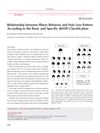
January 2023 in “Annals of Dermatology” The BASP classification helps predict patient behavior and improve treatment for hair loss.
 October 2023 in “Sinkron”
 This study demonstrated that a CNN-based model using VGG-16 architecture achieved a 94.5% accuracy in classifying ten types of hair diseases, implying a promising tool for aiding health professionals in diagnosing hair conditions accurately.
 22 citations
,
May 2002 in “Skin Research and Technology”
22 citations
,
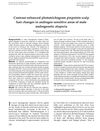
May 2002 in “Skin Research and Technology” This study found that in male androgenetic alopecia, the contrast enhanced phototrichogram technique was superior in detecting changes in hair density and thickness compared to other methods.
2 citations
,
January 2005 in “Hair transplant forum international” This narrative discusses the importance of composing a picture with balanced and harmonious elements but reports no new findings.
This study suggests that the prevalence of red beards in individuals with dark hair may be explained by Thayer’s Theorem of countershading.