 May 2025 in “Current Drug Safety”
 In this case study, a 17-year-old male using topical minoxidil 5% for beard growth developed peripheral edema, which resolved after discontinuing the drug, highlighting a rare but significant systemic side effect of minoxidil's use.
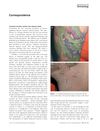 June 2011 in “International Journal of Dermatology”
 A man's red tattoo caused a skin reaction and hair loss in his beard, which improved after treatment.
173 citations
,
July 1995 in “Biochemical and biophysical research communications” This study suggests that IGF-I may mediate androgen-induced hair growth in outer root sheath cells cocultured with beard dermal papilla cells.
66 citations
,
May 2014 in “Conservation Physiology” This study found that lower salmon availability was associated with higher stress hormone levels in grizzly and black bears, influencing their physiological responses and competitive behaviors.
25 citations
,
July 1994 in “Journal of dermatological science” This study observed that testosterone metabolism and androgen receptor localization differ significantly across body sites, with beard hair follicles showing distinct characteristics compared to occipital scalp hair follicles.
 5 citations
,
January 2004 in “Japanese journal of geriatrics”
5 citations
,
January 2004 in “Japanese journal of geriatrics” In this study, androgens were found to stimulate keratinocyte growth in co-culture with beard dermal papilla cells but inhibit it in co-culture with balding frontal scalp DPCs, mediated by TGF-beta1.
4 citations
,
July 2006 in “British journal of dermatology/British journal of dermatology, Supplement” This study found that testosterone significantly stimulated the proliferation of outer root sheath cells when co-cultured with beard or axillary dermal papilla cells, but not with cells from occipital scalp hair follicles.
 June 2026 in “International Journal Of Ayurvedic And Herbal Medicine”
 In this case report, a 23-year-old male with alopecia areata in the beard area experienced significant improvement, with tiny hairs appearing, after 10 days of combined Ayurvedic Shamana and Shodhana therapies.
January 2022 in “Open Journal of Endocrine and Metabolic Diseases” This study found that women with hirsutism in the Amassoma metropolis had higher levels of testosterone, cholesterol, and glucose compared to non-bearded women.
35 citations
,
January 2017 in “International Journal of Food Properties” This study observed that a peptide showed higher antioxidant and metal ion chelation activity compared to its encapsulated version cross-linked in calcium alginate beads.
 15 citations
,
May 2003 in “The Laryngoscope”
15 citations
,
May 2003 in “The Laryngoscope” In this study, researchers observed that spiral ganglion neurites created more branched networks near FGF-1-coupled beads compared to control beads, highlighting FGF-1's role in hair cell innervation development.
9 citations
,
August 2020 in “Ecological indicators” This study in western Hudson Bay, Canada, examined trace elements in the hair of adult male polar bears and found significant differences in concentration patterns along the hair length, suggesting laser ablation ICP-MS is a promising tool for monitoring these variations over time.
5 citations
,
January 2007 in “Lincoln (University of Nebraska)” These investigations described in the study demonstrate how geochemical techniques can be applied to biological studies in Yellowstone, finding significant mercury accumulation in trout and grizzly bears which correlates with hydrothermal sources.
5 citations
,
January 1976 in “Journal of Endocrinology” This study compared hormone levels between oriental and Caucasian men, finding that while oriental men share similar plasma testosterone levels, their 17-oxosteroid excretion is lower, which may influence beard growth differences.
 1 citations
,
October 2013 in “BMJ”
1 citations
,
October 2013 in “BMJ” This case study reports a man with rapid hair thinning, whitening, and sparse beard, linked to an increased proportion of hair follicles in catagen or telogen phase and peribulbar lymphocytic infiltrate.
 April 2026 in “International Journal of Homoeopathic Sciences”
 This case report highlights the role of mental symptoms in tailoring homoeopathic treatment for a 24-year-old male with alopecia barbae, a localized non-scarring hair loss condition affecting the beard, emphasizing the psychological component in its management.

This case study reports a rare instance of both alopecia areata and fixed drug eruption occurring in the same area on a 40-year-old man's beard, triggered by oral paracetamol, highlighting potential shared pathogenic pathways and the isotopic phenomenon.
May 2024 in “JAAD Case Reports” This case report describes a 29-year-old man with a year-long non-itchy skin eruption and hair loss, with distinct papules and plaques across his scalp, beard, body, and suprapubic regions, but no systemic symptoms or family history of autoimmune disease.
September 2023 in “Journal of the American Academy of Dermatology” This study examined the application of new clinical guidelines for diagnosing frontal fibrosing alopecia in 18 men, highlighting that current diagnostic criteria may often overlook early beard involvement and sideburn recession.
 October 2022 in “International Journal of Homoeopathic Sciences”
 This case report describes a 28-year-old male patient with alopecia areata who received Natrium Muriaticum as an individualized homeopathic treatment for hair loss in his beard area, but it provides no broader clinical findings.
21 citations
,
January 2020 in “Conservation Physiology” This study found that cortisol concentrations were significantly higher in hair samples with follicles compared to those without, suggesting potential confounding in stress assessments using different hair sampling methods.
 17 citations
,
January 2010 in “International journal of trichology”
17 citations
,
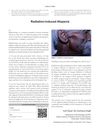
January 2010 in “International journal of trichology” This case report highlights the occurrence of radiation-induced alopecia in a patient undergoing radiotherapy for oropharyngeal carcinoma, emphasizing awareness of this potential side effect.
10 citations
,
March 2008 in “DMW - Deutsche Medizinische Wochenschrift” In this case report, a man developed loss of libido, decreased hair growth, and gynecomastia after using an estrogen-containing hair tincture, but symptoms resolved and hormone levels normalized after he stopped using it.
3 citations
,
October 2021 in “Dermatologic Therapy” In this case report, a 28-year-old male with alopecia areata experienced successful hair growth following follicular unit extraction (FUE), with no recurrence observed over a 1-year follow-up.
July 2023 in “International Journal of Trichology” In this case report, a 39-year-old man with sudden whitening of scalp hair due to alopecia areata experienced total regrowth of pigmented hair after six months without systemic treatment.
 157 citations
,
April 1994 in “Clinical endocrinology”
157 citations
,
April 1994 in “Clinical endocrinology” Androgens can cause hair growth in some areas and hair loss on the scalp.
 115 citations
,
September 2012 in “Experimental Dermatology”
115 citations
,
September 2012 in “Experimental Dermatology” This article reviews the molecular mechanisms involved in androgenetic alopecia and the androgen's paradoxical role in hair growth, but reports no new experimental findings.
66 citations
,
October 2003 in “Dermatologic clinics” Excision and laser techniques can effectively treat acne keloidalis nuchae.
 63 citations
,
November 1999 in “British journal of dermatology/British journal of dermatology, Supplement”
63 citations
,
November 1999 in “British journal of dermatology/British journal of dermatology, Supplement” This study observes the expression of mRNA for androgen receptor, 5α‐reductase, and 17β‐hydroxysteroid dehydrogenase in human dermal papilla cells.
49 citations
,
March 2004 in “Journal of Investigative Dermatology” This study found that the hHa7 gene in hair follicle trichocytes is the first identified to have its expression directly regulated by androgens, suggesting it as a marker for androgen action on hair follicles.