 4 citations
,
November 2021 in “Frontiers in endocrinology”
4 citations
,
November 2021 in “Frontiers in endocrinology” This study systematically compared pediatric and adult Cushing's disease patients, revealing more severe and earlier-onset symptoms in males, and distinct gender-specific clinical manifestations.
 February 2026 in “Orphanet Journal of Rare Diseases”
 This study identified pathogenic or likely pathogenic gene variants in 70.1% of Russian families affected by hypohidrotic ectodermal dysplasia, expanding knowledge of causative mutations.
6 citations
,
October 2016 in “Pediatric Dermatology” This case report describes a unique instance of a 6-year-old girl developing angioedema after treatment with squaric acid dibutylester for alopecia areata.
 October 2024 in “Journal of the Endocrine Society”
 This study found that certain CYP21A2 mutations significantly reduce enzyme activity, contributing to non-classic congenital adrenal hyperplasia phenotypes, which may aid in enhancing diagnosis and treatment strategies.

The document concludes that scientists created various steroids with different properties, including a more effective semi-synthetic vitamin D.
 November 2025 in “Mendeley Data”
 This study found that tofacitinib and baricitinib, when administered with unorthodox weight-stratified dosing in pediatric patients with moderate-to-severe AA, showed comparable efficacy and tolerability, though baricitinib's efficacy decreased with non-standard dosing.
75 citations
,
January 2004 in “Molecular and Cellular Biology” In this study, EDA-A2 transgenic mice exhibited multifocal myodegeneration dependent on XEDAR, suggesting a potential role for XEDAR in skeletal muscle homeostasis.
1 citations
,
October 2025 in “Scientific Reports” This study reports that hedgehog pathway inhibitors, sonidegib and vismodegib, showed distinct adverse event patterns in real-world data, suggesting the need for further research to confirm these findings.
October 1993 in “The Journal of Clinical Pharmacology”  September 2024 in “Journal of the American Academy of Dermatology”
 In this retrospective analysis, baricitinib 4 mg was found to improve hair regrowth and was deemed effective and safe for treating severe alopecia areata in a real-world setting.
 October 2008 in “Clin-alert”
 This abstract lists keywords related to various medications and therapies, but it does not provide new study results or findings.
January 2017 in “Elsevier eBooks” Congenital Adrenal Hyperplasia is mainly caused by enzyme deficiencies, leading to varying symptoms like hormone imbalances and physical changes.
July 2024 in “Journal of Investigative Dermatology” In these two clinical trials, DS-2325a, a KLK5 inhibitor, was found to be generally safe and well tolerated in healthy volunteers, with mild and non-serious adverse events, suggesting its potential for further development as a treatment for Netherton Syndrome.
16 citations
,
January 2023 in “Regenerative Biomaterials” This study examined 3D-printed scaffolds coated with polydopamine and observed that they significantly enhanced osteogenesis and angiogenesis in vitro and in a rat cranium defect model, suggesting their potential for repairing large bone defects.
 8 citations
,
July 1990 in “Archives of Dermatology”
8 citations
,
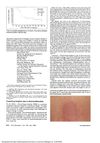
July 1990 in “Archives of Dermatology” This case report details a fixed-drug eruption in a woman linked to the use of dextromethorphan, marking it as a previously unreported skin reaction to this medication.

This handbook of dermatology provides a comprehensive practical manual for dermatologists, but reports no new research findings.
 6 citations
,
June 2018 in “Journal of pediatric endocrinology & metabolism/Journal of pediatric endocrinology and metabolism”
6 citations
,
June 2018 in “Journal of pediatric endocrinology & metabolism/Journal of pediatric endocrinology and metabolism” In this study, eight patients with hereditary vitamin D-resistant rickets who share a specific VDR mutation showed improved clinical symptoms except alopecia after up to 11 years of treatment.
 September 2026 in “Stem Cell Reviews and Reports”
 Bulge progenitor cells show promise for regenerating hair follicles and increasing hair density.
This study identified novel mutations associated with ectodermal dysplasias in Pakistani families, including a missense mutation in the KRTHB5 gene linked to pure hair-nail ectodermal dysplasias and mutations in the EDAR gene related to hypohidrotic ectodermal dysplasia.
November 2024 in “Journal of Investigative Dermatology”  June 2024 in “British Journal of Dermatology”
 This report detailed the British Hair and Nail Society's national grand round, which aids in diagnosing and treating complex hair disorders, showcasing rare diagnoses and suggesting novel therapies.
 February 2019 in “Institutional Repositories DataBase (IRDB)” 14 citations
,
May 2017 in “Journal of Investigative Dermatology”
February 2019 in “Institutional Repositories DataBase (IRDB)” 14 citations
,
May 2017 in “Journal of Investigative Dermatology” This study reports a novel homozygous mutation in the DST gene causing a unique form of epidermolysis bullosa simplex with prurigo papules in a 39-year-old Syrian man.
June 2025 in “British Journal of Dermatology” This case series highlighted three pediatric patients with congenital nail anomalies, revealing underlying developmental or genetic issues such as symbrachydactyly and potential Adams–Oliver syndrome, underscoring the critical role of dermatologists in early detection and diagnosis of these conditions.
10 citations
,
June 1999 in “Veterinary Dermatology” This report documents follicular dysplasia with pigmentary changes in two adult cows, contributing to the understanding of this rare condition in cattle.
117 citations
,
April 2008 in “Developmental biology” This study identified that Eda-A1 unexpectedly induces placode inhibitors dkk4 and lrp4, indicating the importance of tightly regulated signaling for proper ectodermal organ development.
1 citations
,
August 2023 in “Journal of Investigative Dermatology” Farudodstat may help treat alopecia areata by protecting hair follicles.
 August 1946 in “Journal of the American Medical Association”
 This document discusses website navigation and access options for JAMA without presenting any new research findings.
13 citations
,
July 2009 in “Pediatrics in Review” This review discusses the diagnosis and treatment of 21-hydroxylase deficiency in congenital adrenal hyperplasia and emphasizes the need for earlier detection and proper management; it reports no clinical results.