 March 2019 in “Journal of Investigative Dermatology”
 This review discusses a quiz related to seborrheic dermatitis diagnosis and key findings from a previous study, but reports no new clinical results.
 January 2019 in “SAGE Open Medical Case Reports”
 This paper reports a rare case where AL amyloidosis presented as isolated scalp alopecia, underscoring the importance of considering systemic amyloidosis in the differential diagnosis of alopecia.
 November 2016 in “Therapeutic Delivery”
 New drugs for Alzheimer's and rheumatoid arthritis advanced, a Zika vaccine is in development, and there were business deals in anesthesia and oncology.
 September 2016 in “Journal of dermatological science”
 This study found that COL17 plays a key role in regulating epidermal keratinocyte differentiation and proliferation, influencing the expression of differentiation markers and cellular growth in specific conditions.
 September 2016 in “Journal of dermatological science”
 This study found that adult dermal papilla cells guided high-passage adult keratinocytes to produce new hair fibers, suggesting potential for large-scale hair follicle bioengineering.
Hormonal treatments can help with hair loss, acne, and excess hair growth, but it takes 3-6 months to see results and patients should know the possible side effects.
 September 2013 in “Experimental Dermatology”
 The document concluded that stem cells are crucial for skin repair, regeneration, and may help in developing advanced skin substitutes.
 January 2012 in “Methods in pharmacology and toxicology”
 This review discusses the use of cultured hair follicles for studying hair growth regulation and reports the challenge of modeling the entire hair cycle in vitro.
 January 2010 in “Elsevier eBooks”
 The document concludes that different types of hair loss have specific treatments, and early diagnosis is crucial for preventing permanent hair loss.
 May 2009 in “The American Journal of Dermatopathology”
 This abstract contains only journal subscription and informational content and does not present any research findings.
 June 2008 in “Springer eBooks”
 The document concludes that permanent hair loss conditions are complex, require early specific treatments, and "secondary permanent alopecias" might be a more accurate term than "secondary cicatricial alopecia."
 January 2003 in “Elsevier eBooks”
 Androgens and other hormones affect hair growth and skin conditions like acne.
 January 2021 in “Journal of cosmetology & trichology”
 In this follow-up study, participants with severe androgenic/estrogenic alopecia showed increased hair growth 10 months after ending vacuum therapy and cosmetic emulsion treatment, highlighting the therapies' potential effectiveness.
 January 2007 in “Dermatologic Surgery”
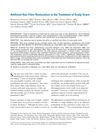
 This study found that implanting polyamide hair fibers may serve as a supplementary treatment for scalp scars, with most cases showing favorable outcomes and manageable complications.
 41 citations
,
April 2016 in “Journal of experimental botany”
41 citations
,
April 2016 in “Journal of experimental botany” This research suggests that the barley protein RACB supports cell polarity functions rather than interfering with immunity, as it aids nucleus positioning during fungal attack rather than affecting early immune responses.
117 citations
,
August 1999 in “Nature Genetics”  5 citations
,
March 2019 in “Journal of lipid research”
5 citations
,
March 2019 in “Journal of lipid research” This study reports new fluorogenic ceramidase substrates and highlights RBM14C24:1 as an efficient substrate for neutral ceramidase, while RBM15C18:1 is the best probe for measuring ACER1 and ACER2 activities, potentially aiding high-throughput screening for ceramidase inhibitors.
 30 citations
,
October 2014 in “PLOS ONE”
30 citations
,
October 2014 in “PLOS ONE” This study found that BAF200, a subunit of the PBAF chromatin remodeling complex, is crucial for heart development and coronary artery formation in mice, as its absence led to embryonic lethality with severe cardiac defects.
 April 2026 in “Zenodo (CERN European Organization for Nuclear Research)”
 In this study, Dodatek A operationalizes the Functional Androgen Axis framework by defining three system-level indices and an efficiency metric to describe androgen function, incorporating key methodological improvements and acknowledging significant limitations for future empirical validation.
 April 2026 in “Zenodo (CERN European Organization for Nuclear Research)”
 This research presents the Dodatek A model, elaborating on androgen function through new mathematical indices and methodological improvements, shifting focus from serum hormone concentrations to system interactions to better describe androgen activity comprehensively.
 August 2012 in “Nature Cell Biology”
 In this study, researchers found that β-catenin directly promotes TERT expression in stem and cancer cells by interacting with the Tert promoter, illustrating a mechanistic link between tumorigenesis and pluripotency.
 14 citations
,
March 2016 in “Mechanisms of Development”
14 citations
,
March 2016 in “Mechanisms of Development” This study found that BNC2 is critical for hair follicle regeneration and other developmental processes, as Bnc2−/− mice exhibit incomplete hair follicle development and developmental defects, and BNC1 cannot substitute for BNC2.
51 citations
,
September 2020 in “Nucleic Acids Research” This article introduces signatureSearch, a software package designed for gene expression signature searching and functional enrichment analysis, but reports no new clinical results.
 June 2024 in “ESMO Gastrointestinal Oncology”
 The BAYONET trial is a phase II study designed to assess the efficacy and safety of combining encorafenib, binimetinib, and cetuximab for patients with BRAF V600E-mutant metastatic colorectal cancer that is resistant to encorafenib plus cetuximab; results are not yet reported.
 April 2018 in “Journal of Investigative Dermatology”
 This study observed that β-catenin overexpression in human squamous cell carcinoma cells led to increased CREB expression, which significantly enhanced clonogenic activity, suggesting CREB as a β-catenin-regulated factor promoting cancer characteristics.
May 2021 in “bioRxiv (Cold Spring Harbor Laboratory)” This study introduced rPanglaoDB, an R package that facilitates the integration of public scRNA-seq datasets to effectively characterize rare cell types, exemplified by generating the first unbiased transcriptome profile of fibrocytes.
36 citations
,
September 1999 in “Journal of Cell Science” This study suggests that basonuclin may act as a tissue-specific transcription factor for ribosomal RNA genes by interacting with the promoter region necessary for high transcription levels in human keratinocytes.
10 citations
,
November 2017 in “Letters in drug design & discovery” This paper discusses a structure-based analysis to find new BRD4 inhibitors, identifying finasteride and amentoflavone as promising candidates for BET inhibition.
January 2026 in “SSRN Electronic Journal”