 5 citations
,
April 2019 in “Journal of The American Academy of Dermatology”
5 citations
,
April 2019 in “Journal of The American Academy of Dermatology” This review discusses the complex nature of frontal fibrosing alopecia, suggesting it is a misnomer and possibly a subset of lichen planopilaris, but reports no new clinical results.
 2 citations
,
October 2017 in “Journal of The American Academy of Dermatology”
2 citations
,
October 2017 in “Journal of The American Academy of Dermatology” In this study, focal atrichia was associated with late-onset female pattern hair loss, providing a clinical clue to its diagnosis, particularly separating it from other hair disorders.
 17 citations
,
November 2018 in “Dermatology”
17 citations
,
November 2018 in “Dermatology” The authors concluded that Hispanic/Latino ethnicity, facial papules, and premenopausal status in patients with frontal fibrosing alopecia may indicate a susceptibility to more severe disease, potentially necessitating early treatment.
 September 2017 in “Journal of Investigative Dermatology”
 This study found that infrared thermography might be a useful non-invasive tool to help diagnose frontal fibrosing alopecia by identifying active phases of the disease.
 63 citations
,
October 2011 in “Archives of Dermatology”
63 citations
,
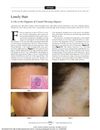
October 2011 in “Archives of Dermatology” Isolated long hairs at the original hairline can help diagnose Frontal Fibrosing Alopecia.
August 2018 in “Journal of the American Academy of Dermatology”  6 citations
,
January 2019 in “Medical Hypotheses”
6 citations
,
January 2019 in “Medical Hypotheses” This hypothesis article explores frontal fibrosing alopecia as a potential autoimmune condition and calls for future research to investigate this possibility, but reports no new clinical results.
June 2026 in “Frontiers in Medicine” This study evaluated the 308-nm excimer laser as an adjuvant treatment for frontal fibrosing alopecia and found it may stabilize hairline recession and improve erythema and perifollicular hyperkeratosis, with transient erythema as the only reported adverse effect.
13 citations
,
January 2018 in “International Journal of Trichology” In this study, intralesional triamcinolone acetonide injections were associated with halting the progression of frontal fibrosing alopecia in female patients and showed minimal adverse effects, but the efficacy as sole therapy remains unclear pending further trials.
 42 citations
,
January 2008 in “Dermatology”
42 citations
,
January 2008 in “Dermatology” This study reports that dermoscopy is a useful diagnostic tool for distinguishing acute diffuse and total alopecia of the female scalp from female pattern hair loss by identifying specific hair features.
 July 2021 in “British Journal of Dermatology”
 This case report describes a novel instance of scarring alopecia with features of frontal fibrosing alopecia in a patient with systemic sclerosis, suggesting a potential link between the two conditions not previously reported.
16 citations
,
April 2020 in “JAMA dermatology” More inflammation leads to faster and worse hair loss in women with frontal fibrosing alopecia.
 April 2023 in “Journal of Investigative Dermatology”
 This study reports distinctive clinical, trichoscopic, and histopathological features of fibrosing alopecia in a pattern distribution among Chinese patients, suggesting possible racial differences compared to previous studies primarily involving Caucasians.
 3 citations
,
September 2024 in “BMC Oral Health”
3 citations
,
September 2024 in “BMC Oral Health” This study found that low-level laser therapy effectively reduced relapse rates, while functional appliances did not; combining them offered no additional benefits.
 16 citations
,
February 2010 in “Journal of the European Academy of Dermatology and Venereology”
16 citations
,
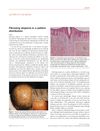
February 2010 in “Journal of the European Academy of Dermatology and Venereology” This article is a letter to the editor about fibrosing alopecia in a pattern distribution and reports no new research findings.
 April 2023 in “World Journal Of Advanced Research and Reviews”
 This study in Morocco found that all women with frontal fibrosing alopecia presented frontotemporal hairline recession, with trichoscopic features such as perifollicular erythema and follicular hyperkeratosis being indicative of the condition, and suggested a potential link between cosmetic products or emotional factors and the disease.
January 2016 in “Indian dermatology online journal” This case study diagnosed a 60-year-old woman with frontal fibrosing alopecia after histopathological analysis showed characteristic scarring patterns in the hairline area.
 177 citations
,
December 2002 in “The Lancet”
177 citations
,
December 2002 in “The Lancet” In this study, single fibrinogen/LDL apheresis showed a significant improvement in speech perception for patients with plasma fibrinogen concentrations over 295 mg/dL compared to standard treatment for sudden sensorineural hearing loss.
 209 citations
,
March 1989 in “Journal of The American Academy of Dermatology”
209 citations
,
March 1989 in “Journal of The American Academy of Dermatology” This study found that recombinant human leukocyte interferon alfa-2a achieved a 64% overall antitumor response rate in patients with early and advanced cutaneous T cell lymphoma and was generally well-tolerated.
 8 citations
,
December 2017 in “Journal of The American Academy of Dermatology”
8 citations
,
December 2017 in “Journal of The American Academy of Dermatology” This correspondence discusses the diagnostic criteria for frontal fibrosing alopecia but reports no new research findings, agreeing with many previously suggested criteria.

This study found a significant discordance between clinical symptoms and dermatoscopic signs with histopathological inflammation in patients with LPP and AFF, affecting diagnostic and therapeutic approaches.
 November 2023 in “The journal of investigative dermatology/Journal of investigative dermatology”
 In this case series, researchers reported on the clinical characteristics and treatment approaches for Frontal Fibrosing Alopecia in four cases, emphasizing the importance of early identification and intervention to manage this scarring hair loss disorder that primarily affects the frontal hairline and eyebrows.
 August 2023 in “JAAD Case Reports”
 This report describes a 57-year-old woman with fibrosing alopecia in a pattern distribution, who experienced hair regrowth with combined treatment including hydroxychloroquine and other topical and oral therapies.
 1 citations
,
July 2020 in “Benha Journal of Applied Sciences”
1 citations
,
July 2020 in “Benha Journal of Applied Sciences” This study identified that trichoscopy can effectively diagnose frontal fibrosing alopecia by highlighting specific scalp abnormalities in postmenopausal women.
November 2021 in “Frontiers in Genetics” This study found that a new FAW-FS algorithm improved recognition of depression in patients with androgenic alopecia, and comprehensive psychological interventions positively impacted their rehabilitation outcomes.
October 2024 in “Zagazig University Medical Journal” This clinical trial found that transdermal delivery of 5-Fluorouracil using fractional CO2 laser resulted in a significantly better treatment response in alopecia areata patients compared to intralesional injections of the same drug, with a greater reduction in the Severity of Alopecia Tool Score.
August 2026 in “Canadian Journal of Health Technologies” This study found that Litfulo improved hair regrowth in patients aged 12 and older with severe alopecia areata but did not meaningfully improve anxiety or depression symptoms compared to placebo.
2 citations
,
July 2025 in “Journal of the European Academy of Dermatology and Venereology” This study involved 69 hair experts using a Delphi process to achieve consensus on treating frontal fibrosing alopecia, finding strong agreement on disease monitoring but less on physical and systemic therapies, indicating the need for more research.
June 2026 in “British Journal of Dermatology” This study found that individuals with frontal fibrosing alopecia have increased odds of thyroid disease, lupus erythematous, vitiligo, and heart disease, supporting the consideration of FFA as a systemic disorder.
 126 citations
,
April 2006 in “International Journal of Dermatology”
126 citations
,
April 2006 in “International Journal of Dermatology” This study found that frontal fibrosing alopecia and lichen planopilaris have similar histopathological features, but FFA exhibits more prominent apoptosis and less inflammation with spared interfollicular epidermis.