 November 2022 in “The journal of investigative dermatology/Journal of investigative dermatology”
 This study suggests that allergens like linalool found in personal care products may contribute to the pathobiology of frontal fibrosing alopecia by affecting immune responses and stem cell function in hair follicles.
2 citations
,
April 2022 in “Genes” This study identifies a polygenic basis for atypical recurrent flank alopecia in Cesky Fousek dogs through genome-wide association analysis and gene expression profiling, highlighting several metabolic pathways involved in the condition.
 39 citations
,
July 2015 in “British Journal of Dermatology”
39 citations
,
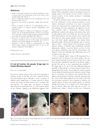
July 2015 in “British Journal of Dermatology” This article discusses the pseudo 'fringe sign' in frontal fibrosing alopecia, highlighting that it is not solely related to traction, and it reports no new clinical results.
 6 citations
,
January 2017 in “British Journal of Dermatology”
6 citations
,
January 2017 in “British Journal of Dermatology” This article reviews frontal fibrosing alopecia, exploring its characteristics, demographics, and associated conditions, and calls for controlled trials due to an increase in worldwide cases; it reports no new findings.
 May 2024 in “International Seven Journal of Multidisciplinary”
 This review discusses fibrosing frontal alopecia, including its causes, mechanisms, and treatments, and emphasizes the need for further research to improve understanding and treatments; it reports no new clinical results.
 10 citations
,
June 2020 in “Journal of Cosmetic Dermatology”
10 citations
,
June 2020 in “Journal of Cosmetic Dermatology” This study found a high prevalence of genital Lichen sclerosus and autoimmune comorbidities in patients with frontal fibrosing alopecia, suggesting a possible shared autoimmune process.
 April 2026 in “Zenodo (CERN European Organization for Nuclear Research)”
 This research presents the Dodatek A model, elaborating on androgen function through new mathematical indices and methodological improvements, shifting focus from serum hormone concentrations to system interactions to better describe androgen activity comprehensively.
 November 2023 in “Indian Journal of Dermatology”
 This study from North-East India analyzed 21 cases of frontal fibrosing alopecia, noting a high prevalence in post-menopausal women and distinct histological features such as perifollicular lymphocytic infiltrate and hydropic degeneration.
1 citations
,
May 2024 in “Skin Appendage Disorders” In this study, researchers analyzed trichoscopy findings in black patients with FFA to aid in precise diagnosis and treatment, highlighting the importance of understanding disease characteristics to improve hair care in this group.
 4 citations
,
January 2020 in “Skin appendage disorders”
4 citations
,
January 2020 in “Skin appendage disorders” This case report describes a unique presentation of frontal fibrosing alopecia characterized by a hair loss pattern that resembles the Greek letter upsilon, supported by trichoscopic and histological findings.
 April 2026 in “Zenodo (CERN European Organization for Nuclear Research)”
 In this study, Dodatek A operationalizes the Functional Androgen Axis framework by defining three system-level indices and an efficiency metric to describe androgen function, incorporating key methodological improvements and acknowledging significant limitations for future empirical validation.
2 citations
,
June 2021 in “Sultan Qaboos University medical journal” This case report presents three sisters with familial frontal fibrosing alopecia, making it the 25th documented familial case, with treatment results observed in one sister.

This study explored the experiences of systemic lupus erythematosus patients receiving Anifrolumab, revealing improvements in self-reported symptoms and daily life impacts alongside decreased disease activity and lowered corticosteroid use.
1 citations
,
March 2012 in “Actas dermo-sifiliográficas/Actas dermo-sifiliográficas” Dermoscopy helps diagnose frontal fibrosing alopecia by identifying specific scalp features.
 November 2021 in “CRC Press eBooks”
 This article reviews the characteristics and presentation of fibrosing alopecia in a pattern distribution, a form of scarring alopecia similar to androgenetic alopecia and lichen planopilaris, but provides no new clinical findings.
 1 citations
,
December 2017 in “Anais Brasileiros de Dermatologia”
1 citations
,
December 2017 in “Anais Brasileiros de Dermatologia” This article discusses the DOAJ, a comprehensive index of international open access journals, and emphasizes its role in providing free quality content online without presenting new research findings.
7 citations
,
March 2023 in “Lasers in Surgery and Medicine” This study found that a single ablative fractional laser treatment significantly reduced hedgehog pathway gene expression in microscopic murine basal cell carcinomas, nearly matching the effects of repeated topical vismodegib applications.
April 2019 in “Journal of Investigative Dermatology” Targeting immune pathways like JAK/STAT may help treat frontal fibrosing alopecia.
 42 citations
,
April 2011 in “Annals of Pharmacotherapy”
42 citations
,
April 2011 in “Annals of Pharmacotherapy” This study found that long-term flutamide treatment reduced hair loss in women with female pattern hair loss, but liver-related dropouts were minimized at a very low dose of 62.5 mg/day.
March 2025 in “Journal of Investigative Dermatology” February 2025 in “Archives of Dermatological Research” This study observed that fibrosing alopecia in a pattern distribution shows varied histological features and may resemble lichen planopilaris with initial diffuse distribution, potentially leading to scarring alopecia.
 3 citations
,
February 2022 in “Dermatology practical & conceptual”
3 citations
,
February 2022 in “Dermatology practical & conceptual” This study found that trichoscopy is an effective noninvasive technique for diagnosing frontal fibrosing alopecia, confirming its valuable role alongside traditional histopathological examination.
54 citations
,
November 2007 in “Actas Dermo-Sifiliográficas” Early diagnosis of frontal fibrosing alopecia is crucial to prevent permanent hair loss.
 1 citations
,
June 2022 in “International Journal of Dermatology”
1 citations
,
June 2022 in “International Journal of Dermatology” FFA in men shows unique features and treatment results vary widely.
13 citations
,
August 2013 in “International Journal of Dermatology” Frontal fibrosing alopecia can affect African men and may be underdiagnosed.
14 citations
,
January 2014 in “Indian Journal of Dermatology Venereology and Leprology” Frontal fibrosing alopecia can affect men's beards and leads to permanent hair loss.
December 2023 in “JEADV Clinical Practice” This study found that dermoscopy of the axilla in patients with frontal fibrosing alopecia revealed significantly higher odds of brownish peripillary halos, suggesting a diagnostic clue for the condition in this region.
July 2024 in “Journal of Investigative Dermatology” Linalool in fragrances may harm hair follicles and contribute to hair loss.
 155 citations
,
September 2008 in “British journal of dermatology/British journal of dermatology, Supplement”
155 citations
,
September 2008 in “British journal of dermatology/British journal of dermatology, Supplement” This study observed that frontal fibrosing alopecia predominantly affects postmenopausal women, can be associated with lichen planus, and may lead to progressive hairline recession, though this progression is not consistent in all cases.
 April 2016 in “Proceedings of SPIE”
 This study found that UV laser-induced fluorescence spectroscopy can effectively differentiate between types of alopecia in patients, showing a high correlation between blood circulation levels and tissue autofluorescence intensity.