18 citations
,
June 2020 in “Dermatologic Therapy” In this study, FCO2 laser treatment showed significantly better improvement for alopecia areata compared to traditional intralesional corticosteroid injections, with no serious side effects or relapse observed.
 9 citations
,
October 2018 in “Journal of Cosmetic and Laser Therapy”
9 citations
,
October 2018 in “Journal of Cosmetic and Laser Therapy” This study reviewed eight studies investigating transcutaneous drug delivery via fractional laser and microneedling for alopecia treatment, with six studies showing improved hair regrowth over topical therapy alone, suggesting its potential as a promising treatment strategy, although further research is needed to refine treatment parameters.
 182 citations
,
December 2017 in “Journal of the American Academy of Dermatology”
182 citations
,
December 2017 in “Journal of the American Academy of Dermatology” This article reviews current and emerging treatments for alopecia areata, including Janus kinase inhibitors, highlighting variability in clinical outcomes and the lack of sustained remission.
 58 citations
,
December 2017 in “Journal of The European Academy of Dermatology and Venereology”
58 citations
,
December 2017 in “Journal of The European Academy of Dermatology and Venereology” This review highlights that microneedling shows some promise for improving hair growth in alopecia, particularly when used with other treatments, though more research is needed to establish its efficacy and protocols.
 19 citations
,
June 2015 in “Seminars in Cutaneous Medicine and Surgery”
19 citations
,
June 2015 in “Seminars in Cutaneous Medicine and Surgery” This review discusses the clinical presentation, epidemiology, pathophysiology, and treatment options for alopecia areata and reports no new clinical findings.
40 citations
,
September 2014 in “Journal of cosmetic and laser therapy” This case series found that combining ablative fractional resurfacing and acoustic pressure ultrasound with triamcinolone treatment led to complete recovery in patients with areata alopecia.
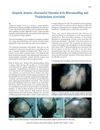 53 citations
,
January 2014 in “Journal of Cutaneous and Aesthetic Surgery”
53 citations
,
January 2014 in “Journal of Cutaneous and Aesthetic Surgery” Microneedling combined with triamcinolone can safely stimulate faster hair regrowth in people with Alopecia Areata.
 35 citations
,
January 2013 in “Indian Journal of Dermatology, Venereology and Leprology”
35 citations
,
January 2013 in “Indian Journal of Dermatology, Venereology and Leprology” This study found that intralesional triamcinolone acetonide is effective for treating localized patchy alopecia areata, with dermoscopy aiding in early detection of clinical response and adverse effects.



