107 citations
,
December 2013 in “International Journal of Dermatology”
107 citations
,
December 2013 in “International Journal of Dermatology” This review summarizes the anatomical and physiological aspects of human hair and its clinical significance, but does not report new research findings.
 47 citations
,
January 2013 in “International Journal of Cosmetic Science”
47 citations
,
January 2013 in “International Journal of Cosmetic Science” This review explores genetic and lifestyle factors influencing hair diversity and reports no new findings, calling attention to the potential for future discoveries in genetic and epigenetic research.
 72 citations
,
February 2011 in “American Journal of Biological Anthropology”
72 citations
,
February 2011 in “American Journal of Biological Anthropology” This study observed that eliminating positional error in hair segment analysis can improve understanding of changes in isotopic composition, aiding the identification of pathological conditions and dietary patterns.
 88 citations
,
June 2009 in “Cleveland Clinic Journal of Medicine”
88 citations
,
June 2009 in “Cleveland Clinic Journal of Medicine” This article reviews various causes of diffuse hair loss, highlighting the importance of identifying triggers through thorough examination for effective treatment and emphasizing patient education in management; it reports no new clinical findings.
 70 citations
,
January 2009 in “Indian Journal of Dermatology, Venereology and Leprology”
70 citations
,
January 2009 in “Indian Journal of Dermatology, Venereology and Leprology” This article reviews the characteristics, diagnosis, and management of different types of diffuse alopecia in women and provides no original research findings.
 501 citations
,
October 2008 in “Psychoneuroendocrinology”
501 citations
,
October 2008 in “Psychoneuroendocrinology” This study suggests that cortisol measured in human hair can effectively reflect increased production for up to six months, but its retrospective accuracy may be limited due to rapid decline in levels.
567 citations
,
October 2007 in “Clinical and investigative medicine” This study described a new assay for measuring cortisol in hair and found it may serve as a useful biomarker for long-term cortisol exposure, correlating with 24-hour urine cortisol levels in non-obese subjects.
254 citations
,
January 2007 in “Chemical Society Reviews” This review discusses the hierarchical structure and chemical properties of hair fibers and offers insights for chemists and biochemists, but reports no new experimental findings.
20 citations
,
July 2006 in “Annals of Anatomy - Anatomischer Anzeiger” The 15th-century Korean mummy's hair was well-preserved due to a protective lime-soil coating.
 375 citations
,
July 2006 in “Journal of Investigative Dermatology”
375 citations
,
July 2006 in “Journal of Investigative Dermatology” This review discusses the brain-skin connection, the skin's role in stress response, and highlights unmet challenges in understanding stress-induced skin inflammation but reports no new experimental findings.
 115 citations
,
September 2005 in “International Journal of Dermatology”
115 citations
,
September 2005 in “International Journal of Dermatology” Different ethnic groups have unique hair growth patterns, with African hair growing slower and less dense, Asian hair growing fast but sparse, and Caucasian hair being densest; men are more likely to experience hair loss than women.
489 citations
,
June 2005 in “The FASEB Journal” This study found that human scalp hair follicles can respond to corticotropin releasing hormone stimulation similarly to the classical HPA axis, including up-regulating cortisol production and activating neuroendocrine feedback loops.
9 citations
,
January 2005 in “Experimental Dermatology” This study found that human hair follicles can function like a peripheral hypothalamic-pituitary-adrenal axis, synthesizing cortisol in response to corticotropin-releasing hormone and adrenocorticotropic hormone stimulation.
203 citations
,
June 2003 in “Journal of the American Academy of Dermatology” This article reviews the structure and chemistry of hair across ethnicities and how these factors affect hair properties and treatment responses, but reports no new research findings.
 194 citations
,
March 2003 in “American Journal of Pathology”
194 citations
,
March 2003 in “American Journal of Pathology” This study found that psychoemotional stress disrupts hair growth in mice by terminating anagen and suggests a potential pathway for pharmacological management of stress-related hair loss in humans.
 239 citations
,
July 2002 in “Clinical and Experimental Dermatology”
239 citations
,
July 2002 in “Clinical and Experimental Dermatology” This review explores the role of nutritional factors in hair loss, noting that iron and l-lysine supplementation may benefit some individuals, while excessive supplements can lead to hair shedding.
 33 citations
,
April 2002 in “Journal of Cutaneous Medicine and Surgery”
33 citations
,
April 2002 in “Journal of Cutaneous Medicine and Surgery” This review discusses the skin conditions linked to eating disorders and emphasizes that treating the underlying disorder often improves these dermatological symptoms.
 1113 citations
,
August 1999 in “The New England Journal of Medicine”
1113 citations
,
August 1999 in “The New England Journal of Medicine” This article discusses the biologic and psychosocial significance of hair, the current limitations in hair growth drugs, and anticipates future therapies based on advancing hair follicle research.
228 citations
,
January 1997 in “Birkhäuser Basel eBooks” This article integrates existing literature on hair follicle structure and formation at the cellular and molecular level, reporting no new findings.
 62 citations
,
July 1993 in “Journal of Investigative Dermatology”
62 citations
,
July 1993 in “Journal of Investigative Dermatology” Hair growth is influenced by interactions between skin layers, growth factors, and hormones, but the exact mechanisms are not fully understood.
 26 citations
,
March 1986 in “Clinical and Experimental Dermatology”
26 citations
,
March 1986 in “Clinical and Experimental Dermatology” Scalp hair grows at 0.37 mm/day, forearm hair at 0.18 mm/day, and thigh hair at 0.30 mm/day, with no significant differences found in people with certain hair conditions.
 47 citations
,
July 1967 in “Science”
47 citations
,
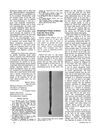
July 1967 in “Science” This study observed morphological changes in scalp hair follicles of humans deprived of protein for 15 days, which suggests potential use in diagnosing protein-calorie malnutrition.