290 citations
,
August 2021 in “Clinical Reviews in Allergy & Immunology” JAK inhibitors show promise for treating alopecia areata, but more research is needed.
 24 citations
,
February 2021 in “Dermatology and Therapy”
24 citations
,
February 2021 in “Dermatology and Therapy” This study reported a significant relapse in alopecia areata among patients infected with COVID-19, possibly due to the infection's inflammatory response and stress from quarantine.
134 citations
,
July 2020 in “Experimental dermatology” This review discusses immune privilege in anagen hair follicles and its collapse in alopecia areata, emphasizing the importance of restoring this function for effective management and disease relapse prevention.
 124 citations
,
October 2019 in “Frontiers in Immunology”
124 citations
,
October 2019 in “Frontiers in Immunology” This review discusses the role of the JAK-STAT pathway in autoimmune skin diseases and suggests potential therapeutic benefits of JAK inhibitors, but reports no new experimental results.
 21 citations
,
January 2013 in “Annals of dermatology/Annals of Dermatology”
21 citations
,
January 2013 in “Annals of dermatology/Annals of Dermatology” In this study, combination therapy with cyclosporine and PUVA for severe alopecia areata resulted in a majority of patients showing only fair to poor responses, though some improvements were noted.
 67 citations
,
January 2013 in “Indian Journal of Dermatology, Venereology and Leprology”
67 citations
,
January 2013 in “Indian Journal of Dermatology, Venereology and Leprology” This review discusses the causes, associated conditions, and treatment options for alopecia areata, such as corticosteroids and wigs, but reports no new clinical findings.
 13 citations
,
January 2011 in “International Journal of Trichology”
13 citations
,
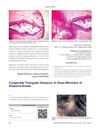
January 2011 in “International Journal of Trichology” CTA is often mistaken for AA but doesn't respond to steroids and may require hair transplantation.
56 citations
,
June 2010 in “Clinical and experimental dermatology” In this study, coudability hairs were identified as a useful marker for assessing disease activity in patients with alopecia areata and may serve as an alternative to the hair-pull test.
 64 citations
,
November 2008 in “Journal of The American Academy of Dermatology”
64 citations
,
November 2008 in “Journal of The American Academy of Dermatology” This study observed that acute diffuse and total alopecia, a subtype of alopecia areata, typically resolves rapidly and spontaneously within about six months, even without treatment, suggesting a favorable prognosis.
 196 citations
,
June 2008 in “International Journal of Dermatology”
196 citations
,
June 2008 in “International Journal of Dermatology” This study found that dermoscopic indicators like black dots and tapering hairs are valuable markers for diagnosing and assessing the severity and activity of alopecia areata in Asian patients.
 150 citations
,
April 2008 in “Journal of The American Academy of Dermatology”
150 citations
,
April 2008 in “Journal of The American Academy of Dermatology” This study found that videodermoscopy reveals distinct dermoscopic features in patients with alopecia areata incognita, aiding in biopsy decisions by identifying the appropriate sampling area and potentially avoiding unnecessary procedures.
275 citations
,
November 2002 in “International Journal of Dermatology” This study found that among an Asian population with alopecia areata, commonly first episodes occurred before age 40, with severe cases linked to psychological effects and treatments showing significant regrowth.
95 citations
,
June 2002 in “The Journal of Dermatology” In this study, using topical crude onion juice significantly improved hair regrowth in patients with patchy alopecia areata compared to tap water.
164 citations
,
November 1989 in “Clinical and Experimental Dermatology” This retrospective study found that juvenile alopecia areata is more severe and has a worse prognosis than maturity-onset alopecia areata.