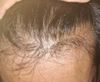
Investigation of the Comprehensive Treatment’s Clinical Efficacy of Various Types of Alopecia Using Proteoglycan Replacement Therapy

    Aida Gadzhigoroeva, Yu. Yu. Romanova, В В Вавилов, Yu.A. Markova
    Studysummary This study found that after a 4-month comprehensive therapy course, 90.5% of patients with androgenetic alopecia and telogen effluvium showed hair condition improvement, highlighting the potential benefits of adjuvant proteoglycan replacement therapy in these conditions.
    Automatically generated from the study's abstract, not written by a person, and not a review of the full paper. Not medical advice or a treatment recommendation. Read the original study, and consult a qualified healthcare professional before changing treatment. Full disclaimer
    Read the full study on mediasphera.ru →
    Discuss this study in the Community →

    Research cited in this study 7

    1. Integral Roles of Specific Proteoglycans in Hair Growth and Hair Loss: Mechanisms Behind the Bioactivity of Proteoglycan Replacement Therapy with Nourkrin with Marilex in Pattern Hair Loss and Telogen Effluvium Dermatology Research and Practice · 2020
    2. Isolation and Quantification of Glycosaminoglycans from Human Hair Shaft Annals of Dermatology · 2016
    3. The Androgen Receptor Antagonizes Wnt/β-Catenin Signaling in Epidermal Stem Cells Journal of Investigative Dermatology · 2015
    4. A Newly Discovered Linkage Between Proteoglycans and Hair Biology: Decorin Acts as an Anagen Inducer Experimental Dermatology · 2014
    5. Hair Cycle-Specific Expression of Versican in Human Hair Follicles Journal of Dermatological Science · 2005
    6. Molecular Control of Epithelial-Mesenchymal Interactions During Hair Follicle Cycling ˜The œjournal of investigative dermatology. Symposium proceedings/˜The œJournal of investigative dermatology symposium proceedings · 2003
    7. Differences in Hair Follicle Dermal Papilla Volume Are Due to Extracellular Matrix Volume and Cell Number: Implications for the Control of Hair Follicle Size and Androgen Responses Journal of Investigative Dermatology · 1999