 1 citations
,
April 2023 in “Science Advances”
1 citations
,
April 2023 in “Science Advances” This study found that sustained ERK activity during tissue regeneration in spiny mice is linked to fibroblast growth factor and ErbB signaling, while inhibiting ERK shifted regeneration toward scarring.
 40 citations
,
November 2021 in “npj Regenerative Medicine”
40 citations
,
November 2021 in “npj Regenerative Medicine” In this study, spiny mice showed superior cardiac recovery after myocardial infarction compared to other mouse strains, with enhanced myocardial preservation and functional stabilization.
123 citations
,
January 2020 in “International Journal of Molecular Sciences” This review discusses the role of fibroblast heterogeneity in determining skin scarring versus regeneration and reports no new results, highlighting opportunities for developing antiscarring therapies.
 85 citations
,
December 2017 in “Developmental Biology”
85 citations
,
December 2017 in “Developmental Biology” This review discusses mammalian models of epimorphic regeneration to define a vertebrate regeneration blastema, concluding that regenerative failure likely stems from cellular responses to the microenvironment after injury, not progenitor cell availability, and calls for targeted modification studies in mammals to advance human regeneration.
 418 citations
,
September 2012 in “Nature”
418 citations
,
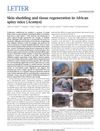
September 2012 in “Nature” This study reports the first instance of skin autotomy in mammals, specifically in African spiny mice, and suggests they may possess a greater regenerative capacity than previously understood, possibly offering insights for regenerative medicine.
305 citations
,
December 2000 in “The EMBO Journal” Inhibiting Bmp signaling disrupts hair growth and differentiation.