12 citations
,
June 2010 in “Journal of dermatology”
12 citations
,
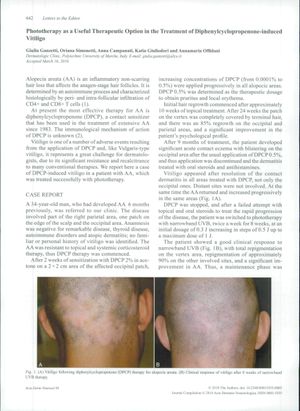
June 2010 in “Journal of dermatology” This study found that hyperpigmentation following contact immunotherapy for severe alopecia areata may indicate poor treatment responsiveness and aligns with characteristics of pigmented contact dermatitis.
65 citations
,
November 2008 in “Pediatric Dermatology” This study observed that phototherapy is an effective and well-tolerated treatment for childhood dermatoses, particularly for psoriasis and pityriasis lichenoides chronica.
22 citations
,
March 1999 in “International Journal of Clinical Practice” This review discusses the use of topical immunotherapy for severe alopecia areata and resistant viral warts, highlighting diphencyprone's advantages and the need for careful handling to avoid staff sensitisation; it reports no new clinical results.
18 citations
,
January 2010 in “Dermatology Research and Practice” This case report describes a 30-year-old Brazilian male who developed vitiligo lesions following diphencyprone therapy for alopecia areata.
 4 citations
,
August 2013 in “Case reports in dermatology”
4 citations
,
August 2013 in “Case reports in dermatology” This case report describes a patient in whom vitiligo was induced by diphenylcyclopropenone treatment for alopecia universalis, highlighting the potential overlap of susceptibility genes between the two conditions.