 62 citations
,
June 2015 in “The Journal of Dermatology”
62 citations
,
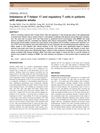
June 2015 in “The Journal of Dermatology” This study found that patients with alopecia areata had higher levels of Th17 cells and lower levels of regulatory T cells compared to healthy controls, suggesting an immune imbalance in these patients.
30 citations
,
January 2015 in “Dermatology” This study found that 308-nm excimer laser therapy improved hair diameter in alopecia areata patients, as shown by photographic assessments and a side-by-side comparison with control patches.
 421 citations
,
April 2012 in “The New England Journal of Medicine”
421 citations
,
April 2012 in “The New England Journal of Medicine” Alopecia Areata is an autoimmune condition causing hair loss with no cure and treatments that often don't work well.
37 citations
,
November 2011 in “Photodermatology Photoimmunology & Photomedicine” This study found that narrowband UVB phototherapy alone is not very effective for severe alopecia areata, with improved responses noted primarily in patients also receiving corticosteroid injections.
85 citations
,
November 2004 in “Journal of the American Academy of Dermatology” The 308-nm excimer laser helps hair regrowth in some alopecia areata cases but not all.
275 citations
,
November 2002 in “International Journal of Dermatology” This study found that among an Asian population with alopecia areata, commonly first episodes occurred before age 40, with severe cases linked to psychological effects and treatments showing significant regrowth.
105 citations
,
December 1995 in “British journal of dermatology/British journal of dermatology, Supplement” This retrospective study concluded that PUVA treatment is generally ineffective for alopecia areata, with low effective success rates for partialis, totalis, and universalis types.