Topical finasteride - Can anyone here share their results? 9/6/2026
Topical finasteride combined with oral minoxidil is used by some for hair loss, with mixed results; some users report success while others find it difficult to apply. Alternatives like oral finasteride and microneedling are also considered, with some users experiencing hair stabilization and new growth.
View this post in the Community →
Similar Community Posts Join
5 / 5 resultscommunity 6 months, no progress on fin and min oral. Male 25
A 25-year-old male has been using oral finasteride and minoxidil for six months without noticeable progress in hair regrowth and is considering switching to dutasteride or a hair transplant. Users suggest giving the treatment more time, adding microneedling, and possibly using topical minoxidil.
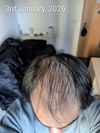
community 21M (‘05) - Monthly Progress Journal (Since Jan 2, 2026) | Oral Fin/Min + Scalp Optimization
A 21-year-old has been using daily oral finasteride, minoxidil, biotin, and vitamins since January 2026 for hair loss, adding topical treatments and microneedling in May. They observed initial shedding and scalp issues but noted significant progress after adjusting their routine.
community Summed up version of my hair loss journey so far
The user started a hair loss treatment with oral minoxidil, topical finasteride, and microneedling, later switching to oral finasteride and topical minoxidil. Despite initial stabilization, shedding resumed, and the user is considering switching to dutasteride after 12 months.
community Microneedling + topical minoxidil is the most underrated combo.
Microneedling with topical minoxidil is effective for hair regrowth, especially with finasteride. Users report fewer side effects compared to oral minoxidil.
community Almost 7 months on topical fin/min- not seeing much benefit
A 39-year-old user has been using topical 0.3% finasteride with 6% minoxidil for almost 7 months without seeing significant improvement in hair regrowth. They are considering switching to a gel with higher minoxidil concentration, adding retinoic acid, or trying topical dutasteride, while others suggest returning to 5% minoxidil foam, adding oral finasteride, or exploring microneedling and lifestyle changes.
Related Research
6 / 6 resultsresearch Platelet-rich plasma in alopecia areata and primary cicatricial alopecias: A systematic review
This review suggests that platelet-rich plasma may be a promising treatment for immune-mediated alopecias, including alopecia areata and primary cicatricial alopecias, but definitive recommendations are limited due to insufficient high-quality evidence.
research Platelet-rich plasma in androgenetic alopecia
This expert group provided recommendations for preparing and using platelet-rich plasma in treating androgenetic alopecia, suggesting a manual double-spin method and specific dosing, although further studies on injectable platelet-rich fibrin are needed.
research Microneedle-Mediated Transdermal Drug Delivery for the Treatment of Multiple Skin Diseases
This study highlights the clinical potential of microneedles as an innovative transdermal drug delivery system for treating various skin diseases with minimal pain and high patient compliance.
research Review of Human Hair Follicle Biology: Dynamics of Niches and Stem Cell Regulation for Possible Therapeutic Hair Stimulation for Plastic Surgeons
This review discusses the latest understanding of androgenetic alopecia, including stem cell niches in hair follicles, and highlights emerging treatments like growth factors and platelet-rich plasma without new clinical findings.
research Platelet-Rich Plasma and its Use for Cicatricial and Non-Cicatricial Alopecias: A Narrative Review
This article reviews major uses of platelet-rich plasma in treating various hair disorders, including both non-cicatricial and cicatricial alopecia, but reports no new results.
research Phytochemicals as emerging therapeutic agents for alopecia treatment
This chapter provides an overview of phytochemicals with properties to combat alopecia and discusses the potential of flavonoids, found in several herbs, as a safer alternative to synthetic hair loss treatments due to their long-term skin compatibility.