RU58841 users — how do you find a reliable source? Research/Science 8/24/2025
Users discuss finding reliable sources for RU58841, focusing on lab tests, batch consistency, and community reputation. Some mention using alternatives like pyrilutamide.
View this post in the Community →
Similar Community Posts Join
6 / 6 resultscommunity Is RU58841 safe or is pyrilutamide better option
RU58841 and pyrilutamide are discussed as alternatives to 5AR blockers for hair loss, with mixed opinions on their safety and effectiveness. Some users report positive experiences with RU58841, while others express concerns about its safety.
community What’s the consensus on RU58841 vs Pyrilutamide (Kx-826)?
RU58841 and Pyrilutamide (Kx-826) are both topical anti-androgens, but neither is effective for hair regrowth. RU58841 has more anecdotal support, while Pyrilutamide has progressed further in trials, though both have limitations.
community Has anybody tried RU58841 and pyrilutamide together?
RU58841 and pyrilutamide are being discussed as potential hair loss treatments, with some users reporting side effects. There is interest in these treatments as alternatives to 5ar inhibitors and oral minoxidil due to concerns about safety and side effects.
community Ru-58841 vs KX-826/pyrilutamide while on steroids
The user increased their steroid dosage and noticed hair shedding, so they adjusted their regimen by reducing steroid doses and adding oral dutasteride. They are also experimenting with combining RU-58841 and KX-826/pyrilutamide in minoxidil to address hair loss.
community Is RU58841 or pyrilutamide a stronger topical anti-androgen?
The conversation discusses adding either RU58841 or pyrilutamide to a hair loss treatment regimen that already includes oral dutasteride and oral minoxidil. RU58841 is considered the stronger anti-androgen but may have more side effects.
community Consenus on Kx-826/pyrilutamide vs ru58841
KX-826 is considered effective for hair maintenance, with better safety research than RU58841, but lacks positive anecdotes. RU58841 is seen as potentially stronger, but concerns exist about systemic effects; combining anti-androgens with 5AR inhibitors is suggested for better results.
Related Research
6 / 6 results
research Nouvelles thérapeutiques dans la prise en charge de l’alopécie androgénétique
This thesis investigates the underlying mechanisms and treatment options for androgenetic alopecia, highlighting the molecular roles of androgens and genetic predispositions, and evaluates current and emerging therapies, such as PROTACs and Janus Kinase inhibitors, to enhance patient management.
research RU 58841, a new specific topical antiandrogen: A candidate of choice for the treatment of acne, androgenetic alopecia and hirsutism
This study found that the topically applied non-steroidal antiandrogen RU 58841 may reduce androgen-dependent skin conditions in a hamster model with minimal systemic effects.
research RU 58841-myristate–prodrug development for topical treatment of acne and androgenetic alopecia.
This study reports that RU 58841-myristate, a new antiandrogen prodrug formulated with solid lipid nanoparticles, shows potential for targeting hair follicles in preclinical laboratory settings.
research A controlled study of the effects of RU58841, a non-steroidal antiandrogen, on human hair production by balding scalp grafts maintained on testosterone-conditioned nude mice
This study found that the non-steroidal antiandrogen RU58841 increased hair growth rates and promoted hair cycle initiation in balding human scalp grafts on testosterone-conditioned nude mice, indicating a positive effect on hair growth.
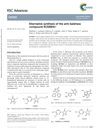
research Alternative synthesis of the anti-baldness compound RU58841
A new, less toxic and more efficient method to create the anti-baldness compound RU58841 was developed in 2014.
research Dose-dependent and long term effects of RU58841 (androgen receptor blocker) on hair growth in the bald stumptailed Macaque.
In this study using a macaque model, RU58841 at a 5% concentration significantly increased hair density, thickness, and length in the frontal bald scalp over six months.