Is my current doseage viable? (Trans) 10/18/2025
The user is taking Dutasteride, Finasteride, Estradiol, Spironolactone, and Progesterone for hair regrowth and is considering adding Minoxidil and rosemary oil. They are experiencing some hair regrowth and are consulting a dermatologist to avoid a hair transplant.
View this post in the Community →
Similar Community Posts Join
5 / 5 resultscommunity Female, 30, PCOS diagnosis, MPB Norwood 2. Endo refuses to give anything other than Spironolactone. Feel like I’m at my wit’s end here.
A 30-year-old female with PCOS and male pattern baldness is frustrated with her endocrinologist's recommendation of only Spironolactone and minoxidil, feeling that dutasteride, finasteride, and progesterone would be more effective. Other users suggest various online sources for treatments, warn against self-medicating due to potential risks, and recommend seeking a specialized endocrinologist or considering additional treatments like Inositol, Berberine, and dermaneedling.
community 2 years on treatment (stack update)
A user shared their hair regrowth progress using Dutasteride, topical Minoxidil, Spironolactone, and Estradiol Valerate injections as part of hormone replacement therapy for transitioning. They experienced significant hair improvement and personal satisfaction but caution against this approach for non-transitioning individuals due to irreversible changes.
community Did Dutasteride change how you look physically? your facial profile such as skin thickness, fat distribution or softness?
Dutasteride and finasteride can cause changes in physical appearance, like more feminine features and increased water retention. Users report side effects such as reduced libido, weight gain, and improved skin clarity, while some notice no significant changes.
community Sorry yall I cheated 😵💫 1 year fin + hrt
Hair regrowth and gender transition using finasteride, estrogen, and spironolactone. Significant hair regrowth and personal transformation were achieved through hormone replacement therapy.
community After about 3 months of 2mg Estradiol (Sublingual) and 2.5mg Minox (Oral) daily
A person transitioning is using 2mg sublingual estradiol and 2.5mg oral minoxidil daily for hair regrowth, noting significant progress in three months. They plan to increase estrogen dosage and consider adding dutasteride, discussing the effects and challenges of transitioning.
Related Research
6 / 6 results
research Controversies in Polycystic Ovary Syndrome
This article discusses the unclear aspects of diagnosing and treating polycystic ovarian syndrome and emphasizes a multidisciplinary approach but reports no clinical results.
research CLINICAL UPDATES IN HAIR
This chapter reviews various antiandrogens and androgen inhibitors, detailing their mechanisms, uses, and side effects, with a focus on spironolactone, finasteride, dutasteride, and oral contraceptives.

research Antiandrogens and Androgen Inhibitors
This source outlines various antiandrogen and androgen inhibitor drugs used to treat cutaneous disorders of hyperandrogenism, detailing their mechanisms, uses, dosages, and side effects, with emphasis on spironolactone, finasteride, dutasteride, and oral contraceptives.
research Hormonal Treatment for Skin Androgen-Related Disorders
Hormonal treatments can help with hair loss, acne, and excess hair growth, but it takes 3-6 months to see results and patients should know the possible side effects.
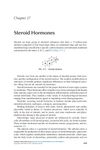
research Steroid Hormones
This article discusses the various roles of steroids in vertebrate organ systems and notes several glucocorticoids that were among the Top 200 Drugs by sales in the 2010s, but it reports no new clinical findings.
research Androgens in women
This review discusses hormone-modulating therapies for androgen-mediated cutaneous disorders in women but reports no new clinical results and highlights the need for more rigorous studies.