Any Gym goer here? I need your thoughts about taking Oral finasteride + Oral Minoxidil. 4/30/2025
The conversation discusses hair thinning potentially linked to creatine use, with the user considering switching from topical to oral finasteride and minoxidil. Creatine may increase DHT levels, but topical treatments are suggested to be effective without significant side effects.
View this post in the Community →
Similar Community Posts Join
5 / 5 resultscommunity Day 55 of minoxidil and finasteride
A 20-year-old is using oral and topical finasteride, topical minoxidil, ketoconazole shampoo, rosewater, Adgain tablets, creatine, and derma stamping to address hair loss. There is a debate about creatine's impact on hair loss, with some suggesting it increases DHT, while others disagree.
community Phase II topical dut study - outperforms oral fin with a minor DHT reduction
Topical dutasteride 0.05% is more effective for hair growth than oral finasteride 1mg, with minimal DHT reduction. The formulation uses castor oil and MCTs for better absorption but is not widely available until 2028.
community Topical solutions combining minoxidil and finasteride?
A user is seeking advice on creating a topical solution combining minoxidil, finasteride, and tretinoin for hair loss, and is unsure about optimal concentrations and availability. Another user shares their custom formula with tretinoin 0.015%, finasteride 0.025%, and minoxidil 5%, and mentions taking oral dutasteride 0.25mg daily.
community Strange results using oral finasteride and minoxidil
A 47-year-old male experienced mixed results with hair loss treatments using finasteride and oral minoxidil. After reducing dosages and adding creatine, he noticed shedding, but switching back to higher doses and changing to pea protein may help regain progress.
community No regrowth after oral min, topical fin, min, and tret: Aggressive diffuse/hairline recession in 2 years
A user experienced no hair regrowth after using oral minoxidil, topical finasteride, minoxidil, and tretinoin, and reported side effects from oral finasteride. They are considering switching to dutasteride or using hair fibers for better results.
Related Research
6 / 6 results
research Androgenetic, Diffuse and Senescent Alopecia in Men: Practical Evaluation and Management
This review discusses the evaluation and management of male baldness and related conditions, but reports no new clinical results.
research Updates in Treatment for Androgenetic Alopecia
This review discusses current and emerging treatments for androgenetic alopecia, covering mechanisms, efficacy, and safety of both androgen-targeted and non-androgen-targeted approaches, but reports no new clinical results.
research Astragalus membranaceus and Cinnamomum cassia Stimulate the Hair Follicle Differentiation-Related Growth Factor by the Wnt/β-Catenin Signaling Pathway
In this study, researchers observed that the YH complex, made from Astragalus membranaceus and Cinnamomum cassia, promoted hair regrowth and increased hair shaft thickness in mice, potentially through increased growth factors and Wnt/β-catenin signaling, suggesting its use for treating various forms of hair loss.
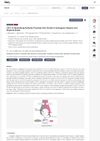
research CXCL12 Neutralizing Antibody Promotes Hair Growth in Androgenic Alopecia and Alopecia Areata
This study found that subcutaneous injection of a CXCL12 neutralizing antibody significantly promoted hair growth in androgenic alopecia and inhibited hair loss in alopecia areata in mouse models, suggesting its potential as a promising treatment for hair loss.
research Hair Thickness Growth Effect of Adenosine Complex in Male-/Female-Patterned Hair Loss via Inhibition of Androgen Receptor Signaling
In this study, researchers found that topical treatment with adenosine improved hair growth and thickness by significantly increasing hair density and thickness after four months in vivo, with results comparable to minoxidil, potentially due to adenosine's anti-androgenic effects.
research The medicinal activity of lyophilized aqueous seed extract of Lepidium sativum L. in an androgenic alopecia model
This study found that Lepidium sativum seed extract showed potential in treating alopecia in rats by reducing 5(alpha)-dihydrotestosterone levels and improving hair length compared to minoxidil.