1 month on minoxidil and spironolactone Is this regrowth? 4/21/2025
The user discusses their experience with hair regrowth after one month of using minoxidil and spironolactone. They are seeking opinions on whether they are experiencing regrowth.
View this post in the Community →
Similar Community Posts Join
6 / 6 resultscommunity Ladies who losing hair early- how young is too young for losing hair? I noticed a lot of hair loss when hitting 30.
A woman experiencing hair loss at 30 discusses treatments like Rogaine (Minoxidil) and Spironolactone. Others share experiences with hair loss, mentioning treatments like Minoxidil, Nizoral, and scalp oils.
community 2 months of difference with estradiol and spiro (4 months total w/ estradiol & spiro; 4 years of minoxidil and finasteride) (you should not take estradiol or spiro if you look manly and want to continue looking manly)
Hair regrowth using estradiol, spironolactone, minoxidil, and finasteride, showing significant improvement over four years. HRT is not advised for cis men solely for hair loss due to feminizing effects.
community Can I take bicalutamide for hair loss as a man, but don’t want to transition?
A 23-year-old man with hair loss, despite using dutasteride, oral minoxidil, and RU58841, is considering bicalutamide for regrowth but is concerned about feminization. Alternatives like topical estrogen, JXL069, and spironolactone are discussed, with suggestions to explore thyroid levels and other potential underlying conditions.
community 15 Months Ago vs 15 Minutes Ago (Fin + Min + Spiro + E)
The user experienced significant hair regrowth using spironolactone, estradiol, minoxidil, and finasteride while transitioning. They noted reduced libido and increased grogginess as side effects.
community for anyone who is on the fence about oral minoxidil should read this NYT article it might help. it's an old one but people might need a refresher. https://www.nytimes.com/2022/08/18/health/minoxidil-hair-loss-pills.html
Oral minoxidil is more effective than topical for hair regrowth but may cause unwanted body hair growth and cardiovascular side effects. Some users experience positive results, while others discontinue use due to side effects like chest pain.
community 2 years on treatment (stack update)
A user shared their hair regrowth progress using Dutasteride, topical Minoxidil, Spironolactone, and Estradiol Valerate injections as part of hormone replacement therapy for transitioning. They experienced significant hair improvement and personal satisfaction but caution against this approach for non-transitioning individuals due to irreversible changes.
Related Research
6 / 6 resultsresearch A Case of Hair Regrowth in a Patient with Complete Androgen Insensitivity Syndrome and Female Pattern Hair Loss
This article reviews the etiology of FPHL, distinguishing between androgen-dependent and androgen-independent forms, but reports no new clinical findings; it highlights the need to better understand its pathogenesis.
research Hair regrowth in a male patient with extensive androgenetic alopecia on estrogen therapy
This report describes a case where a sex reassignment patient on estrogen therapy experienced complete hair regrowth on a previously fully alopecic scalp.

research Treatment of female pattern hair loss with a combination of spironolactone and minoxidil
This case report describes how a 53-year-old woman with female pattern hair loss experienced further hair regrowth when topical minoxidil was added to her spironolactone treatment after initial results plateaued.
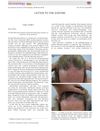
research Frontal fibrosing alopecia: Regrowth following cessation of sunscreen on the forehead
Stopping sunscreen use on the forehead led to hair regrowth in a woman with frontal fibrosing alopecia.

research Therapeutic Approach to Androgenetic Alopecia
Treatments for hair loss include hormone modifiers, minoxidil, and hair transplant surgery.
research Persistent chemotherapy-induced alopecia: updates in diagnosis and treatment persistent chemotherapy induced alopecia: an updated approach
This study reports that scalp cooling therapies and minoxidil may promote hair regrowth in patients experiencing persistent chemotherapy-induced alopecia, with trichoscopy aiding in treatment assessment.