2 citations
,
December 2023 in “Biointerface Research in Applied Chemistry” In this study, the authors explore and compare advanced high-performance methods for transcriptome analysis, emphasizing the significant role of next-generation sequencing in understanding gene expression and revealing new RNA species.
 4 citations
,
January 2015 in “Journal of microbial & biochemical technology”
4 citations
,
January 2015 in “Journal of microbial & biochemical technology” In this study, the researchers observed that biotin administration in biotin-deficient children with alopecia eliminated certain membrane proteins from their blood, suggesting that biotin might regulate these proteins' expression.
 September 2025 in “Frontiers in Genetics”
 This study developed a non-invasive, partially automated protocol for extracting high-quality DNA from hair follicles of marmosets, significantly reducing chimerism rates compared to blood, and proving reliable for whole genome sequencing in low-input DNA scenarios.
8 citations
,
March 2023 in “BMC Research Notes” This pilot study explored a new method using laser-capture microdissection and 16S rRNA gene sequencing to analyze the human scalp hair follicle microbiome more accurately, revealing region-specific variations in microbial diversity and abundance.
 5 citations
,
January 2021 in “iScience”
5 citations
,
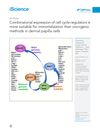
January 2021 in “iScience” Using a combination of specific cell cycle regulators is better for safely keeping hair root cells alive indefinitely compared to cancer-related methods.